


Listen to the article
Venezuelan Migrants Return Home as Trump’s Immigration Policies Reshape Holiday Plans
MARACAY, Venezuela — This was not the Christmas that Mariela Gómez would have imagined a year ago. Nor was it the one thousands of other Venezuelan immigrants would have envisioned. But Donald Trump’s return to the White House in January quickly shattered their American dream.
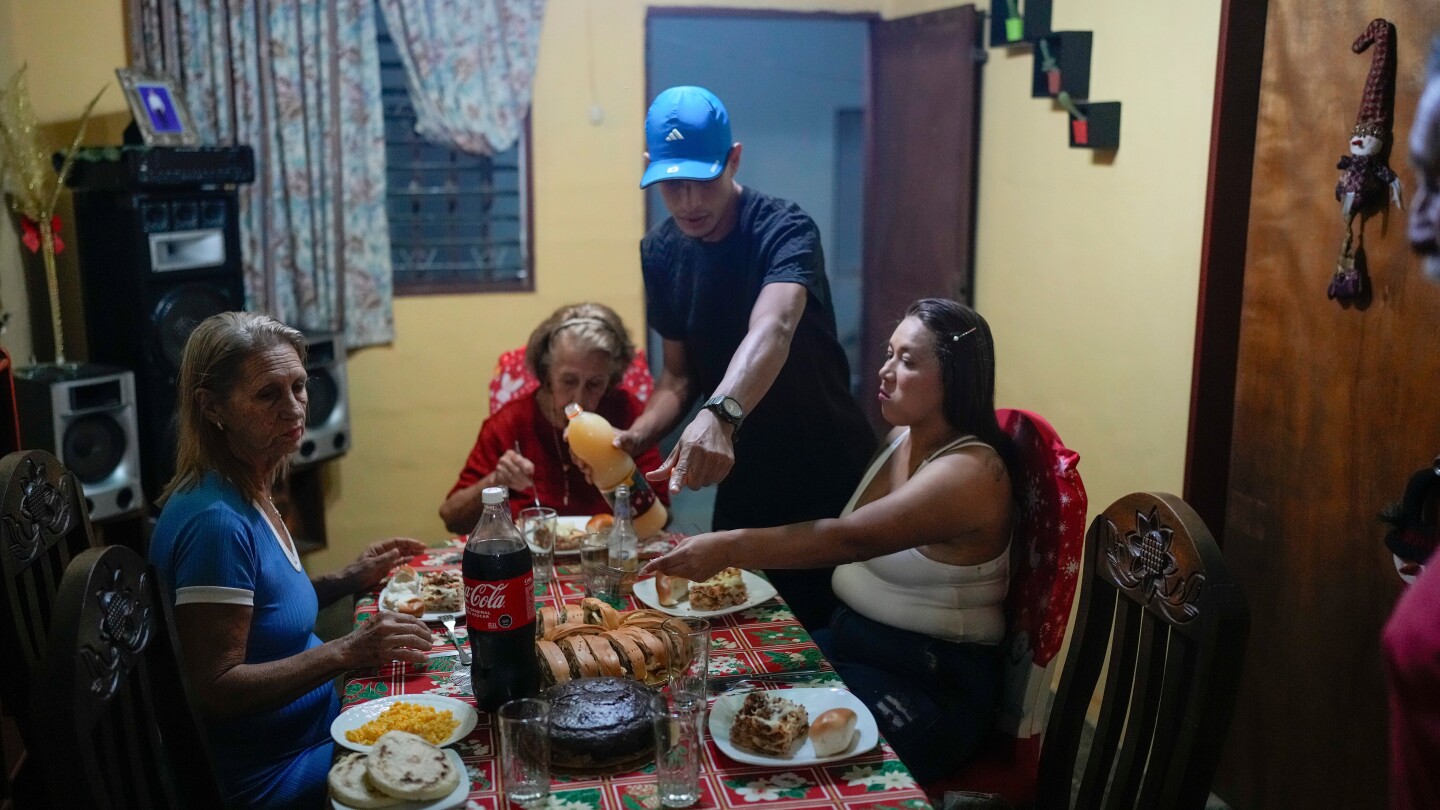
Gómez found herself spending the holiday in northern Venezuela for the first time in eight years. Though she dressed up, cooked, bought her son a scooter and put on a brave face for her in-laws, the harsh reality of returning migrants loomed over their celebration: unemployment and poverty.
“We had a modest dinner, not quite what we’d hoped for, but at least we had food on the table,” Gómez said of the lasagna-like dish she shared with her partner and in-laws instead of the traditional Venezuelan Christmas hallacas, a dish of stuffed corn dough. “Making hallacas here is a bit expensive, and since we’re unemployed, we couldn’t afford to make them.”
Gómez, her two sons and her partner returned to Maracay on October 27 after crossing the U.S.-Mexico border into Texas. They were quickly apprehended by U.S. Border Patrol amid the Trump administration’s intensified immigration crackdown. After being deported to Mexico, they began the dangerous journey back to Venezuela.
The family traveled through Central America by bus, but in Panama, financial constraints forced them to take a riskier route home. Unable to afford boat passage to Colombia via the Caribbean, they chose the cheaper Pacific route, sitting atop sloshing gasoline tanks in a cargo boat for several hours before transferring to a fast boat that took them to a jungle area in Colombia. They spent about two weeks there until relatives wired them money to reach the Venezuelan border.
Their story reflects the plight of millions who fled Venezuela’s economic collapse over the past decade. More than 7.7 million Venezuelans have left their homeland since the country’s economy imploded due to falling oil prices, corruption, and governmental mismanagement. Like many others, Gómez had lived in Colombia and Peru for years before attempting to reach the United States in search of better opportunities.
Trump’s second term has dramatically altered these migration patterns. According to government figures from Colombia, Panama and Costa Rica, more than 14,000 migrants, primarily Venezuelans, have returned to South America since Trump moved to restrict migration to the U.S. Additionally, Venezuelan nationals have been steadily deported back to their country throughout the year after President Nicolás Maduro, under pressure from the White House, reversed his long-standing policy of refusing to accept deportees from the United States.
Deportation flights have arrived regularly at the airport outside Caracas, operated by either U.S. government contractors or Venezuela’s state-owned airline. More than 13,000 immigrants returned on chartered flights this year alone.
For Gómez, returning to Venezuela did bring one unexpected joy—reuniting with her now 20-year-old daughter whom she had left behind when first fleeing the country’s crisis. They shared beers during the holiday knowing it might be their last gathering for some time, as her daughter plans to migrate to Brazil next month, continuing the cycle of Venezuelan diaspora.
Despite the challenges, Gómez maintains hope. She’s planning to prepare hallacas for New Year’s Eve and is actively searching for employment. But her prayers for the coming year focus primarily on well-being rather than prosperity.
“I ask God for many things, first and foremost life and health, so we can continue enjoying our family,” she said, reflecting the modest yet essential aspirations of thousands of migrants whose dreams of a new life in America have been replaced with the struggle to rebuild in the country they once fled.
Fact Checker
Verify the accuracy of this article using The Disinformation Commission analysis and real-time sources.

18 Comments
Production mix shifting toward World might help margins if metals stay firm.
Interesting update on A Venezuelan family’s Christmas: From the American dream to poverty. Curious how the grades will trend next quarter.
Nice to see insider buying—usually a good signal in this space.
Good point. Watching costs and grades closely.
Production mix shifting toward World might help margins if metals stay firm.
Production mix shifting toward World might help margins if metals stay firm.
The cost guidance is better than expected. If they deliver, the stock could rerate.
Good point. Watching costs and grades closely.
Good point. Watching costs and grades closely.
Uranium names keep pushing higher—supply still tight into 2026.
I like the balance sheet here—less leverage than peers.
Interesting update on A Venezuelan family’s Christmas: From the American dream to poverty. Curious how the grades will trend next quarter.
Good point. Watching costs and grades closely.
Good point. Watching costs and grades closely.
If AISC keeps dropping, this becomes investable for me.
Good point. Watching costs and grades closely.
Nice to see insider buying—usually a good signal in this space.
Good point. Watching costs and grades closely.