


Listen to the article
U.S. Medical Aid Arrives in Venezuela as Relations Thaw Following Maduro’s Capture
A significant shipment of medicine and medical supplies from the United States arrived in Venezuela on Friday, marking a new chapter in bilateral relations following the unexpected capture of former President Nicolás Maduro last month.
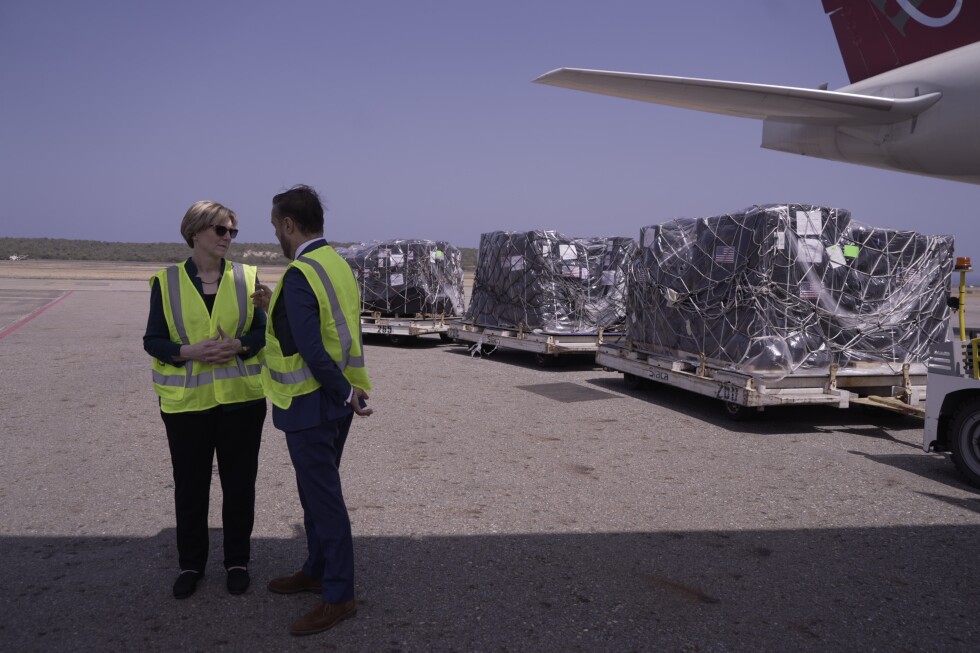
The delivery of 6 metric tons of supplies was received at Maiquetía International Airport outside Caracas by Laura Dogu, the top U.S. diplomat in Venezuela, alongside Venezuelan diplomat Félix Plasencia. This arrival represents the first tangible evidence of improved cooperation between the two nations, which have had strained relations for years.
“It’s very important to stabilize the health system here in Venezuela,” Dogu told reporters at the airport. She emphasized that this delivery is “the first of many donations” expected to arrive “in the coming days,” suggesting a sustained commitment to addressing Venezuela’s healthcare crisis.
Venezuela’s healthcare system has been devastated by the country’s prolonged economic and political crisis that began more than a decade ago. What was once considered one of Latin America’s leading healthcare systems now lies in ruins, with hospitals lacking even the most basic supplies. The situation has deteriorated to the point where patients must often provide their own medical necessities, from syringes and bandages to more specialized items like surgical screws and implants.
Plasencia characterized the aid delivery as a “message of cooperation among two sovereign countries,” adding, “We’re doing the best for our people.” His comments reflect the changing diplomatic tone between the nations, which had virtually severed formal relations during much of Maduro’s presidency.
The dramatic shift in U.S.-Venezuela relations follows the capture of Maduro, whose controversial leadership had been a point of contention between the two countries. The United States had imposed heavy sanctions on Venezuela’s oil industry and key officials during Maduro’s reign, citing human rights abuses, electoral fraud, and corruption.
Venezuela’s healthcare collapse has been among the most visible consequences of its broader societal crisis. According to the United Nations, more than 7 million Venezuelans have fled the country since 2014, with many citing the inability to access medical care among their reasons for leaving. Preventable and treatable diseases like malaria, tuberculosis, and HIV/AIDS have resurged in the country, while maternal and infant mortality rates have increased significantly.
Medical professionals have been among the exodus, with thousands of doctors and nurses leaving the country in search of better working conditions and salaries that would allow them to survive amid hyperinflation. Those who remain often work in facilities without reliable electricity, running water, or essential equipment.
The arrival of U.S. medical aid represents not just practical assistance but also a symbolic shift in approach from both governments. Previous attempts to deliver international aid to Venezuela under Maduro’s leadership were often rejected or politicized, with the former president claiming such efforts were veiled attempts to undermine his authority.
International health organizations have cautiously welcomed this development but note that the scale of Venezuela’s healthcare crisis requires sustained and comprehensive support. The World Health Organization estimates that rebuilding Venezuela’s health infrastructure would require billions of dollars in investment and years of consistent effort.
As additional aid shipments are expected in the coming days, observers will be watching closely to see how this renewed cooperation between the United States and Venezuela develops, and whether it signals broader changes in Venezuela’s approach to international relations and domestic governance.
Fact Checker
Verify the accuracy of this article using The Disinformation Commission analysis and real-time sources.

12 Comments
I’m curious to see if this medical aid shipment marks the start of a broader thaw in US-Venezuela relations. It’s an important gesture that could pave the way for more substantive cooperation down the line.
This is a small but meaningful step in the right direction. Both countries have a lot of work ahead to fully normalize their relationship.
The delivery of US medical supplies to Venezuela is a pragmatic move that puts people’s well-being first. However, it remains to be seen if this signals a broader shift in the relationship between the two countries.
Providing humanitarian aid is the right thing to do, but it’s just the first step. Lasting improvements will require a comprehensive, collaborative approach from all stakeholders.
This medical aid shipment is a welcome development, but Venezuela’s challenges go far beyond just healthcare. Restoring stability and prosperity in the country will require a comprehensive, long-term approach.
While this is a positive step, the US and Venezuela still have a lot of work to do to rebuild trust and address the root causes of the country’s crisis.
This is a promising sign of improved relations between the US and Venezuela. Providing much-needed medical aid could help address the country’s healthcare crisis and improve the lives of Venezuelans.
It’s good to see the two nations cooperating on this important humanitarian issue, despite their past tensions.
Restoring cooperation on public health matters is a positive step forward. Hopefully this leads to further diplomatic progress and eases the suffering of the Venezuelan people.
The delivery of US medical supplies is a welcome development, but there is still a long way to go in rebuilding trust and repairing relations.
Addressing Venezuela’s healthcare crisis is critical. While this aid delivery is a positive sign, it remains to be seen if it leads to further collaboration on other pressing issues facing the country.
Providing humanitarian assistance should be a priority, regardless of political differences. Hopefully this sets a precedent for more constructive engagement between the US and Venezuela.