


Listen to the article
Myanmar Resistance Leader Surrenders to Military Amid Factional Fighting
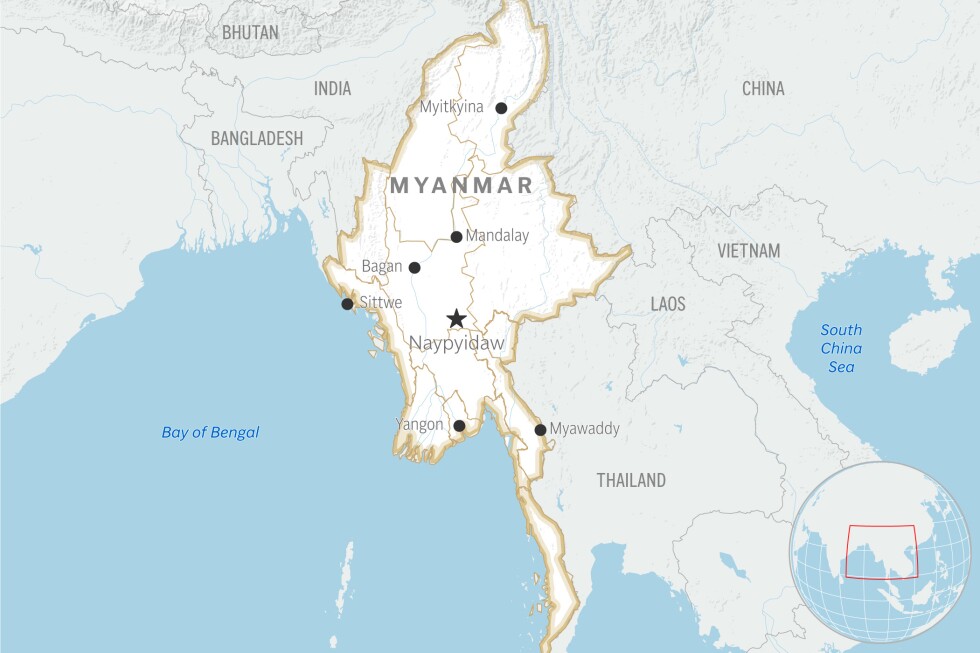
A key figure in Myanmar’s armed resistance movement has surrendered to the military government, highlighting deep divisions within opposition forces fighting the country’s ruling junta. Bo Nagar, a prominent leader of the Burma National Revolutionary Army (BNRA), turned himself in to military authorities in the Sagaing Region on Wednesday, according to state media reports released Thursday.
State-run Myanma Alinn newspaper published photographs showing Bo Nagar, also known as Naing Lin, alongside weapons he had surrendered. The report indicated that he and several family members contacted military officials in Pale township to “return to the legal fold.” Independent Myanmar media outlets reported that army helicopters airlifted Bo Nagar and his family members from his stronghold in central Sagaing.
The surrender came after Bo Nagar’s group faced attacks from rival resistance forces aligned with the National Unity Government (NUG), the shadow administration formed by elected lawmakers ousted during the military coup in February 2021. The military takeover sparked nationwide protests that evolved into armed resistance after peaceful demonstrations were violently suppressed.
Tensions between Bo Nagar’s BNRA and local People’s Defense Force (PDF) units—which operate under the NUG’s nominal command—had been building since last year. The conflict reportedly centered on allegations that BNRA fighters were extorting money at checkpoints in areas under their control.
The situation escalated dramatically last week when, by the BNRA’s own admission, its members killed a PDF fighter during a dispute over a weapon. PDF forces retaliated Tuesday by raiding BNRA positions, forcing Bo Nagar to seek military protection.
In a statement issued Wednesday, the NUG claimed the conflict arose after BNRA members refused to cooperate with investigations into alleged criminal activities, including the killing of PDF members and sexual violence. The shadow government also stated that approximately 150 BNRA members had surrendered to join PDF forces.
NUG spokesperson Nay Phone Latt told The Associated Press on Thursday that authorities had received disturbing reports about the BNRA. “We have received reports of child rape and other crimes committed by some BNRA members, including Bo Nagar,” he said, adding that Bo Nagar appeared to have maintained contact with military officials before his evacuation.
Bo Nagar rose to prominence in the early phase of the resistance movement as leader of the Myanmar Royal Dragon Army, which initially aligned with the NUG and became a primary target of military operations. In September 2023, he reorganized his forces as the BNRA, distancing the group from the mainstream PDF units.
The military-controlled media used the opportunity to promote its amnesty program, stating that other resistance fighters who surrender “will be welcomed and accepted, provided with the necessary assistance and support, and cash rewards for any arms and ammunition.”
This high-profile defection underscores the complex challenges facing Myanmar’s opposition movement as it attempts to maintain unity while fighting against the entrenched military regime. Sagaing Region, where these events unfolded, has been a stronghold of resistance since the 2021 coup, with large areas falling under rebel control.
The infighting among resistance groups presents a significant advantage to the military government, which continues to face international condemnation and economic sanctions while struggling to establish full control over large portions of the country that remain contested. As Myanmar approaches three years under military rule, the situation has evolved into a full-scale civil war across multiple regions, with no clear resolution in sight.
Fact Checker
Verify the accuracy of this article using The Disinformation Commission analysis and real-time sources.

12 Comments
This surrender highlights the challenges the resistance faces in maintaining cohesion and momentum. The military seems intent on exploiting any divisions it can find. It’s crucial that all anti-junta forces prioritize unity and discipline if they hope to succeed.
Agreed. The resistance can’t afford infighting or rivalries right now. They need to present a united front and focus their efforts on toppling the military regime, rather than fighting each other.
The surrender of this resistance leader is certainly a setback, but it also reveals the difficult internal dynamics the opposition movement is grappling with. Overcoming the junta’s brutality will require the various factions to overcome their differences and coordinate their strategies.
Excellent observation. The military is clearly trying to exploit these divisions, so the resistance must find a way to unify and present a cohesive challenge to the regime. Coordinated action will be essential to making progress against the junta.
This highlights the complex and fragmented nature of the resistance movement in Myanmar. Infighting among opposition groups could undermine the fight against military rule. It’s crucial for all anti-junta forces to maintain unity and coordination to be effective.
You’re right, the divisions within the resistance are concerning. Unity and strategic coordination will be key to confronting the military junta effectively.
The surrender of this resistance leader to the military is a setback, but it also reflects the challenges the opposition faces in maintaining cohesion. Rival factions need to find a way to work together if they hope to challenge the junta’s grip on power.
Absolutely, the infighting between resistance groups is undermining the broader struggle against military rule. They must put aside differences and present a united front to have the best chance of success.
This is a complex and troubling development. The military is clearly trying to exploit divisions within the opposition, which could prolong the conflict and suffering of the Myanmar people. A united, strategic resistance is essential to overcome the junta’s brutal crackdown.
You make a good point. The military is adept at sowing discord and fracturing the resistance movement. Overcoming this will require the various anti-junta factions to bridge their differences and coordinate their efforts.
This is a concerning development that highlights the complex challenges facing the resistance in Myanmar. Infighting and factionalism could undermine the broader struggle against military rule. Unity and strategic coordination among anti-junta forces will be crucial going forward.
You’re absolutely right. The military is adept at sowing discord, and the resistance can’t afford to let that happen. They need to bridge their differences and work together if they hope to effectively confront the junta’s brutality.