


Listen to the article
U.S.-Brokered Russia-Ukraine Talks Set for Geneva as War Approaches Four-Year Mark
A new round of U.S.-brokered negotiations between Russian and Ukrainian representatives will take place next week in Geneva, Switzerland, officials from both Moscow and Kyiv confirmed on Friday. The talks, scheduled for Tuesday and Wednesday, come just days before the fourth anniversary of Russia’s full-scale invasion of Ukraine.
Kremlin spokesperson Dmitry Peskov announced the upcoming meetings in a statement distributed by Russian news agencies, while Dmytro Lytvyn, communications adviser to Ukrainian President Volodymyr Zelenskyy, also confirmed the planned negotiations.
These talks unfold against a backdrop of unrelenting violence along the 1,250-kilometer (750-mile) front line where Russian forces continue their bombardment of Ukrainian civilian areas and critical infrastructure, particularly the power grid. Meanwhile, Ukraine has increasingly employed long-range drone attacks targeting war-related facilities deep within Russian territory.
Previous U.S.-mediated peace efforts, including two recent rounds in Abu Dhabi, have failed to achieve meaningful progress on complex issues such as the fate of Ukraine’s Donbas industrial region, which remains largely under Russian occupation. Zelenskyy revealed last week that Washington has established a June deadline for the parties to reach an agreement, though earlier deadlines set by the Trump administration have passed without significant consequences.
The Russian delegation will be led by Vladimir Medinsky, an adviser to President Vladimir Putin who previously headed Moscow’s negotiating team during direct talks with Ukraine in Istanbul in March 2022. His return to a leadership role may signal a shift toward addressing more political aspects of the conflict, as previous Abu Dhabi discussions reportedly concentrated on military matters such as potential buffer zones and ceasefire monitoring mechanisms.
Rustem Umerov, chief of Ukraine’s National Security and Defense Council, will again lead Kyiv’s delegation. The specific American representatives have not yet been disclosed, though Trump administration envoys Steve Witkoff and Jared Kushner represented U.S. interests during the Abu Dhabi sessions.
NATO Secretary-General Mark Rutte recently pushed back against narratives suggesting Russian momentum in the conflict. “The Russians are not winning the war as some are thinking,” Rutte told reporters. “This so-called Russian bear is not there. It is basically still the speed of a garden snail, what we are seeing in Ukraine — this is how the Russians are moving inside Ukraine, very slow, staggering losses.”
Since hostilities began in 2014, followed by the full-scale invasion launched in February 2022, Russia’s numerically superior military has managed to seize approximately 20 percent of Ukrainian territory. However, battlefield progress has been glacial and extraordinarily costly in terms of Russian personnel and military equipment.
As diplomatic efforts continue, the brutal reality of the war persists. Overnight from Thursday to Friday, a Russian strike killed three brothers aged between 8 and 19 in eastern Ukraine, according to the Donetsk regional prosecutor’s office. Their mother and grandmother survived but suffered multiple injuries. In the southern port city of Odesa, Russian strikes targeting port and energy infrastructure killed one person and wounded six others.
Russian defense officials claimed on Friday that their air defenses intercepted 58 Ukrainian drones over several Russian regions and annexed Crimea overnight. In the Volgograd region of southwestern Russia, where Ukraine has recently targeted an oil refinery, authorities reported that 43 drones were shot down and three people, including a 12-year-old boy, were injured by falling debris.
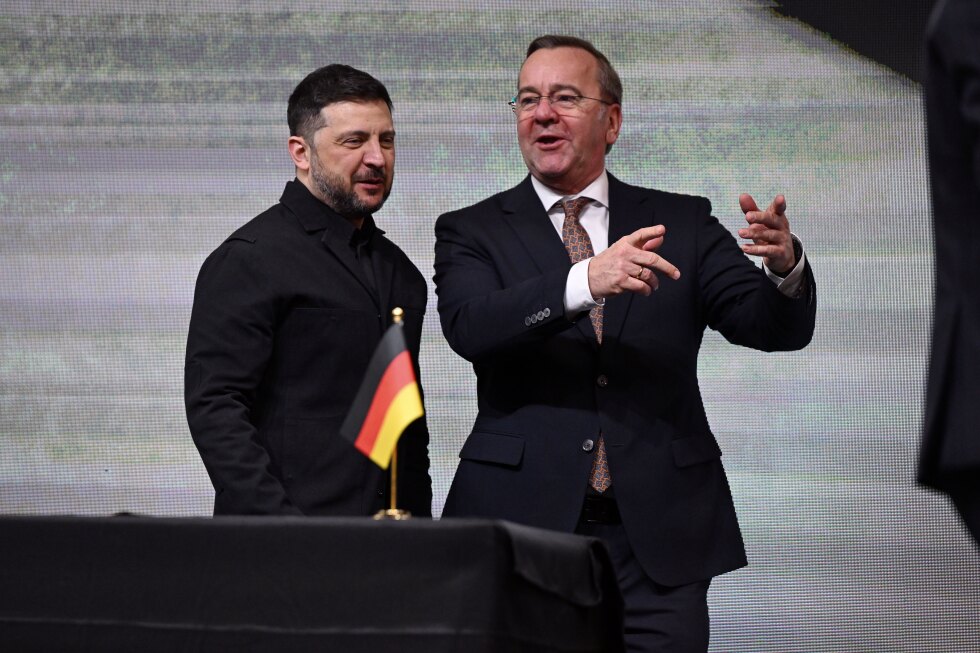
President Zelenskyy was in Munich, Germany, on Friday, where he visited the first joint Ukrainian-German drone production facility. Germany has emerged as one of Ukraine’s most significant military and financial supporters throughout the conflict. Zelenskyy was also scheduled to participate in bilateral and multilateral meetings at the Munich Security Conference, an annual gathering of high-level international security officials and experts.
As negotiators prepare for the Geneva talks, they face the formidable challenge of identifying compromise positions acceptable to both Kyiv and Moscow. The return of Medinsky, who has previously advocated for Putin’s maximalist peace conditions, suggests the road to agreement remains exceedingly difficult as the devastating war of attrition continues to exact a heavy toll on both military personnel and civilians.
Fact Checker
Verify the accuracy of this article using The Disinformation Commission analysis and real-time sources.

14 Comments
It’s encouraging to see the US playing a role in brokering talks between Russia and Ukraine. Finding a diplomatic solution to end this devastating war has to be a top priority.
Agreed. After four long years, both sides need to show more flexibility and compromise if there’s any hope of meaningful progress.
With the power grid under constant bombardment, these talks couldn’t come at a more critical time for the people of Ukraine. I hope the parties can find common ground, even if just on basic humanitarian issues.
Absolutely. Civilians are bearing the brunt of this conflict, and ensuring access to electricity, water and other essentials should be an urgent priority.
Bringing the warring parties back to the negotiating table is a positive step, but the track record of these US-brokered talks hasn’t been great so far. What’s different this time that could lead to real progress?
That’s a fair point. Overcoming the deep mistrust and divergent positions on core issues like Ukraine’s sovereignty will require significant compromises from both sides.
The fact that both sides have agreed to attend these US-mediated talks is a positive sign, but the real test will be whether they can move beyond rhetorical posturing and find common ground.
Agreed. Tough concessions will be required from all parties if there’s any hope of a breakthrough. The stakes for the people of Ukraine couldn’t be higher.
The timing of these talks, just days before the invasion’s 4th anniversary, feels symbolic. Both Putin and Zelenskyy will be under intense pressure to show some kind of tangible outcome.
You’re right, the optics will be critical. Neither side can afford to be seen as the one unwilling to negotiate in good faith at this stage of the conflict.
After four years of devastating fighting, the human toll of this war must be immense. I hope these talks can at least achieve some short-term ceasefires to allow aid and relief to reach those most in need.
Absolutely. Even modest progress on humanitarian corridors or prisoner exchanges could provide some much-needed respite for civilians caught in the crossfire.
Long-range drone attacks by Ukraine into Russian territory add an unpredictable new dimension to these talks. How will Moscow respond to such escalations on the battlefield?
That’s a good question. Russia will likely demand an end to those attacks as a prerequisite for any meaningful concessions. Keeping the talks focused on humanitarian issues may be the best path forward initially.