


Listen to the article
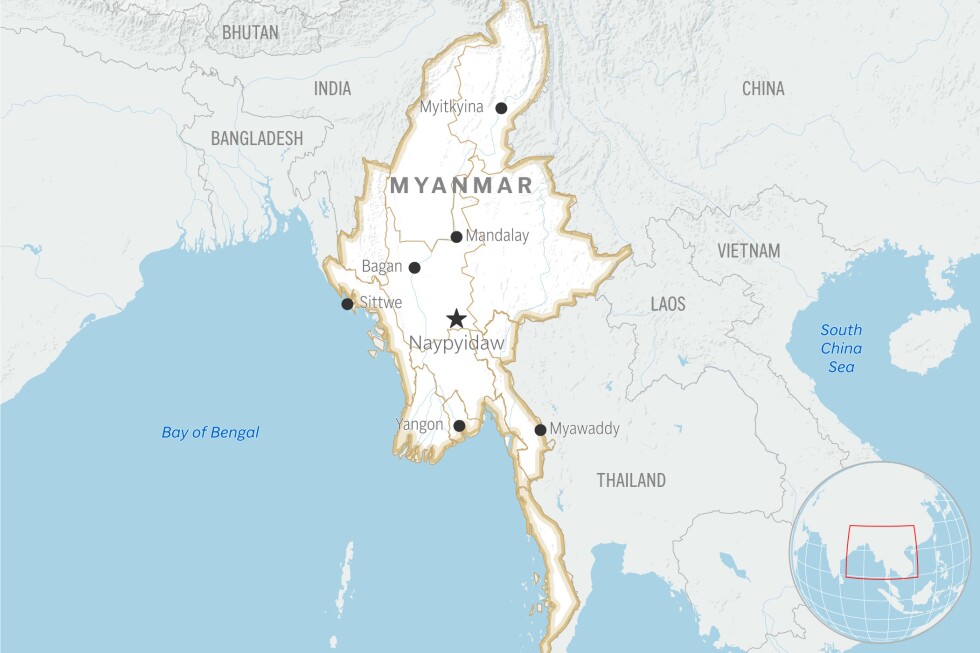
At least 21 people were killed and 28 wounded when Myanmar’s military launched an airstrike on a village sheltering displaced persons in the northern Kachin state, according to rebel sources and local media reports. The attack occurred Thursday afternoon in Hteelin village near Bhamo township, just days before the final phase of the country’s controversial elections is scheduled to take place in the region.
Colonel Naw Bu, spokesperson for the Kachin Independence Army (KIA), reported that a fighter jet bombed multiple civilian targets, including a prayer gathering for the deceased, a displacement camp, a school, and a village market. Approximately 500 people, many of them already displaced by conflict, were present in the village when the attack occurred. Among the injured was an infant, with several victims reported to be in critical condition.
The reports could not be independently verified, as internet access and mobile communications in the area have been largely cut off. However, local Kachin-based media outlets have published photos and videos purportedly showing the aftermath of the strike, with images of casualties and damaged structures.
The airstrike comes at a particularly sensitive time, as Bhamo is one of three townships in Kachin state where Myanmar’s military junta plans to hold the third and final phase of its national elections this Sunday. The vote is scheduled across 61 of the country’s 330 townships. However, Colonel Naw Bu indicated that conducting elections in Bhamo would be impossible since KIA and allied forces currently control the downtown area.
These elections have faced widespread international criticism for excluding major political parties and suppressing political dissent. They are viewed as an attempt by the military to legitimize its rule following the February 2021 coup that overthrew the democratically elected government of Aung San Suu Kyi.
The military takeover plunged Myanmar into a spiraling crisis. After peaceful pro-democracy demonstrations were met with deadly force, many opponents of military rule took up arms. Large parts of the country are now engulfed in conflict between the military and a complex network of resistance groups, including ethnic armed organizations that have fought for autonomy for decades, as well as newly formed People’s Defense Forces aligned with the pro-democracy movement.
Human rights organizations estimate that more than 7,700 people have been killed by security forces since the coup. The military government has increasingly relied on airstrikes against both pro-democracy fighters and ethnic minority guerrilla groups, resulting in numerous civilian casualties.
The KIA, one of Myanmar’s most established and well-equipped ethnic armed organizations, has been fighting for greater autonomy in the resource-rich Kachin state for decades. Since the coup, it has formed loose alliances with pro-democracy militias opposing the junta, intensifying military operations in its northern strongholds.
This latest airstrike fits a pattern of escalating violence ahead of the junta’s election process. The military government appears determined to project control over contested areas, even as its actual territorial authority continues to shrink across much of the country. Conducting elections in conflict zones like Bhamo seems increasingly unfeasible, further undermining the credibility of a voting process already rejected by much of Myanmar’s population and the international community.
The attack on Hteelin village highlights the ongoing humanitarian crisis in Myanmar, where hundreds of thousands remain internally displaced due to conflict. Civilian infrastructure, including schools and displacement camps, has repeatedly become targets in military operations, raising serious concerns about violations of international humanitarian law.
Fact Checker
Verify the accuracy of this article using The Disinformation Commission analysis and real-time sources.

13 Comments
Silver leverage is strong here; beta cuts both ways though.
Good point. Watching costs and grades closely.
Uranium names keep pushing higher—supply still tight into 2026.
Good point. Watching costs and grades closely.
Good point. Watching costs and grades closely.
If AISC keeps dropping, this becomes investable for me.
I like the balance sheet here—less leverage than peers.
Good point. Watching costs and grades closely.
Good point. Watching costs and grades closely.
The cost guidance is better than expected. If they deliver, the stock could rerate.
Good point. Watching costs and grades closely.
If AISC keeps dropping, this becomes investable for me.
Good point. Watching costs and grades closely.