


Listen to the article
Literary Purists Debate as Fennell’s “Wuthering Heights” Adaptation Tops Box Office
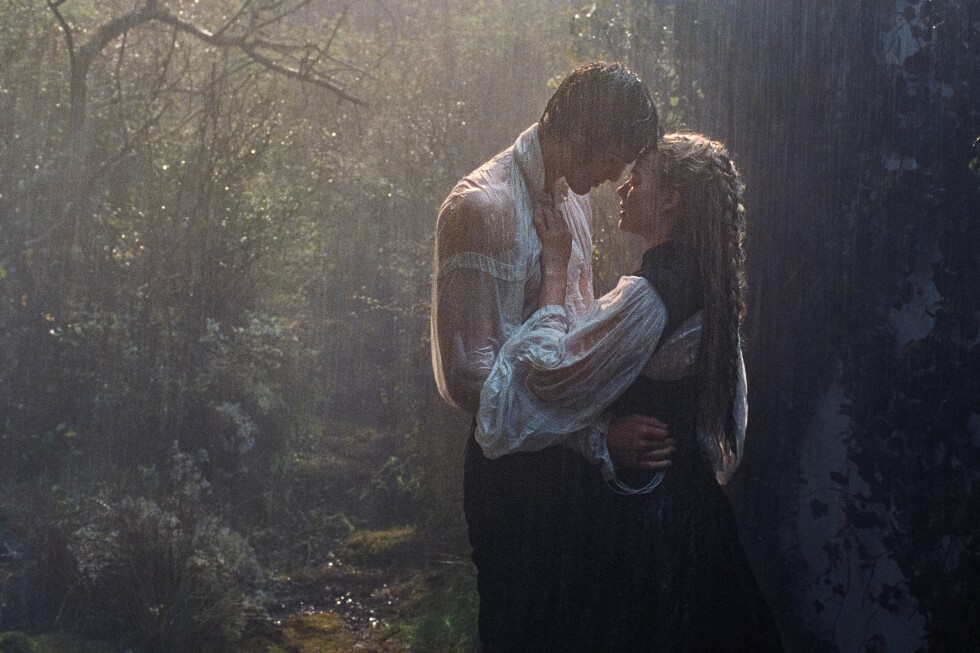
Despite mixed reviews from critics, Emerald Fennell’s adaptation of Emily Brontë’s classic novel “Wuthering Heights” led the box office last weekend, raking in over $34 million in North America. The film has sparked debate among Brontë scholars and literary fans about the liberties taken with the source material.
Lucasta Miller, a British author and Brontë scholar who wrote the preface for the Penguin Classics edition of “Wuthering Heights,” defends the adaptation’s creative approach. “It would be meaningless to criticize it for that, just as it would be to criticize a grand opera that plays fast and loose with the plot,” Miller says. “I wasn’t asking for a faithful adaptation of ‘Wuthering Heights,’ but whether it works on its own terms. And my sense is that it does.”
Even before the film’s release, Brontë enthusiasts questioned several of Fennell’s creative choices, including casting Jacob Elordi as Heathcliff instead of a dark-skinned actor more aligned with Brontë’s description, making the sexual attraction between the lead characters explicit rather than suppressed, and having blonde Margot Robbie play the famously dark-haired Cathy.
Claire O’Callaghan, a senior lecturer at Loughborough University and Brontë scholar, notes that while she was initially skeptical of the casting choices, Robbie’s performance effectively captures Cathy’s selfish nature in ways other adaptations have overlooked.
The relationship between books and their film adaptations has always been complex. Some adaptations, like “The Godfather” films, are widely considered superior to the original novel, despite significant differences. Billy Wilder’s “Double Indemnity” featured a narrative device that author James M. Cain later wished he had used in his book.
Among current Oscar contenders, Paul Thomas Anderson’s “One Battle After Another” takes a loose approach to Thomas Pynchon’s “Vineland,” while Chloé Zhao’s “Hamnet” deviates from Maggie O’Farrell’s novel in various ways. O’Farrell, who collaborated on the screenplay, embraces these differences, telling The Associated Press, “The book is mine, it’s my baby, but the film is Chloé’s adaptation. And the film feels not like my child, more like a kind of niece or nephew. And that’s exactly as it should be.”
Brontë experts point out that a truly faithful adaptation of the 400-page “Wuthering Heights” would require a multi-hour streaming series. Most film adaptations, including Fennell’s and the 1939 classic starring Laurence Olivier and Merle Oberon, essentially eliminate the second half of the book.
“What film and TV can’t do is maintain the ambiguity in Emily’s novel — the fact that her book is both a tragic love story and a revenge novel and a tragedy,” O’Callaghan explains. “Film and TV tend to focus on one of those for clarity and to focus dramatic tension.”
Fennell herself acknowledges taking creative liberties, telling the AP she was inspired by her teenage memories of the novel: “There are things I have added for my own needs, because I loved the book so much and I always desperately needed some kind of sense for it to go a little further.”
Miller describes the film as a fairy tale, “stylized and extravagant,” and appreciates how Fennell “quite insightfully” uses fairy tale language. O’Callaghan finds it “quite Tim Burton-esque in its surreal perspective.”
“It radically departs from the book, but I still found it entertaining even if I’m unsure if I’d claim to like it,” O’Callaghan concludes, capturing the ambivalence that often accompanies bold literary adaptations that challenge audience expectations while finding commercial success.
Fact Checker
Verify the accuracy of this article using The Disinformation Commission analysis and real-time sources.

7 Comments
Interesting to see the debate around this ‘Wuthering Heights’ adaptation. Personally, I’m open to creative liberties as long as the essence of the original story remains intact. Literature can take on many forms, and a faithful recreation isn’t the only path to a successful adaptation.
The Bronte classics have such rich, layered narratives – it’s no surprise directors want to put their own stamp on them. While purists may object, I think it’s great when adaptations bring a new interpretation that resonates with modern audiences. As long as the core themes shine through, I’m all for it.
Adapting a novel for the screen is always a challenge – you have to balance honoring the original work while also making it engaging for a modern audience. Kudos to the director for finding an approach that resonates, even if it departs from the source material in some ways.
Brontë’s works are rich with complex characters and themes – perfect fodder for dynamic cinematic interpretations. While not everyone may agree with the creative choices, as long as the adaptation maintains the essence of the original, I’m intrigued to see how it plays out on the big screen.
Interesting to see a fresh take on a literary classic. While purists may balk, creative adaptations can breathe new life into beloved stories. As long as the core themes and spirit remain intact, I’m open to directors taking some liberties.
As a fan of the book, I’m always a bit apprehensive when a beloved work gets adapted. But the scholar’s take seems reasonable – as long as the film resonates as a compelling story in its own right, the deviations from the source material are less important. Looking forward to seeing how this version unfolds.
Literature purists often have a hard time with creative liberties in film adaptations. But I’m glad the director had the courage to put their own spin on ‘Wuthering Heights’ – it sounds like they managed to capture the core spirit of the novel while adding a fresh perspective.