


Listen to the article
Israel Claims Strike Killed Top Iranian Security Official Amid Escalating Conflict
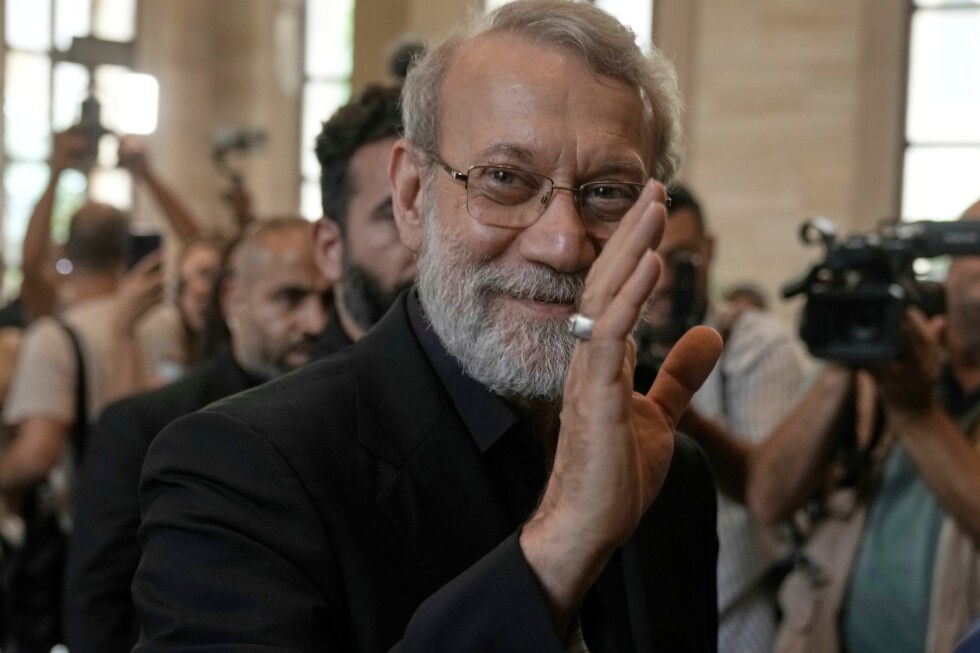
Israel has announced that it killed Ali Larijani, a prominent Iranian security official who was believed to be managing Iran’s affairs following the death of Supreme Leader Ayatollah Ali Khamenei, in an overnight strike on Tuesday. The Israeli military also claimed responsibility for killing Iranian General Gholam Reza Soleimani, who headed a powerful internal security service known for suppressing protests against Iran’s theocratic government.
Iranian authorities have not yet confirmed or denied these deaths, which come in the wake of U.S. and Israeli strikes that killed Supreme Leader Khamenei and other high-ranking security officials. Khamenei’s son, Mojtaba, who was appointed as his replacement, has not made any public appearances, fueling Israeli suspicions that he may have been wounded in the attacks.
Despite these leadership casualties, Iran’s Revolutionary Guard continues to launch missiles at Israel and Arab Gulf countries. The conflict has also led to Iran effectively shutting down the Strait of Hormuz, a critical maritime passage through which approximately 20% of the world’s traded oil flows. This closure has triggered a spike in global oil prices and sent shockwaves through the international economy.
Larijani, who comes from one of Iran’s most influential political families—often compared to the Kennedys in the United States—had been a significant conservative force within the country’s power structure. One of his brothers, Sadeq, previously served as the head of Iran’s judiciary, while another brother, Mohammad Javad, was a senior diplomat and close adviser to Khamenei on foreign policy matters.
Throughout his political career, Larijani held several prominent positions. In the 1990s, he served as Iran’s culture minister, where he implemented stricter censorship policies. He later became parliament speaker, a position he held from 2008 to 2020, before taking on the role of head of the Supreme National Security Council. Known for his intellectual pursuits, Larijani authored at least six books on philosophy, including three examining the works of German philosopher Immanuel Kant.
Prior to the current conflict, Larijani had been appointed to advise Khamenei on strategy for nuclear negotiations with the Trump administration. Just two weeks before the Israel-U.S. attacks, he traveled to Oman to meet with mediators. Like many senior Iranian officials, Larijani was subject to heavy U.S. sanctions related to Iran’s violent suppression of mass protests in January.
Although he was ineligible to become supreme leader due to not being a Shiite cleric, Larijani was widely expected to serve as a top adviser in Iran’s current leadership vacuum. Many regional experts believed he was effectively running the country as U.S. and Israeli strikes forced Iran’s remaining leadership to operate underground.
The elimination of Larijani marks another significant blow to Iran’s government structure during this period of unprecedented instability. In a social media exchange just last week, after former U.S. President Donald Trump threatened to attack Iran “TWENTY TIMES HARDER” if Tehran blocked oil shipments through the Strait of Hormuz, Larijani had responded defiantly on X: “The sacrificial nation of Iran doesn’t fear your empty threats. Even those bigger than you couldn’t eliminate Iran. Be careful not to get eliminated yourself.”
This latest development represents a further escalation in what has become an increasingly direct conflict between Israel and Iran, with significant implications for regional stability and global energy markets. As tensions continue to mount, international observers are closely watching for Iran’s response to these targeted killings of its leadership figures.
Fact Checker
Verify the accuracy of this article using The Disinformation Commission analysis and real-time sources.

13 Comments
The shutdown of the Strait of Hormuz would have major global economic implications, disrupting oil shipments. I hope cooler heads can prevail to deescalate this situation.
Absolutely. The strategic importance of that maritime chokepoint means the fallout from any closure could be catastrophic. Diplomacy is the best path forward.
This conflict has significant implications for energy markets and the global economy. All parties need to exercise restraint and focus on finding a diplomatic solution to prevent further escalation.
The shutdown of the Strait of Hormuz would be a major geostrategic and economic blow. I hope both sides can be persuaded to step back from the brink and engage in constructive dialogue.
Agreed. The stakes are incredibly high, and the potential for unintended consequences is severe. Cooler heads must prevail to prevent this from spiraling out of control.
This escalation of tensions between Israel and Iran is deeply concerning. The targeted killings of senior Iranian officials could have severe consequences and lead to further conflict in the region.
Agreed, these are high-stakes moves that risk sparking uncontrolled retaliation. Both sides need to exercise restraint to avoid an all-out war.
The targeted killings of Iranian officials are a concerning development, but we need more information about their specific roles and alleged crimes. Transparency from all parties is essential.
Absolutely. Jumping to conclusions without a clear understanding of the facts could inflame the situation further. Diplomatic efforts to de-escalate are critical at this stage.
The impact of shutting down the Strait of Hormuz would be huge, not just for oil markets but for global trade as a whole. All sides need to approach this with extreme caution.
This is a volatile situation that requires nuanced handling. I hope the international community can pressure both sides to step back from the brink and find a diplomatic resolution.
Agreed. De-escalation and open communication channels are crucial to prevent this conflict from spiraling out of control with disastrous consequences.
While the killings of Iranian officials are concerning, I’d like to know more about their specific roles and how they may have been involved in the country’s repressive policies. Transparency is key in a conflict like this.