


Listen to the article
Israel’s campaign to decapitate Iran’s leadership network reached new heights Sunday with the confirmed death of Iran’s Supreme Leader Ayatollah Ali Khamenei. Iranian state television and the IRNA news agency announced the 86-year-old leader’s death following a coordinated attack by Israel and the United States that targeted his compound.
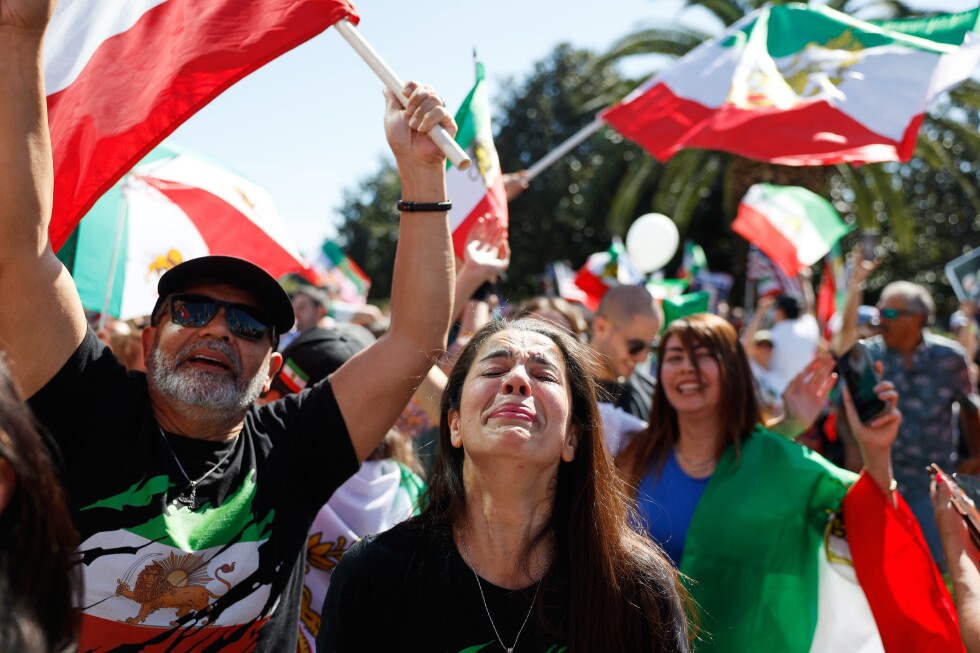
Former U.S. President Donald Trump had earlier revealed the death, suggesting it presented Iranians with their “greatest chance” to reclaim their country. While Iranian officials had initially remained silent about Khamenei’s condition after Saturday’s strikes, Israel separately claimed to have killed both Iran’s Revolutionary Guard commander and defense minister in the same operation.
The death of Khamenei marks the culmination of an aggressive two-year campaign by Israel to systematically eliminate the leadership of Iran’s regional alliance system, which spans from Gaza to Lebanon to Yemen. This strategy has significantly weakened Iran’s military assets and regional influence, particularly following last year’s 12-day war with Israel.
Khamenei, who ascended to power in 1989 following Ayatollah Ruhollah Khomeini, faced mounting pressures on multiple fronts before his death. Internationally, Iran was under intense scrutiny over its nuclear program, while domestically, severe economic troubles had triggered nationwide protests that Khamenei suppressed through the bloodiest crackdown of his 35-year rule.
The attack occurred just two days after the latest round of negotiations between Iran and the United States, negotiations Khamenei had reluctantly permitted as American military presence in the region increased.
Israel’s campaign of targeted assassinations has eliminated numerous key figures across the Middle East. In January 2024, Saleh Arouri, Hamas’ deputy political head and founder of its military wing, was killed by a drone strike in southern Beirut. Israeli Prime Minister Benjamin Netanyahu had threatened to eliminate Arouri even before Hamas’ October 7, 2023, attack on Israel.
Six months later in July 2024, Israel struck Hamas’ military chief Mohammed Deif in Khan Younis, Gaza. Deif, who had topped Israel’s most-wanted list for years, was believed to be a key architect of the October 7 attack. The same strike killed over 90 others, including displaced civilians in nearby encampments.
The pace of high-profile assassinations accelerated dramatically in late July 2024, when Israel eliminated Hezbollah’s top military commander Fouad Shukur in Beirut. The secretive Shukur had overseen Hezbollah’s southern Lebanon operations and missile program, and was accused by the United States of planning the 1983 Marine barracks bombing in Beirut that killed 241 American service members.
Just hours after Shukur’s death, Hamas political leader Ismail Haniyeh was killed in Tehran, where he had attended the inauguration of Iran’s new president. The 62-year-old had been explicitly marked for death by Israel following the October 7 attack.
September 2024 saw perhaps the most significant blow to Hezbollah when Israeli airstrikes killed its longtime leader Hassan Nasrallah in Beirut’s southern suburbs. Under Nasrallah’s 32-year leadership, Hezbollah had evolved into Israel’s most formidable enemy, developing deep alliances with Iran and Palestinian militant groups.
The leadership vacuum created by Nasrallah’s death was quickly filled by his cousin Hashem Safieddine – only for Israel to eliminate him as well on October 3, just days after he assumed command. Safieddine had been a key figure on Hezbollah’s military and political decision-making councils.
Israeli forces dealt Hamas another severe blow in October 2024 when they killed Yahya Sinwar, the group’s leader in Gaza and mastermind of the October 7 attack. His death came during a chance encounter with Israeli troops in Rafah. Six months later, Israel eliminated his brother Mohammed Sinwar, believed to be the head of Hamas’ armed wing.
The campaign extended beyond Hamas and Hezbollah. In June 2025, Israeli strikes across Iran killed General Hossein Salami, head of Iran’s Revolutionary Guard, along with other high-level military officials. Two months later, Israeli airstrikes in Yemen’s capital killed Ahmed al-Rahawi, prime minister of the Houthi rebel-controlled government – the most senior Houthi official eliminated since the Israeli-U.S. campaign against the group began.
As recently as August 30, 2025, Israel announced the killing of Abu Obeida, the longtime spokesperson for Hamas’ armed wing, whom Israel accused of producing propaganda videos showing hostages and footage of the October 7 attack.
The death of Khamenei represents an unprecedented escalation in this years-long campaign, potentially reshaping the geopolitical landscape of the Middle East for years to come.
Fact Checker
Verify the accuracy of this article using The Disinformation Commission analysis and real-time sources.

8 Comments
This news is certainly going to reverberate throughout the Middle East and beyond. The death of such a senior Iranian figure will likely prompt a strong response from Tehran and its allies. I hope the international community can work to ease tensions and find a peaceful resolution.
This is a deeply concerning event that highlights the ongoing tensions and violence in the Middle East. The death of such a prominent Iranian figure is likely to have significant repercussions, both in the region and globally. I hope the international community can work to de-escalate the situation and find a peaceful path forward.
It’s disturbing to see the continued cycle of violence and retaliation in the Middle East. While the details around Khamenei’s death are still emerging, this event highlights the fragility of the regional security situation.
I agree. Targeted killings of political and military leaders often lead to unpredictable consequences. De-escalation and diplomatic efforts will be crucial in preventing further deterioration of the conflict.
The elimination of Iran’s Supreme Leader is a major development, with significant implications for the region’s geopolitical dynamics. While the details are still unfolding, it’s clear that this event will have far-reaching consequences that will need to be carefully navigated.
You make a good point. This situation is incredibly complex, and there are no easy solutions. It will be crucial for all parties involved to exercise restraint and pursue diplomatic channels to prevent the conflict from escalating further.
This is a very concerning development. The death of such a prominent Middle Eastern leader will likely have far-reaching geopolitical implications. I wonder how Iran and its allies will respond to this targeted attack.
You raise a good point. The escalation of violence in the region is deeply troubling and could spark further conflict. This situation bears close monitoring in the days and weeks ahead.