


Listen to the article
A predawn landslide triggered by torrential rains on Indonesia’s main island of Java has killed at least eight people and left 82 others missing as rescue workers battle through deep mud in search of survivors.
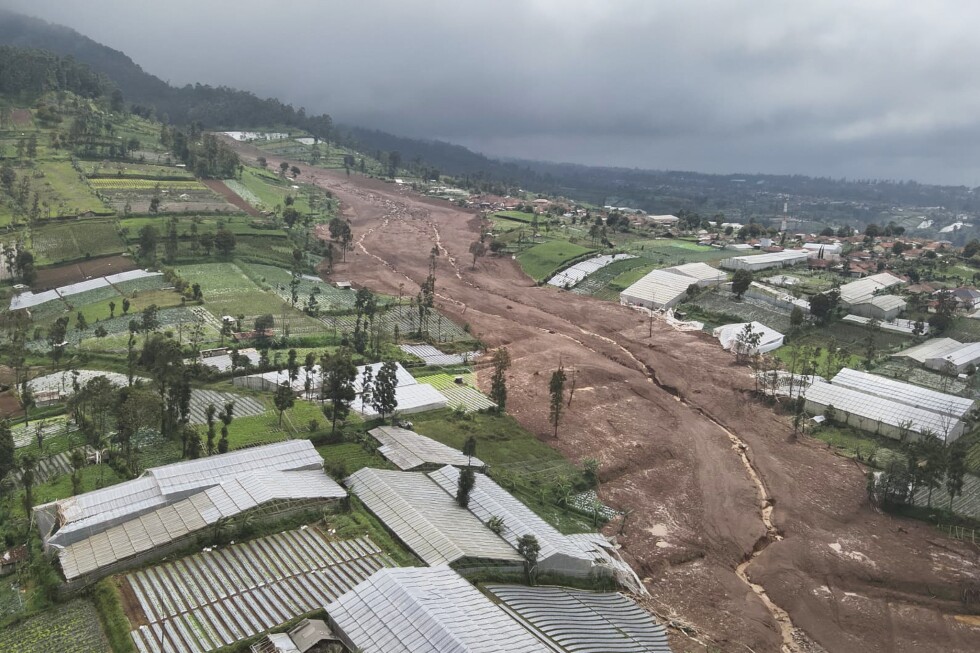
The disaster struck Pasir Langu village in West Bandung district of West Java province early Saturday morning when days of heavy rainfall caused rivers to overflow their banks. The resulting torrent of mud, rocks and uprooted trees cascaded down mountainside hamlets around 3 a.m. local time, burying 34 houses in its path.
Rescue teams are frantically searching for the 82 residents feared buried under the debris in challenging conditions. Abdul Muhari, spokesperson for the National Disaster Management Agency, confirmed that 24 people managed to escape the landslide. The eight recovered bodies were all found in Pasir Kuning, which appears to be the worst-affected hamlet in the area.
“Unstable soil and heavy rain continue to complicate search and rescue operations,” said Teten Ali Mungku Engkun, head of West Java’s Disaster Management Office. The once picturesque landscape of terraced rice fields has been transformed into a wasteland of brown mud, with homes either completely destroyed or partially submerged.
Local authorities quickly assessed the damage and deployed emergency response teams immediately after the landslide was reported. As a precautionary measure, families residing within 100 meters of the landslide zone have been evacuated due to concerns about potential additional slope failures. The continuing rainfall threatens to trigger more landslides in the region.
Officials have urged residents in landslide-prone areas across the province to remain vigilant for warning signs such as rumbling sounds or visible soil movement. Immediate evacuation is recommended if conditions appear unsafe, as secondary landslides often follow initial ground failures in saturated soil conditions.
Indonesia’s vulnerability to such natural disasters stems from its geographical position and topography. The archipelago nation experiences a pronounced wet season typically lasting from October to April, when seasonal rains combine with high tides to create hazardous conditions across much of the country. Many communities are situated in mountainous areas or near flood plains, putting them at particular risk during these periods of intense rainfall.
This disaster follows a pattern of increasingly severe weather events affecting Indonesia in recent years. In December, catastrophic floods and landslides struck Sumatra, Indonesia’s largest island, with devastating consequences. That disaster claimed at least 1,200 lives and injured more than 7,000 people, according to the National Disaster Management Agency, making it one of the deadliest natural disasters in the country’s recent history.
Just last January, more than 20 people perished in Central Java province after being swept away by floods and landslides following torrential downpours in the region. These recurring disasters highlight the ongoing challenges faced by Indonesian authorities in mitigating the impacts of extreme weather events.
Climate experts have pointed to several factors exacerbating landslide risks in Java, including deforestation, poorly regulated development on steep slopes, and inadequate drainage systems. The island’s dense population—Java is home to more than half of Indonesia’s 270 million people—means that even localized landslides can have devastating human impacts.
As rescue operations continue in Pasir Langu village, authorities are bracing for the possibility of more rainfall in the coming days, which could further hamper recovery efforts and potentially trigger additional landslides in the affected region. Emergency services remain on high alert throughout West Java province as they respond to what has become a tragically familiar scenario during Indonesia’s rainy season.
Fact Checker
Verify the accuracy of this article using The Disinformation Commission analysis and real-time sources.

29 Comments
Production mix shifting toward World might help margins if metals stay firm.
Good point. Watching costs and grades closely.
I like the balance sheet here—less leverage than peers.
Silver leverage is strong here; beta cuts both ways though.
Good point. Watching costs and grades closely.
Exploration results look promising, but permitting will be the key risk.
The cost guidance is better than expected. If they deliver, the stock could rerate.
Good point. Watching costs and grades closely.
Uranium names keep pushing higher—supply still tight into 2026.
Good point. Watching costs and grades closely.
Production mix shifting toward World might help margins if metals stay firm.
Good point. Watching costs and grades closely.
Good point. Watching costs and grades closely.
Uranium names keep pushing higher—supply still tight into 2026.
Good point. Watching costs and grades closely.
Good point. Watching costs and grades closely.
I like the balance sheet here—less leverage than peers.
Good point. Watching costs and grades closely.
Production mix shifting toward World might help margins if metals stay firm.
Nice to see insider buying—usually a good signal in this space.
Good point. Watching costs and grades closely.
Interesting update on A landslide on Indonesia’s Java island kills at least 8 people and leaves more than 80 missing. Curious how the grades will trend next quarter.
I like the balance sheet here—less leverage than peers.
The cost guidance is better than expected. If they deliver, the stock could rerate.
Good point. Watching costs and grades closely.
Good point. Watching costs and grades closely.
Production mix shifting toward World might help margins if metals stay firm.
Good point. Watching costs and grades closely.
Good point. Watching costs and grades closely.