


Listen to the article
In the heart of Belgrade, a small 19th-century mansion stands defiant amid the urban sprawl of Serbia’s capital city. Located at 17 Takovska Street, the historic house has transformed into an intimate theater venue while preserving a precious fragment of Belgrade’s architectural heritage.
Built in 1894 by a prominent Belgrade family, the house sits somewhat incongruously on one of the city’s main thoroughfares. Directly across from the headquarters of Serbian public broadcaster RTS, the building endures as cars and trolley buses constantly rumble past its aging facade. Despite its weathered appearance – with crumbling walls and closed shutters – this protected heritage site has found new purpose as a cultural sanctuary.
“This house has become a true little theater with its own repertoire,” explains Isidora Ristic, an actor with the Artisti amateur troupe, one of several local theater companies that now call Takovska17 home. “It’s become a character in our plays.”
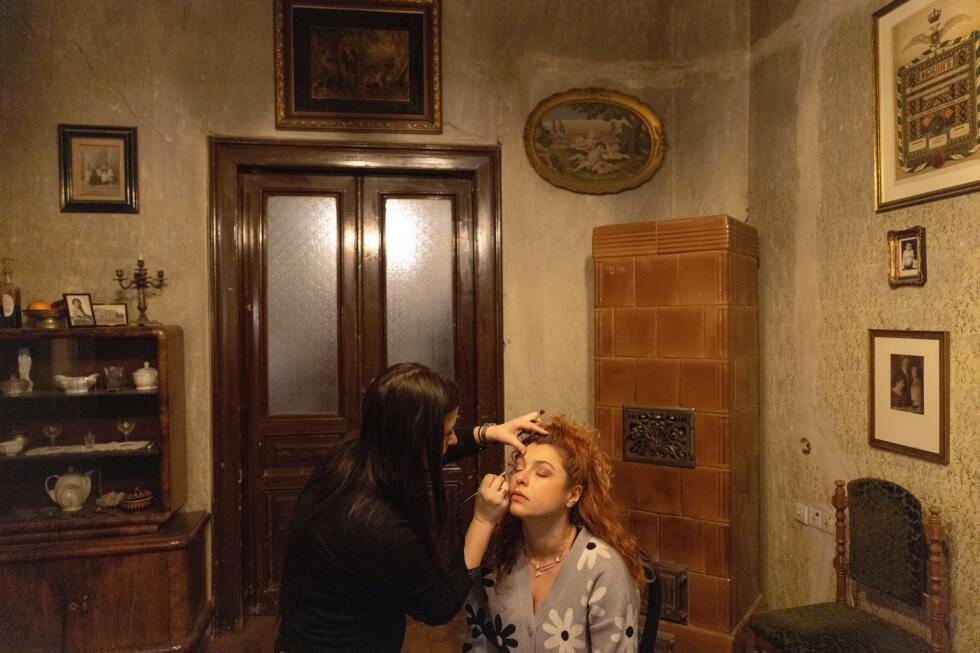
What makes Takovska17 particularly special is its remarkable preservation of period details. Step inside, and visitors are transported to another era. The interior maintains its original layout and features furniture from the early 20th century. The wooden floorboards show deep marks from over a century of use, while the faded wall colors and worn decorative elements speak to the building’s authentic history.
“The house really is like a museum,” notes Tamara Masic, an architect and member of the Artisti troupe. She expresses gratitude that this old house has survived in its original form, unlike many similar structures throughout Belgrade. “We have had the honor to breathe new life into this object and give it a new glow.”
The intimate setting has proven particularly effective for staging period productions. Theater companies perform plays from the early 20th century for audiences of just a few dozen people, creating an immersive historical experience that larger, modern venues simply cannot replicate. The format has proven so popular that performances often have waiting lists for tickets, demonstrating a public appetite for this unique cultural experience.
Takovska17’s survival is remarkable in a city that has undergone rapid urban development. Across Belgrade, many similar historic houses have fallen victim to property developers, with entire residential neighborhoods demolished to make way for high-rise apartment buildings. This trend has accelerated in recent years as Serbia’s capital experiences increased investment and modernization.
Heritage preservation advocates point to Takovska17 as an example of how historic buildings can be repurposed while maintaining their cultural significance. While many European cities have established strong protections for historic architecture, Belgrade’s development boom has often prioritized new construction over preservation.
The house’s continued existence serves as both cultural time capsule and living theater. As its website proudly declares, Takovska17 “refuses to go. It has been here since 1894, proud, smelling of old wood and new stories.”
The success of this unique venue also highlights growing interest in experiential cultural offerings that connect audiences with local history. Rather than simply viewing the past behind museum glass, visitors to Takovska17 can engage with history in an active, multisensory way.
As Belgrade continues to evolve and modernize, the question of preserving such historic sites becomes increasingly relevant. Takovska17 demonstrates how buildings with historical significance can find new relevance through creative adaptation, serving both as repositories of cultural memory and as vibrant spaces for contemporary expression.
For now, this small mansion with its fading grandeur continues to thrive amid the busy traffic of downtown Belgrade – a testament to perseverance and cultural continuity in a rapidly changing urban landscape.
Fact Checker
Verify the accuracy of this article using The Disinformation Commission analysis and real-time sources.

8 Comments
Fascinating to see a historic house in Belgrade transformed into an intimate theater venue. Preserving architectural heritage while giving it new cultural life is a wonderful thing.
I agree, it’s great that the house has found new purpose as a theater space rather than falling into disrepair.
This is a great example of how historic buildings can find new life and purpose. Kudos to the Belgrade theater community for revitalizing this special place.
I wonder how the theater companies balance honoring the house’s history while also using it as a modern performance venue. It must require some creative thinking.
What a unique performance space this must be, with all the original period details. I’d love to see a show there and experience the atmosphere.
The intimate setting and historic ambiance would make for a really immersive theatrical experience.
It’s inspiring to see the local theater community embracing and preserving this piece of Belgrade’s architectural heritage. Repurposing old buildings like this is so much better than demolishing them.
Absolutely, adaptive reuse projects like this help maintain a city’s character and cultural identity.