


Listen to the article
Gaza Exile’s Long Wait: Palestinian Father Hopes for Reunion as Rafah Crossing Reopens
Stranded in Egypt for the past two years, Raed Belal has watched helplessly as his wife and children in the Gaza Strip endured bombardment, displacement and hunger. Now he finally has hope he might return to them.
With Israel preparing to reopen the vital Rafah crossing between Egypt and Gaza, Belal, 51, has packed his suitcases, bought gifts for his children, and is ready to go as soon as he is allowed.
“It’s the moment I have been waiting for,” he said, speaking at the rented apartment where he has been living in the Egyptian village of Badrashin. “The moment when I reunite with my children, when I return to my home and homeland, even if everything is destroyed.”
Belal, who owned a mobile phone store in the northern Gaza town of Beit Lahiya, left the territory in July 2023 to get treatment for back pain. Weeks later, Hamas launched its attack on Israel, Israel’s massive bombardment of Gaza began, and Gaza’s borders slammed shut.
Gaza has been closed to entry for Palestinians since Israel launched its retaliatory campaign against Hamas for its Oct. 7, 2023, attack on southern Israel. In the first months of the war, some 110,000 Palestinians were able to leave Gaza. The Rafah crossing was completely closed in May 2024 when Israeli troops took it over.
Since then, people like Belal have been trapped abroad – most of them in Egypt. Many feared Israel would never allow them back to Gaza.
The exact date of Rafah’s reopening has not been announced. The process was jump-started by Israel’s recovery on Monday of the last hostage’s remains in Gaza, where a ceasefire with Hamas has held for four months. Israeli Prime Minister Benjamin Netanyahu on Tuesday called it a “limited opening,” saying 50 Palestinians a day would be allowed into Gaza and that Israel will keep tight control over who enters, subject to security inspections.
Before the war, several hundred people a day would enter Gaza from Egypt. So far, some 30,000 Palestinians have registered with the Palestinian Embassy in Egypt to return to Gaza, according to an embassy official, speaking on condition of anonymity because details of the reopening remain under discussion.
Hamas in a statement Monday called on Israel to open the Rafah crossing in both directions “without restrictions.” Ali Shaath, head of the new Palestinian committee administering Gaza’s daily affairs, last week said the crossing would be opened this week to facilitate movement into and out of the territory.
Palestinians are also hoping that the crossing’s reopening will mean medical evacuations out of Gaza will increase. Some 20,000 Palestinians needing urgent treatment abroad for war wounds or chronic medical conditions have been waiting for evacuation, according to the Gaza Health Ministry. Throughout the war, the numbers allowed out have been low. The ceasefire since October brought only a tiny uptick, with an average of only 25 medical evacuations a week, according to U.N. figures.
Watching his family’s trauma from afar
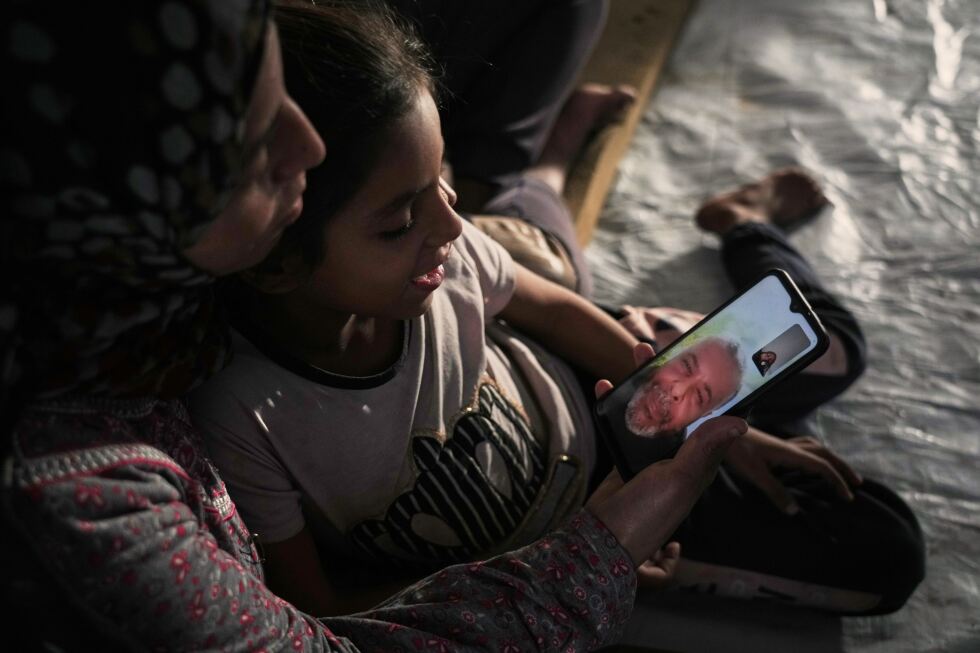
Belal was stranded, struggling to keep up with the turmoil that had enveloped his loved ones.
A few days into the war, he got a video call from his sons, who were rushing to move the merchandise out of the shop after they got a warning from the Israeli military that it was about to bomb the building, where both the shop and their family home was located.
The strike demolished the building, and Belal’s 15-year-old son Younis was wounded in the back, he said. At first, doctors said he might be paralyzed, but after months of treatment he was able to walk again.
That began a long trek for his wife and children, who were displaced 12 times over the course of the war. They first moved to a neighbor’s house, but that was bombed the next day. They sheltered for several weeks along with other displaced families in the nearby Indonesian Hospital, until Israeli forces besieged and raided the facility, forcing them to flee again in November 2023.
They eventually made it to a school-turned-shelter in the southern city of Khan Younis, but soon after Israeli forces invaded the area and they had to move again.
Sometimes, Belal spent days unable to reach his family because of communication blackouts.
One of his brothers, Mohammed, was killed along with his 2-year-old child when Israel bombed the school where they were sheltering in the Shati Refugee camp in northern Gaza in mid-2025.
At one point last year, Belal got a phone call from Gaza City’s Shifa Hospital telling him that his son Younis had been killed. They sent him a photo of the body of someone who looked like Younis. He couldn’t reach his family, and it was only after a day of torment that he was able to call them and learned it was a case of mistaken identity.
“Being far away, while your children and family were in such a situation is awful. You live in constant fear; you don’t eat because you’re thinking about your hungry children,” Belal said. “Sometimes you wake up at night, terrified. You rush to the phone and call them to make sure that they are OK.”
A family reunion that can’t come soon enough
Belal’s wife and five children now shelter in a tent in Gaza City, depending on charity kitchens for food. Belal has been sending them money when he can, but his wife, Asmahan, told the AP their savings have almost run out and they’ve had to borrow money from others to get by.
Asmahan said she has had to bear the burden of moving from place to place and keeping her children fed and safe.
“I’m mentally exhausted. The responsibility is immense,” she said. “We have been humiliated and degraded.”
“God willing, the crossing will open, my husband will return, and we will be reunited,” she said.
Belal’s brother, Jaber, left Gaza on Oct. 1, 2023, seeking a job in the West Bank. After the war began, Israel launched a crackdown in the occupied territory, carrying out destructive raids targeting armed groups and imposing tough restrictions on movement.
“Life became impossible in the West Bank,” Jabel said. So in February he joined his brother in Egypt, and he married an Egyptian woman in June. He, too, has registered to return to Gaza with his wife.
“This is our land. Our house is there, even though it’s destroyed. We will rebuild it and rebuild Gaza,” Jaber said.
Raed Belal knows it may still be a long time. After news of Rafah’s opening came, he said, his children “think it will happen tomorrow.” But it could be months, he said, before he presents the gifts he has bought for his children – shoes and clothes for his teenage sons, and makeup and perfume requested by his 8-year-old daughter.
With his bags packed, he is ready.
Fact Checker
Verify the accuracy of this article using The Disinformation Commission analysis and real-time sources.

10 Comments
This story highlights the immense human toll of the conflict in Gaza. I can only imagine the pain and uncertainty this father has endured, not knowing when he’d see his family again. The reopening of the Rafah crossing is a small but meaningful step towards reuniting loved ones.
It’s a bittersweet moment – hopeful that families can be reunited, yet saddened by the hardships they’ve had to face. I hope this father’s reunion with his children brings some comfort after so much upheaval.
The separation of this family due to the closure of Gaza’s borders is truly heartbreaking. After 2 long years, this father must be overjoyed at the prospect of finally returning home to his loved ones. I sincerely hope the Rafah crossing reopening goes smoothly and allows for many more reunions like this.
Family is everything, especially in times of crisis. This story is a poignant reminder of the human impact of political conflicts. I’m glad this father may soon be back with his children, even if the situation in Gaza remains dire.
After enduring 2 years of separation and upheaval, this father’s longing to return home to his family in Gaza must feel almost overwhelming. The reopening of the Rafah crossing is undoubtedly a bittersweet moment, tinged with both hope and the trauma of all they’ve suffered. I sincerely hope this reunion brings some measure of peace and healing.
The resilience and determination of this father to reunite with his loved ones is truly admirable. While the situation in Gaza remains deeply concerning, stories like this offer a reminder of the human spirit’s capacity to persevere through even the darkest of circumstances.
It’s heartbreaking to hear about this father’s struggle to reunite with his family in Gaza. After 2 years apart, the reopening of the Rafah crossing must feel like a glimmer of hope. I hope he’s able to return home safely and find his loved ones well, despite the destruction they’ve endured.
The separation of families is one of the most tragic consequences of conflict. I’m glad to hear the crossing is reopening and this father may soon be reunited with his children.
What a devastating situation for this Palestinian family. Being separated for 2 years, not knowing when they’d see each other again, must have been unimaginably difficult. The reopening of the Rafah crossing offers a glimmer of hope, but the trauma of this prolonged separation will linger. I hope this father’s reunion with his loved ones provides some comfort.
Conflict always takes the greatest toll on innocent civilians. This story underscores the urgent need for political solutions that prioritize the wellbeing of families and communities. I’m relieved the Rafah crossing is reopening, even if it’s just a small step towards healing the wounds of war.