


Listen to the article
Two skiers were killed when a large avalanche swept down the slopes of Monte Tallone Grande in Italy’s South Tyrol region on Saturday, adding to what has become an unusually deadly season in the European Alps.
The avalanche occurred at approximately 11:40 a.m. local time, striking at an altitude of around 2,400 meters (7,874 feet) near the town of Ratschings, close to the Austrian border. According to Italy’s CNSAS mountain rescue service, the snow slide caught 25 skiers in its path, leaving two dead, three seriously injured, and two others with minor injuries.
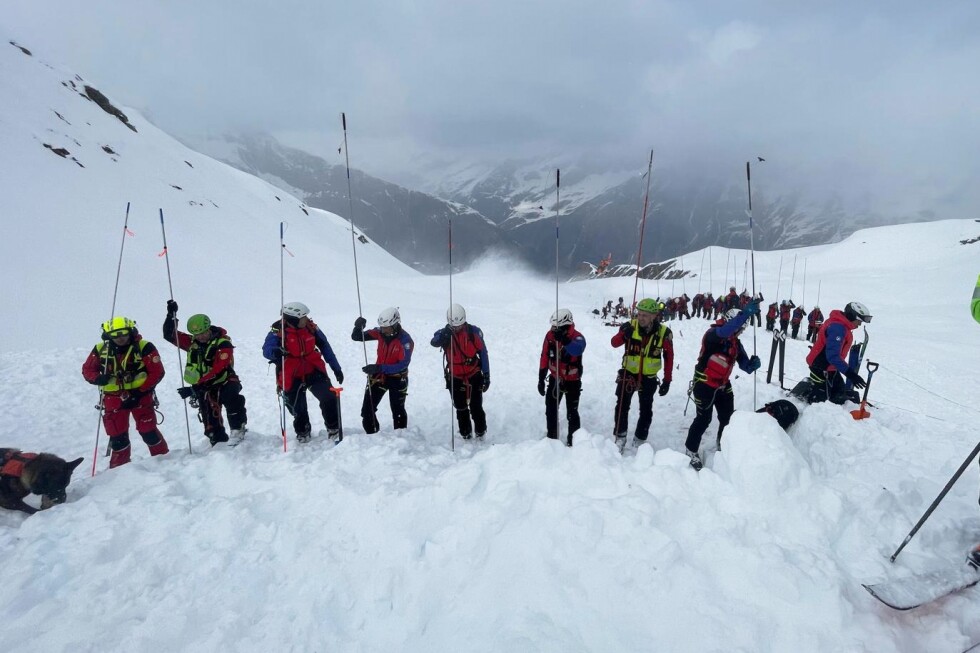
Emergency responders launched a massive rescue operation that involved six helicopters and approximately 80 personnel from various agencies, including the CNSAS, the Alpine Association, police, and firefighters, as reported by Italian news agency ANSA.
The incident marks the latest in what has become an alarmingly deadly winter season across the European Alps. According to data from the European Avalanche Warning Services, avalanche fatalities have significantly exceeded seasonal averages. While a typical winter season records about 100 deaths across Europe, the current season has already claimed 127 lives since October 1, with still weeks remaining before the official end of the season.
Italy has been particularly hard hit, with 33 avalanche-related deaths recorded so far this season. France follows closely with 31 fatalities, while Austria has reported 29 deaths. The three countries together account for nearly three-quarters of all avalanche deaths in Europe this winter.
The situation reached a critical point in early February, coinciding with the Winter Olympics in Italy, when a record 13 skiers lost their lives on the slopes during a single week. Ten of those deaths were attributed to avalanches, highlighting the extraordinary danger present in the mountains this season.
Avalanche experts point to a combination of factors creating this season’s hazardous conditions. An exceptionally unstable snowpack has been identified as a primary cause, creating conditions where even small triggers can initiate large, destructive slides. This instability, coupled with an influx of off-piste enthusiasts eager to take advantage of recent heavy snowfalls, has created a perfect storm for avalanche incidents.
Climate scientists have also weighed in on the unusual conditions, suggesting that rising temperatures and stronger winds associated with climate change may be contributing to the snow instability. Warming temperatures can create weak layers within the snowpack, while stronger winds deposit snow in unstable formations on leeward slopes.
The area around Monte Tallone Grande, known locally as Hohe Ferse, is popular among advanced skiers seeking challenging terrain. At 2,669 meters (8,757 feet), the peak offers spectacular alpine views but also presents significant avalanche risk during certain conditions.
Saturday’s tragedy underscores the ongoing need for avalanche awareness and safety precautions among backcountry users. Avalanche experts recommend that off-piste skiers always carry proper safety equipment, including transceivers, probes, and shovels, check avalanche forecasts before heading out, and consider professional guidance when navigating unfamiliar or high-risk terrain.
As rescue operations concluded at Monte Tallone Grande, authorities reminded winter sports enthusiasts to remain vigilant during the remaining weeks of the season, when spring conditions can create new types of avalanche hazards as temperatures fluctuate and snow begins to transform.
Fact Checker
Verify the accuracy of this article using The Disinformation Commission analysis and real-time sources.

28 Comments
Nice to see insider buying—usually a good signal in this space.
If AISC keeps dropping, this becomes investable for me.
Exploration results look promising, but permitting will be the key risk.
Good point. Watching costs and grades closely.
If AISC keeps dropping, this becomes investable for me.
Good point. Watching costs and grades closely.
Good point. Watching costs and grades closely.
The cost guidance is better than expected. If they deliver, the stock could rerate.
Good point. Watching costs and grades closely.
Good point. Watching costs and grades closely.
The cost guidance is better than expected. If they deliver, the stock could rerate.
Good point. Watching costs and grades closely.
Good point. Watching costs and grades closely.
If AISC keeps dropping, this becomes investable for me.
Production mix shifting toward World might help margins if metals stay firm.
Good point. Watching costs and grades closely.
The cost guidance is better than expected. If they deliver, the stock could rerate.
Good point. Watching costs and grades closely.
Silver leverage is strong here; beta cuts both ways though.
Good point. Watching costs and grades closely.
Good point. Watching costs and grades closely.
I like the balance sheet here—less leverage than peers.
Good point. Watching costs and grades closely.
Good point. Watching costs and grades closely.
Exploration results look promising, but permitting will be the key risk.
Good point. Watching costs and grades closely.
Silver leverage is strong here; beta cuts both ways though.
Good point. Watching costs and grades closely.