


Listen to the article
A curling controversy at the Winter Olympics in Cortina d’Ampezzo, Italy, has thrust the typically genteel 500-year-old sport into an unexpected global spotlight, raising questions about its traditions and future direction.
The dispute erupted when Sweden accused Canadian curler Marc Kennedy of committing a rule violation by touching his stone after releasing it down the ice—a hog line violation. What followed was a flurry of allegations, expletives, and eventually, global media attention that transformed a niche winter sport into headline news and social media fodder.
“It’s the Olympics,” remarked Canadian curler Ben Hebert, whose team found itself at the center of the controversy. “It’ll be over in two weeks and everyone will go back to covering curling in four years.”
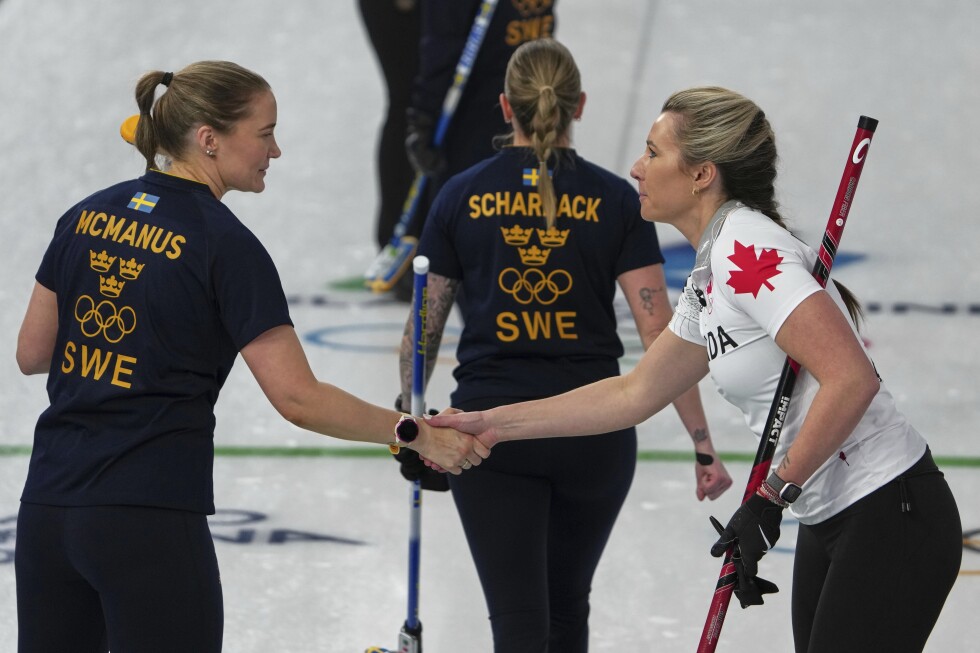
The incident has laid bare the growing pains of a sport that treasures its unique “spirit of curling”—a long-standing ethos where players typically self-regulate, call their own fouls, and maintain friendly relations even with fierce competitors. Traditionally, matches end with handshakes and often a shared drink, regardless of the outcome.
For many in the curling community, this controversy represents a crossroads. The sport has been gradually becoming more professional, with higher stakes and greater visibility, particularly during the Olympics. However, its governance and officiating systems have remained largely rooted in its traditional values of honor and integrity.
“That’s where I think the spirit of curling is in a little bit of trouble,” Kennedy acknowledged, “and honestly that’s probably come from the quest for medals. But it’s OK. It’s all about the evolution of the sport. There’s opportunity here as well, right? For the sport to really figure it out as we all go forward.”
In response to the incident, curling officials first stationed umpires at the hog line to monitor for violations—an unusual step for the sport—but then reverted to the traditional approach of player self-regulation. This rapid policy reversal highlighted the sport’s uncertainty about how to handle such high-profile disputes.
World Curling President Beau Welling defended the sport’s traditional values in an interview with The Associated Press. “We’re trying to spread the word about our culture, and our culture is one based on integrity, and honor, and friendship,” Welling said. “We live by this code—the spirit of curling—where you’re expected to have honorable conduct on ice, but also off ice.”
He added, “Obviously, this has been tested a little bit this week. But, fundamentally, that’s who we are, and I really don’t see that changing.”
Critics might view this stance as an unwillingness to modernize, particularly given the global stage and high stakes of Olympic competition. Unlike many other sports, curling lacks video replay capabilities for officials to review controversial calls—a technology that might have quickly resolved the dispute.
Canada Curling CEO Nolan Thiessen acknowledged the need for evolution while speaking at the Cortina Curling Center. “Curling needs to professionalize a little bit,” he told the AP. “If we want to be where we want to be as a sport, there’s some steps we have to take, and some give and take probably. You know, having officials making subjective calls… there’s a lot of sports that have that. And we probably need to get there as opposed to, ‘I think you did this’ and ‘Well, I don’t think I did.'”
The controversy has had competitive consequences. Sweden’s men’s team, the defending Olympic champions, was eliminated from semifinal contention on Tuesday after suffering their sixth loss in seven matches during round-robin play.
Swedish skip Niklas Edin reflected on what he described as a “horrible week,” admitting, “We maybe should have done something different and could have dealt with it differently.”
As the Olympic curling competition moves toward its medal rounds, the sport finds itself at an inflection point. The incident has generated unprecedented attention but also raised fundamental questions about how curling should balance its cherished traditions with the pressures and scrutiny that come with being an Olympic sport in the modern era.
For a sport that values decorum and sportsmanship above all, navigating this new terrain of public controversies and media spotlight may prove to be its most challenging match yet.
Fact Checker
Verify the accuracy of this article using The Disinformation Commission analysis and real-time sources.

8 Comments
Curling controversies are always intriguing, but I’m glad the sport is moving past this particular incident. The ‘spirit of curling’ is an important part of the game’s tradition, and it’s good to see the community addressing these growing pains.
Agreed. Maintaining that friendly, self-regulating ethos is crucial as curling evolves. I’m curious to see how the sport adapts while preserving its unique character.
Interesting to see how a niche sport like curling can suddenly become headline news. This controversy highlights the challenges of balancing tradition and competitiveness at the Olympic level. I wonder what long-term impacts it could have on the sport’s culture and rules.
Good point. Curling prides itself on sportsmanship, but the stakes are high at the Olympics. It will be interesting to see if this leads to any changes in how rules and violations are handled going forward.
This curling controversy is a fascinating case study in the tension between tradition and competitiveness at the highest levels of sport. I’m curious to see how the curling community navigates these growing pains and works to preserve the ‘spirit of curling’ going forward.
The ‘spirit of curling’ is an admirable tradition, but it’s understandable that tensions can rise in the pressure-cooker environment of the Olympics. This incident may spur some healthy discussions about modernizing certain aspects of the sport while preserving its core values.
Curling may be a niche sport, but this controversy shows how even the most genteel competitions can get caught up in the drama of the Olympics. It’s a good reminder that the ‘spirit of curling’ is an ideal that requires constant tending, especially as the sport grows in popularity.
Well said. Maintaining that spirit of sportsmanship will be key as curling continues to evolve and attract new fans and players. It’ll be interesting to see how the community responds to this incident in the long run.