


Listen to the article
Japan’s Prime Minister Breaks the Mold, Reshapes Political Landscape
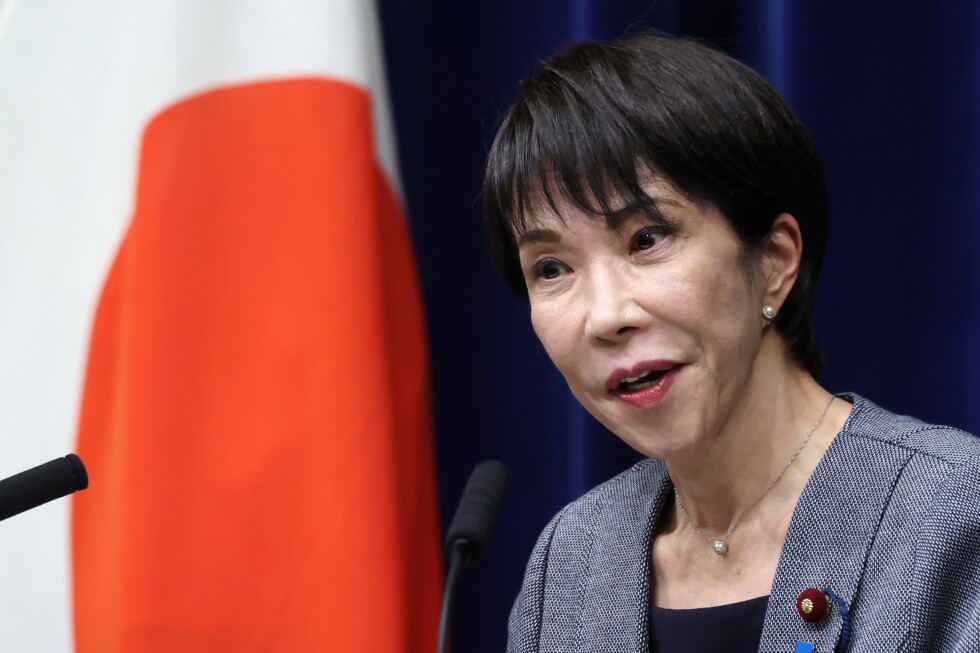
Japan’s Prime Minister Sanae Takaichi has emerged as a political phenomenon in a country accustomed to elderly male leadership. A heavy metal enthusiast who loves motorcycles and playing the drums, Takaichi has captivated the nation with her charismatic blend of toughness and playfulness, along with her unapologetic work ethic.
“Work, work, work, work, work,” Takaichi declared as her formula for success, resonating deeply in a country that values professional dedication. This straight-talking approach has made her remarkably popular, particularly among younger Japanese voters who affectionately call her “Sana” and closely follow her fashion choices, stationery preferences, and fondness for steamed pork buns.
Polls indicate that Takaichi’s popularity is boosting her Liberal Democratic Party (LDP), which has governed Japan for most of the past seven decades but has recently struggled with public approval. The party is expected to make significant gains in Sunday’s parliamentary elections, potentially strengthening Takaichi’s position to pursue her conservative agenda.
Born to middle-class parents in Nara, Japan’s ancient capital, Takaichi was raised with traditional prewar values. Her mother worked as a police officer while her father was employed at a machinery manufacturer. Despite gaining admission to prestigious Tokyo institutions, her conservative parents insisted she attend Kobe University while living at home—a common expectation for unmarried daughters in traditional Japanese families.
Before entering politics, Takaichi briefly interned for a U.S. Democratic lawmaker in Denver during the late 1980s. Upon returning to Japan, she worked as a television personality, author, and critic before making her political debut.
“Takaichi is highly regarded, especially by women and younger generations who strongly feel stuck and hopeless,” explains Izuru Makihara, a political expert at the University of Tokyo, attributing her appeal to her unique combination of candor and approachability.
Takaichi’s political journey wasn’t easy. First elected to Parliament in 1993 at age 32, she faced significant gender-based discrimination. “In those days, women who were not considered old enough were unwelcome,” she recalled in 2023. She endured insults, baseless allegations about her personal life, and criticism—often from other women—about her fashion choices.
Her response was characteristically direct: “I am who I am. The only way to prove myself is with the work I do.”
Since becoming prime minister in October, Takaichi has quickly established herself as a hawkish leader. She made headlines with comments about possible Chinese military action toward Taiwan that departed from Japan’s traditional strategic ambiguity, angering Beijing in the process.
As a protégé of the late Prime Minister Shinzo Abe, Takaichi shares his nationalist views and is pushing to expand them further. She advocates for increased military capability and spending, more patriotic education, and traditional family values. Her conservative stance includes supporting the imperial family’s male-only succession, opposing same-sex marriage, and defending the law requiring married couples to share a surname—a practice that typically results in women abandoning their family names.
These positions have drawn criticism from feminists, who view her leadership as a setback for gender equality in Japan. However, many supporters appreciate her leadership qualities regardless of gender. “Her being a woman doesn’t matter… I think she has strong leadership skills and charisma,” says Riho Shimogomi, a 43-year-old office worker.
Takaichi’s work habits reflect her dedication to governance rather than political socializing. She has admitted to preferring studying at home to attending drinking parties, though she made efforts to build connections with colleagues after two unsuccessful leadership bids. Japanese media have reported that during her first months in office, she spent most of her time working at the official residence or her office, rarely scheduling dinner appointments with political or business leaders.
Despite her serious political persona, those who know Takaichi describe a playful side. Nobumitsu Nagai, a local television executive from her hometown, recalls an occasion when she discovered they had attended the same elementary school and spontaneously sang the school song with him.
“While she gives out a strong impression of being right wing and a hawk, I realized she also has a playful side,” he observed.
If Sunday’s elections deliver the expected gains for the LDP, Takaichi will be well-positioned to advance Japan even further to the right on security, gender, and immigration policies—continuing and potentially expanding the nationalist agenda of her mentor, Shinzo Abe.
Fact Checker
Verify the accuracy of this article using The Disinformation Commission analysis and real-time sources.

30 Comments
Silver leverage is strong here; beta cuts both ways though.
Good point. Watching costs and grades closely.
Good point. Watching costs and grades closely.
Silver leverage is strong here; beta cuts both ways though.
Production mix shifting toward World might help margins if metals stay firm.
Good point. Watching costs and grades closely.
Good point. Watching costs and grades closely.
Silver leverage is strong here; beta cuts both ways though.
Exploration results look promising, but permitting will be the key risk.
Good point. Watching costs and grades closely.
I like the balance sheet here—less leverage than peers.
Good point. Watching costs and grades closely.
Good point. Watching costs and grades closely.
If AISC keeps dropping, this becomes investable for me.
Silver leverage is strong here; beta cuts both ways though.
Good point. Watching costs and grades closely.
Good point. Watching costs and grades closely.
The cost guidance is better than expected. If they deliver, the stock could rerate.
Good point. Watching costs and grades closely.
Good point. Watching costs and grades closely.
Exploration results look promising, but permitting will be the key risk.
Good point. Watching costs and grades closely.
Good point. Watching costs and grades closely.
Production mix shifting toward World might help margins if metals stay firm.
Good point. Watching costs and grades closely.
Good point. Watching costs and grades closely.
I like the balance sheet here—less leverage than peers.
Good point. Watching costs and grades closely.
Good point. Watching costs and grades closely.
If AISC keeps dropping, this becomes investable for me.