


Listen to the article
A 6.9 magnitude earthquake struck northeastern Japan on Friday, triggering small tsunami waves along the coastline but causing no significant damage or injuries, according to officials.
The tremor occurred off the east coast of Aomori prefecture in northern Honshu at 11:44 a.m. local time. The Japan Meteorological Agency reported the quake originated at a depth of 20 kilometers (12.4 miles) beneath the seabed, prompting a tsunami advisory that remained in effect for approximately two hours before being lifted.
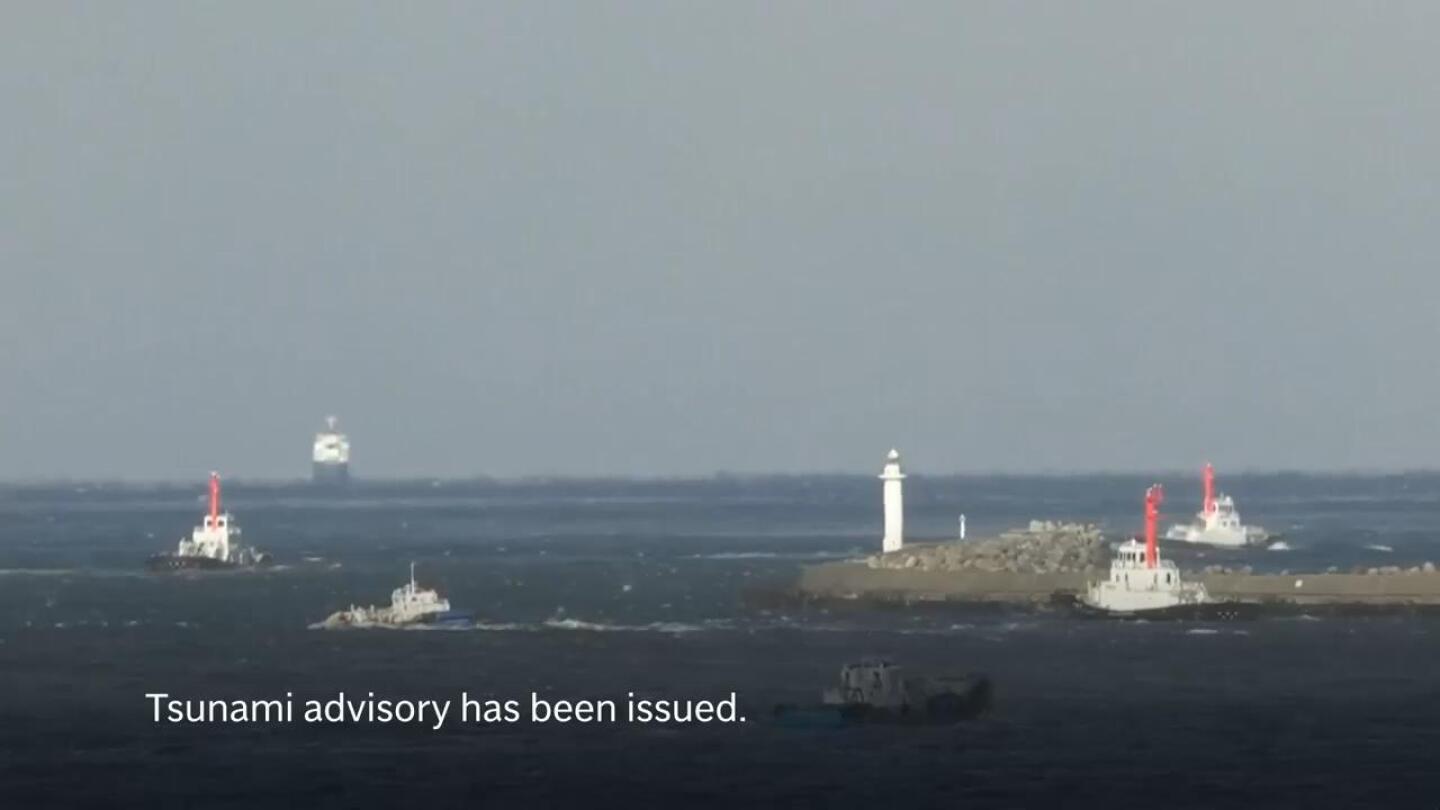
Minor tsunami waves were observed hitting the coastlines of both Hokkaido, Japan’s northernmost main island, and Aomori prefecture. Despite the concerning seismic activity, authorities have not reported any serious structural damage or casualties.
This earthquake comes just days after a more powerful 7.5 magnitude quake rattled the same region on Monday. That earlier tremor resulted in at least 34 people being injured and caused temporary power outages across affected areas. The Monday quake also generated tsunami waves exceeding 2 feet (0.6 meters) above normal tide levels at Kuji port in neighboring Iwate prefecture.
Seismologists had warned residents to remain vigilant for aftershocks following Monday’s event, with Friday’s earthquake appearing to confirm these predictions. The Japan Meteorological Agency has been monitoring the situation closely, noting that the recent seismic activity has slightly elevated the risk of a potential megaquake in the region.
Officials have specifically highlighted concerns about the possibility of a magnitude 8 or stronger earthquake occurring along Japan’s northeastern coastline, spanning from Chiba prefecture just east of Tokyo all the way north to Hokkaido. Any such event could potentially trigger significant tsunami waves. While emphasizing this is not a specific prediction, authorities are encouraging residents throughout the region to review their emergency preparedness plans.
The recent earthquakes have struck in the same general region that experienced the catastrophic magnitude 9.0 earthquake and subsequent tsunami in March 2011. That disaster resulted in nearly 20,000 deaths and led to the devastating Fukushima Daiichi nuclear power plant meltdown, which continues to impact the region today.
Japan, situated along the seismically active “Ring of Fire” that encircles much of the Pacific Ocean, experiences approximately 1,500 earthquakes annually. The country has developed one of the world’s most advanced earthquake early warning systems and building codes in response to this persistent threat.
The back-to-back earthquakes have renewed attention on disaster preparedness throughout northeastern Japan. Local governments have been conducting safety checks on critical infrastructure, including bridges, tunnels and seawalls constructed after the 2011 disaster.
Fishing communities along the coastline, still recovering from previous tsunami damage, briefly suspended operations during the tsunami advisory period. While economic impacts appear minimal from these latest events, the psychological toll on residents who lived through the 2011 catastrophe remains significant.
Emergency management officials continue to emphasize the importance of having evacuation plans, emergency supplies, and communication strategies in place. As Japan moves into winter, authorities are particularly concerned about the potential challenges of managing evacuations during cold weather conditions should a larger seismic event occur.
While Japan has invested heavily in earthquake-resistant infrastructure since 2011, these recent tremors serve as a sobering reminder of the nation’s vulnerability to seismic threats and the ongoing need for vigilance.
Fact Checker
Verify the accuracy of this article using The Disinformation Commission analysis and real-time sources.

13 Comments
Interesting to see how quickly Japan’s early warning systems detected the quake and issued the tsunami advisory. That kind of responsiveness is critical for protecting coastal infrastructure and operations.
Yes, their seismic monitoring and alert capabilities are quite advanced. It’s a model for other earthquake-prone regions around the world.
I wonder if there will be any disruptions to ongoing mining, refining, or energy production activities in the affected areas as a result of this event, even if the direct damage was limited.
The frequency of powerful quakes in this part of Japan is concerning. While the tsunami waves were small this time, these events highlight the ongoing seismic risks that energy and mining companies face when operating in the region.
Absolutely. Robust disaster preparedness and resilient infrastructure are critical for companies in the mining and energy sectors in earthquake-prone areas like this.
Japan’s resilience in the face of natural disasters is remarkable. But these constant seismic threats must be a major operational challenge for the country’s mining, metals, and energy sectors.
Absolutely. Maintaining business continuity and mitigating risks in that environment requires exceptional planning and preparedness.
Glad to hear there was no major damage from the tsunami this time. Japan’s preparedness for natural disasters is impressive. I wonder what the long-term impacts on mining and energy infrastructure might be, if any, in the affected regions.
That’s a good point. Tsunamis can sometimes disrupt supply chains and logistics for mining and energy projects. Monitoring the situation closely will be important.
Even small tsunami waves can cause damage to coastal facilities and disrupt port operations. I hope the mining and energy companies in the affected areas were able to take appropriate precautions quickly.
Yes, timely response and mitigation measures are key. Temporary shutdowns or diversions of shipments may have been necessary until the all-clear was given.
While the direct impacts seem minimal this time, these earthquake and tsunami events are a good reminder of the importance of geologic and climate risk assessment for mining and energy projects. Careful planning is essential.
It’s good to hear the impacts were relatively minor this time. However, the frequency of these quakes is a serious concern. Careful monitoring and risk management will be essential for the resource industries in the region.