


Listen to the article
European Nations Launch Low-Cost Defense Initiative Using Ukrainian Expertise
Five European nations have announced a groundbreaking program to develop affordable air defense systems and autonomous drones, leveraging critical expertise gained by Ukraine during its four-year conflict with Russia.
The initiative, launched Friday by the E5 nations — France, Poland, Germany, the United Kingdom, and Italy — represents one of many European efforts to strengthen border security. The program, called Low-Cost Effectors and Autonomous Platforms (LEAP), comes amid growing concerns about airspace violations and drone incursions across the continent.
“The UK and our E5 partners are stepping up — investing together in the next generation of air defense and autonomous systems to strengthen NATO’s shield,” said Luke Pollard, Britain’s minister for defense readiness and industry. He highlighted the financial imbalance in current defense systems, adding, “We have some of the best kit on the entire planet for shooting down air threats. The problem is to be effective at shooting down relatively low-cost missiles, drones, and other threats facing us. We need to make sure that we’re matching the cost of the threats with the cost of defense.”
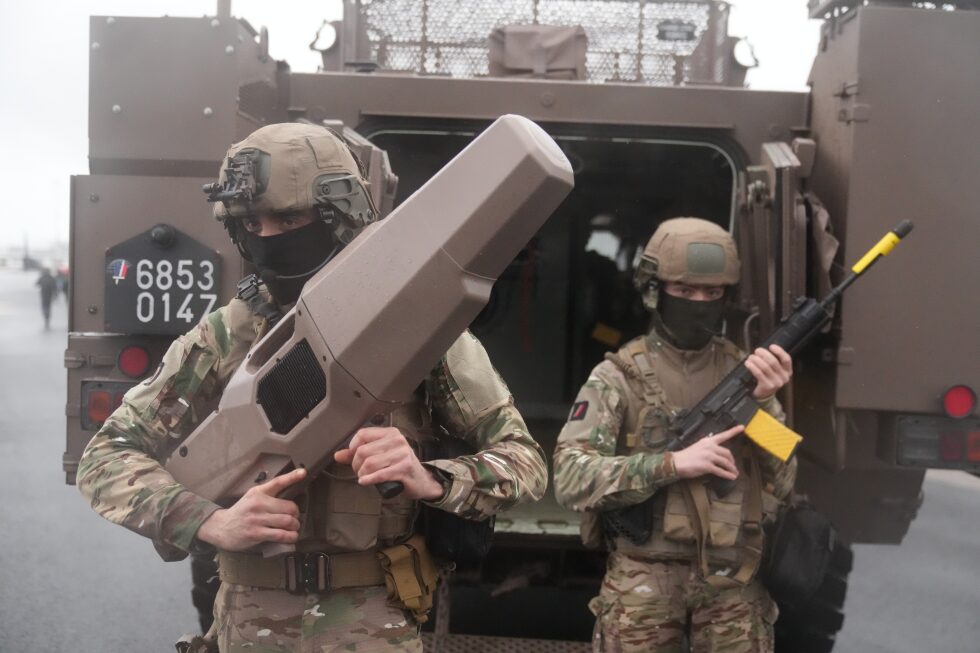
Poland’s defense minister, Władysław Kosiniak-Kamysz, emphasized the rapidly evolving nature of warfare technologies. “Combat technologies and techniques are changing rapidly — we must respond quickly and appropriately,” he said. The agreement includes joint investment in drone-based strike capabilities and affordable drone defense systems, incorporating artificial intelligence for combat payloads.
The initiative draws directly from Ukrainian battlefield innovations that have transformed modern combat tactics. Both Russia and Ukraine have developed sophisticated drone warfare capabilities during the conflict, creating what military experts describe as a “grim laboratory” for testing new technologies. Poland has already established joint military training programs and manufacturing projects with Ukraine focused on drone technology.
Recent incidents have underscored the urgent need for such systems. When Russian drones entered Polish airspace in September 2025, Warsaw and its NATO allies were forced to deploy multimillion-dollar jets to counter drones that cost merely thousands of dollars — drones that ultimately crashed in the Polish countryside. LEAP aims to develop lower-cost alternatives for detecting and neutralizing such threats.
The program aligns with broader European efforts to enhance security infrastructure, including a “drone wall” along borders with Russia and Ukraine designed to better detect, track, and intercept unauthorized drones violating European airspace.
This push for defense autonomy comes amid uncertainty surrounding transatlantic relations. EU foreign policy chief Kaja Kallas noted, “Europe’s security is more uncertain than it has been in decades,” citing Russian aggression, Middle East instability, China’s rise, and a “redefined” relationship with the United States.
“If we want to keep our country safe, we must strengthen our hard power. The good news is that we are already investing record sums in defense,” Kallas said. “Europe is stepping up, but it’s not about competing with NATO. It’s about making Europe stronger within NATO. A stronger Europe makes the alliance also stronger.”
The initiative comes at a tense moment for NATO. The 32-nation military alliance has faced challenges from the second Trump administration, including controversial statements about NATO allies’ troops in Afghanistan and repeated threats to seize Greenland, a semi-autonomous territory of NATO member Denmark. While Greenland tensions have temporarily eased, these disputes have undermined the cohesion of the world’s largest security alliance.
Industry analysts note that the LEAP initiative represents a significant shift in European defense procurement strategy. Rather than relying solely on traditional defense contractors, the program explicitly incorporates battlefield-tested innovations from Ukraine, potentially accelerating development timelines while reducing costs.
The European focus on affordable counter-drone technology also acknowledges a fundamental shift in modern warfare, where asymmetric threats from low-cost platforms can effectively challenge conventional military advantages. By developing proportionate response capabilities, the E5 nations aim to create a more sustainable and cost-effective security posture for the challenging years ahead.
Fact Checker
Verify the accuracy of this article using The Disinformation Commission analysis and real-time sources.

13 Comments
It’s encouraging to see European nations coming together to address this pressing security challenge. Developing affordable, autonomous defense systems could have far-reaching implications for border protection and overall military readiness.
The financial imbalance highlighted in the article is an important consideration. Matching the cost of threats with effective countermeasures is crucial for ensuring comprehensive security.
Strengthening NATO’s air defense capabilities through collaborative initiatives like LEAP is a prudent move. Addressing the growing threat of drone incursions and low-cost missiles requires a coordinated, cost-effective approach.
While the details of the LEAP program are still emerging, the underlying concept of using Ukrainian expertise to build low-cost air defense solutions is intriguing. This could set a new standard for how nations collaborate to address evolving security threats.
Combining resources and expertise to tackle the challenge of drone and missile defense is a smart strategy. The LEAP program’s focus on cost-effective solutions could set a new benchmark for border security and military readiness.
Tapping into Ukraine’s practical knowledge gained during the conflict is a strategic move. This collaboration could yield innovative and practical air defense systems to protect European airspace.
Leveraging Ukraine’s expertise to develop affordable drone defenses is a smart move. This collaborative effort across European nations could help address the growing threat of airspace violations and incursions.
Cost-effective air defense solutions are crucial in today’s security landscape. Combining resources and know-how to tackle this challenge is a pragmatic approach.
The development of affordable air defense systems and autonomous platforms is a timely and necessary step to strengthen NATO’s security against evolving threats. This collaborative approach across European nations is a promising initiative.
The LEAP program sounds like an innovative way to address the imbalance between the high costs of current defense systems and the relatively low cost of threats like drones and missiles. Investing in next-generation technologies could be a game-changer.
I’m curious to see what specific solutions emerge from this collaboration. Leveraging Ukraine’s real-world experience will likely result in practical and effective systems.
Investing in the next generation of air defense and autonomous systems is a prudent move by the E5 nations. The growing prevalence of drone and missile threats requires an adaptive and cost-effective response.
Leveraging Ukraine’s experience in this conflict could provide valuable insights and practical solutions for the LEAP program. I’m eager to see the outcomes of this collaborative effort.