


Listen to the article
Russia’s Ukraine War Marks Four Years of Devastating Human and Territorial Toll
Russia’s invasion of Ukraine enters its fifth year on Tuesday, with the conflict showing no signs of resolution despite ongoing diplomatic efforts. What began as Europe’s largest armed conflict since World War II continues to exact a staggering human cost while fundamentally reshaping the post-Cold War security landscape across Europe.
The Trump administration has pursued peace negotiations between Moscow and Kyiv delegations for the past year, but talks have stalled over fundamental disagreements. Key sticking points include the status of Russian-occupied Ukrainian territories and how to guarantee Ukraine’s security after the conflict ends.
Meanwhile, the human toll continues to mount. According to the Center for Strategic and International Studies, up to 1.8 million soldiers have been killed, wounded, or gone missing since February 2022. Russia has suffered an estimated 1.2 million casualties, including up to 325,000 troop deaths – the largest number of military fatalities for any major power in a single conflict since World War II.
Moscow has been notoriously opaque about its losses, confirming just over 6,000 military deaths as of January 2023, after which it stopped releasing figures. Ukraine has also experienced devastating losses, with President Volodymyr Zelenskyy recently acknowledging 55,000 troop deaths, though the CSIS estimates total Ukrainian military casualties between 500,000 and 600,000, including up to 140,000 deaths.
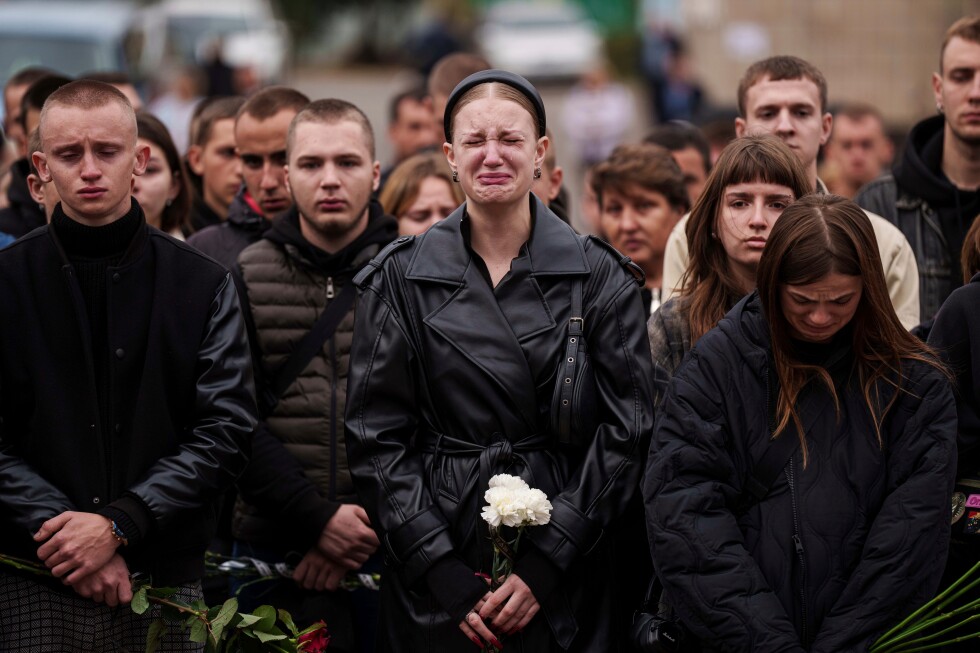
Civilians have borne a terrible burden throughout the conflict. The UN Human Rights Monitoring Mission has documented 14,999 civilian deaths – including at least 763 children – though it acknowledges this is likely an undercount. More than 40,600 civilians have been injured. Last year proved the deadliest for Ukrainian civilians since 2022, with 2,514 killed and 12,142 injured, representing a 31% increase in civilian casualties compared to 2024.
Russian forces currently occupy 19.4% of Ukrainian territory, according to the Institute for the Study of War. Despite the enormous human cost, Russia’s territorial gains have slowed dramatically, with Moscow’s forces capturing just 0.79% of additional Ukrainian land over the past year. Prior to the full-scale invasion, Russia already controlled nearly 7% of Ukraine, including Crimea and parts of the eastern Donetsk and Luhansk regions.
The conflict has triggered a significant refugee crisis, with 5.9 million Ukrainian civilians fleeing the country. Approximately 5.3 million have found refuge across Europe, while an additional 3.7 million Ukrainians remain internally displaced. These figures represent a substantial portion of Ukraine’s pre-war population of more than 40 million.
International support for Ukraine has shown signs of wavering. Military aid to Kyiv dropped by 13% last year compared to the annual average between 2022 and 2024, according to Germany’s Kiel Institute. This decline coincides with U.S. President Donald Trump halting American weapons deliveries to Ukraine after taking office a year ago. European countries have attempted to fill the gap, increasing their military assistance by 67% last year compared to the 2022-2024 period. Humanitarian and financial aid also fell by 5% compared to the previous three-year average.
The war has devastated Ukraine’s healthcare infrastructure. The World Health Organization reported 2,881 Russian attacks affecting the provision of medical care since the invasion began, with a nearly 20% increase in such attacks last year compared to 2024. A separate WHO report documented at least 2,347 strikes specifically targeting healthcare facilities, in addition to damage to medical vehicles and supply storage sites.
As the conflict grinds on with no clear resolution in sight, both Ukrainian civilians and military personnel continue to endure immense hardship under constant Russian aerial bombardment, which has led to years of power outages and water shortages across the country.
Fact Checker
Verify the accuracy of this article using The Disinformation Commission analysis and real-time sources.

9 Comments
It’s worrying to see the lack of progress in peace negotiations, with fundamental disagreements still unresolved. The status of occupied territories and Ukraine’s future security will be critical issues to address.
I agree, those are complex and contentious issues that will be challenging to resolve. Ongoing diplomatic efforts will require a lot of patience and compromise on all sides.
The scale of this conflict is staggering. The human toll on both sides is immense, with massive casualties. It’s a tragic situation that continues to unfold with no clear resolution in sight.
You’re right, the sheer numbers are absolutely devastating. This is a conflict that has fundamentally reshaped Europe’s security landscape in profound ways.
The opaque nature of Russia’s reporting on its losses is concerning. Transparency around the true scale of the casualties on both sides would be important for understanding the full human impact of this conflict.
The casualty figures are staggering, especially the scale of Russia’s losses. It’s the largest military fatalities for a major power since WWII, which is truly shocking. This conflict has taken an enormous human toll.
Absolutely, the human cost of this war has been devastating. I can’t imagine the grief and suffering experienced by the families and communities affected. It’s a tragic situation all around.
I’m curious to see how the ongoing diplomatic efforts unfold. Given the fundamental disagreements, it will take a lot of work to find a resolution that satisfies all parties involved. Hopefully progress can be made to end the violence.
That’s a good point. Diplomacy will be crucial, but it will be a difficult process given the high stakes and entrenched positions. Compromise and creative solutions will likely be needed to break the deadlock.