


Listen to the article
U.S. lawmakers who recently concluded a five-day official visit to Cuba have called for a permanent solution to the island’s ongoing crises, highlighting the severe impact of U.S. energy sanctions on the Cuban population.
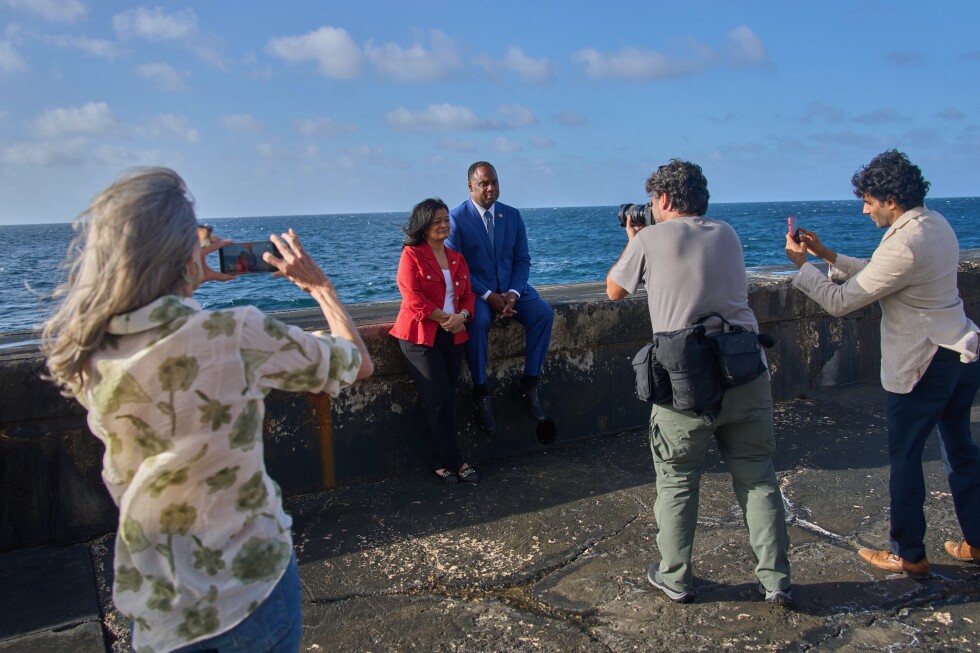
Democratic Representatives Pramila Jayapal of Washington and Jonathan Jackson of Illinois met with Cuban President Miguel Díaz-Canel, Foreign Minister Bruno Rodríguez, and members of the Cuban Parliament during their trip, which ended Sunday.
Following the meetings, Díaz-Canel took to social media platform X on Monday, stating that he had “denounced the criminal damage caused by the blockade, particularly the consequences of the energy embargo imposed by the current U.S. administration and its threats of even more aggressive actions.” The Cuban president also emphasized his government’s willingness to “engage in serious and responsible bilateral dialogue and find solutions to our existing differences.”
Both nations have acknowledged ongoing high-level talks, though specific details remain undisclosed.
Rep. Jayapal told reporters that recent Cuban initiatives signal an opportunity for improved relations. She cited the opening of the Cuban economy to certain investments by Cuban Americans living abroad, the announced pardoning of more than 2,000 prisoners, and Cuba’s cooperation with an FBI team investigating a fatal shooting involving a U.S.-flagged boat.
“These indicate that the moment is here for us to have a real negotiation between the two countries and to reverse the failed U.S. policy of decades, a Cold War remnant that no longer serves the American people or the Cuban people,” Jayapal stated.
While Cuba has begun releasing the pardoned prisoners, who were accused of various crimes, observers note that none of those released thus far appear to be political prisoners—a point of ongoing concern for human rights advocates.
The energy situation in Cuba has reached critical levels. In January, U.S. President Donald Trump threatened to impose tariffs on any country selling or providing oil to Cuba, although an exception was made for a Russian vessel that delivered 730,000 barrels of crude oil last week—the first petroleum shipment to reach the island in three months. Cuba currently produces only 40% of its petroleum needs domestically.
“This is cruel collective punishment—effectively an economic bombing of the infrastructure of the country—that has produced permanent damage. It must stop immediately,” Representatives Jayapal and Jackson declared in a joint statement released Sunday.
The energy crisis intensified after oil shipments from Venezuela were halted following U.S. actions against the South American nation in early January, which included the arrest of then-leader Nicolás Maduro.
For ordinary Cubans already struggling through five years of economic hardship, the fuel shortage has had devastating consequences: nationwide blackouts, severe gasoline rationing, crippled public transportation, reduced working hours, paralyzed healthcare facilities, and suspended flights, among other difficulties.
While Russia has promised a second petroleum delivery, the timing remains uncertain. Energy analysts estimate that the first Russian shipment could produce approximately 180,000 barrels of diesel—enough to meet Cuba’s daily demand for only nine to ten days.
“We need a longer, permanent solution for the Cuban people and the American people,” Jayapal emphasized, acknowledging that such shipments, while crucial, offer only temporary relief.
Representative Jackson drew a pointed comparison between international energy policies, noting that while the U.S. government fights to keep the Strait of Hormuz open for the free flow of oil worldwide, it simultaneously restricts energy access to Cuba, which he described as “the most sanctioned part of Earth.”
“We want, for humanitarian reasons, a free flow of oil, fuel, and energy in our own hemisphere,” Jackson stated.
Both lawmakers have committed to preparing a comprehensive report and continuing work on initiatives proposed by fellow members of the U.S. House of Representatives aimed at lifting sanctions against Cuba to address the ongoing humanitarian crisis.
The congressional visit comes at a time of heightened tension but also potential opportunity for a reset in U.S.-Cuba relations, which have fluctuated dramatically over different U.S. administrations in recent decades.
Fact Checker
Verify the accuracy of this article using The Disinformation Commission analysis and real-time sources.

8 Comments
Interesting to see U.S. lawmakers acknowledging the severe impact of energy sanctions on the Cuban people. It’s a complex geopolitical issue, but any progress towards dialogue and finding solutions would be welcome.
Absolutely, open and honest dialogue is key to resolving longstanding differences between the two countries. I hope this visit lays the groundwork for productive negotiations.
While the U.S. sanctions on Cuba are a complex issue, it’s heartening to see lawmakers from both sides engaging in dialogue. Finding solutions that balance national interests with humanitarian concerns should be the ultimate goal.
The Cuban economy has had to navigate significant challenges due to the U.S. sanctions. While there are valid concerns on both sides, I’m encouraged to hear about opportunities for improved relations.
Agreed. Easing tensions and finding mutually beneficial solutions should be the priority, rather than escalating an economic blockade that ultimately hurts the Cuban people.
Curious to learn more about the specific initiatives Cuba is taking to open up its economy. Improving trade and investment opportunities could be a win-win if done responsibly.
Agreed, any steps towards economic cooperation and mutual understanding between the U.S. and Cuba should be carefully explored. This visit seems like a positive step in that direction.
It’s good to see U.S. lawmakers visiting Cuba and acknowledging the damaging impact of the energy embargo. Hopefully this leads to more open dialogue and a path forward that addresses the concerns of both nations.