


Listen to the article
Panama’s Strategic Ports at Center of US-China Tensions
Panama has become the latest battleground in the geopolitical rivalry between the United States and China, as two key ports at opposite ends of the Panama Canal ignite diplomatic tensions between the superpowers.
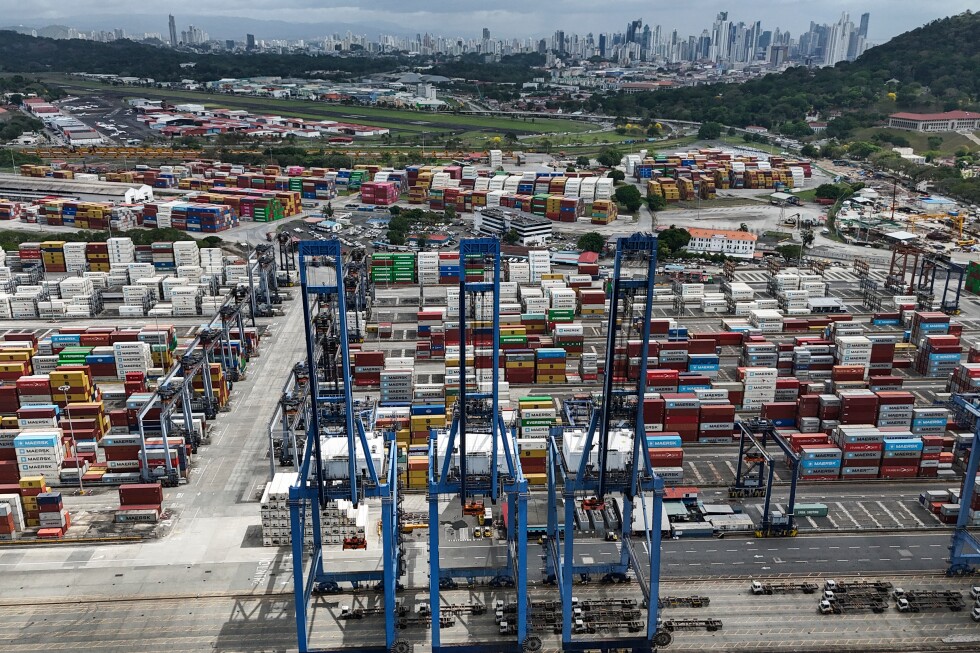
The controversy centers around Panama Ports Company, a local subsidiary of Hong Kong-based CK Hutchison, which has operated the Balboa Port on the Pacific side and Cristobal Port on the Atlantic end since 1997. Together, these facilities handle approximately 39% of Panama’s container traffic and employ around 7,000 workers.
The dispute intensified in late January when Panama’s Supreme Court ruled the port concession unconstitutional. This week, the Panamanian government took control of both ports and designated two alternative companies to manage operations until the concession can be rebid, escalating tensions with China.
“They need us more than we need them,” declared Panamanian President José Raúl Mulino on Thursday in response to China’s threats of consequences. His statement came as investigators removed boxes of documents from Panama Ports Company offices as part of an ongoing probe.
The timing of the dispute has raised questions about external influence. Panama’s comptroller announced an audit of the concession on January 20, 2025—the same day Donald Trump began his second term as U.S. president. Two weeks later, U.S. Secretary of State Marco Rubio visited Panama, explicitly stating that Chinese operation of the ports was “unacceptable” to Washington and suggesting China could potentially obstruct canal traffic.
Trump had previously expressed concerns about China allegedly running the Panama Canal, a claim the Panamanian government strongly refuted, emphasizing that the autonomous Panama Canal Authority operates the waterway independently of the ports.
The Panamanian comptroller’s audit alleged significant irregularities in the concession extension, including substantial lost revenue for Panama’s government. While Panamanian officials maintain they are acting purely in accordance with the law, Beijing’s office overseeing Hong Kong affairs characterized the ruling as evidence that Panama was yielding to “hegemonic powers.”
“Panama’s authorities should recognize the situation and correct their course,” the Chinese statement warned. “If they persist in their own way and refuse to see reason, they will pay a heavy price both politically and economically!”
Panama Ports Company has initiated arbitration proceedings against Panama, claiming the government has conducted a year-long “campaign” against its concession, causing serious harm. The company is reportedly seeking $1.5 billion in compensation, arguing that its rights as an investor have been violated. The dispute is particularly contentious as the concession was renewed in 2021 for a 25-year term.
In response to the government’s seizure of the ports, Panama Ports Company criticized what it called a “daily misinformation campaign” from the state, describing the takeover as “a failure due to the illegal, nontransparent and poorly coordinated conduct of the state.”
The strategic importance of these facilities cannot be overstated. Although Panama itself is not a major importer or exporter, its canal serves as a critical international logistics hub. Daily, massive cargo ships from Asia, Europe, and both U.S. coasts transit through Panama, unloading containers for redistribution to their final destinations via smaller routes.
The canal also accommodates U.S. warships, giving the dispute national security implications for Washington. The United States built the canal and transferred control to Panama in 1999.
Economy Minister Felipe Chapman indicated that arbitration could take years while the government prepares to begin the process of finding a new operator. Meanwhile, President Mulino has emphasized that the court’s decision is final and must be respected, while assuring that operations continue and jobs remain secure.
As this dispute unfolds, Panama finds itself delicately balancing relations with two global powers competing for influence in a region long considered within America’s sphere of influence but increasingly courted by China’s economic diplomacy.
Fact Checker
Verify the accuracy of this article using The Disinformation Commission analysis and real-time sources.

12 Comments
Fascinating geopolitical battle over strategic canal ports. Panama is playing a delicate game, asserting its sovereignty against Chinese and US influence. Curious to see how this unfolds and if any compromise can be reached.
This situation underscores the complex web of economic, political and security factors at play in global trade and infrastructure. Panama is in a delicate position, but asserting its sovereignty is crucial.
Absolutely, Panama has to carefully balance its relationships to avoid being overly beholden to either the US or China. Its independent position is important, but the pressures must be immense.
I wonder if this dispute could lead to any disruptions or delays in global shipping through the Panama Canal. The economic stakes are high, so all sides will be pushing hard to protect their interests.
It’s an interesting case study in how smaller nations can get caught in the middle of superpower rivalries. Panama seems to be asserting its sovereignty, but the pressure from the US and China must be immense.
This dispute highlights the broader global competition for influence and control of strategic trade chokepoints. The Panama Canal is a prime example of a geopolitical flashpoint with major economic implications.
I’m curious to see if Panama can maintain an independent and balanced approach, or if it will ultimately be forced to align more closely with one superpower over the other. The stakes are high for such a small country.
Agreed, Panama faces a difficult balancing act. It will be challenging for them to avoid being drawn too deeply into the US-China rivalry over this critical infrastructure.
The Panama Canal is a vital global trade chokepoint, so the control of its ports is understandably a major geostrategic issue. It’s a complex situation with economic and political factors at play.
You’re right, the canal’s importance makes the port operations a flashpoint between the US and China. Panama is trying to navigate these tensions while protecting its own interests.
The Panama Canal is such a vital global asset. It’s not surprising that the US and China are vying for influence over its operations. Panama will need to be shrewd in navigating these geopolitical waters.
It’s a high-stakes game of geopolitical chess over control of a critical global trade chokepoint. Panama is in a tough spot, but its ability to maintain an independent position could have far-reaching implications.