


Listen to the article
Chinese National and Kenyan Charged in Growing Ant Trafficking Case
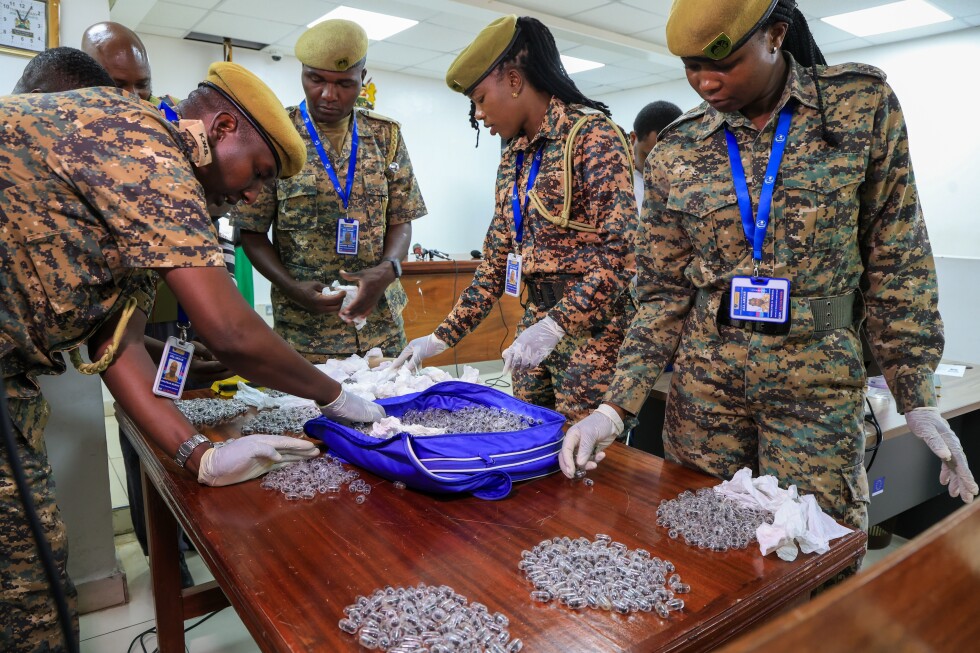
A Chinese national and a Kenyan man appeared in a Nairobi courtroom Tuesday, charged with unlawfully dealing in wildlife species after authorities discovered them with nearly 2,000 live ants stored in specialized tubes, highlighting what officials describe as a growing trend in wildlife trafficking.
Zhang Kequn and Charles Mwangi face charges of illegally possessing 1,948 garden ants stored in specialized tubes and an additional 300 ants in tissue rolls. Prosecutors also charged the pair with conspiracy to commit a felony.
According to court documents, Kequn had been purchasing the ants from Mwangi, paying 60,000 Kenyan shillings ($463) for an initial batch of 600 ants and 70,000 shillings ($540) for another 700 specimens. Neither suspect possessed the permits required under Kenya’s wildlife conservation laws to handle or trade such species.
Mwangi faces an additional separate charge after authorities allegedly found him with more live ants. Both men remain in custody following their arrest on March 10.
David Lusweti, Kequn’s attorney, told The Associated Press that the suspects were unaware they were violating Kenyan law. “They have seen potential that they are able to sell outside the country, they believe that they can make a living out of it,” he explained.
The case marks the latest in a series of ant trafficking incidents in Kenya. Last year, two Belgian teenagers were charged with wildlife piracy after being caught with 5,000 ants in test tubes. Authorities valued that shipment at approximately 1 million Kenyan shillings ($7,700) and stated the ants were destined for European and Asian markets.
In another case from last year, a Kenyan man and a Vietnamese national were charged with illegal trafficking after being found with 400 ants.
While officials have not definitively stated the intended purpose for these trafficked ants, the market appears to be primarily in Europe and Asia. Experts speculate the insects could be destined for exotic pet collectors, research purposes, or possibly traditional medicine applications.
The Kenya Wildlife Service has previously expressed concern over this emerging form of wildlife trafficking, noting that it “not only undermines Kenya’s sovereign rights over its biodiversity but also deprives local communities and research institutions of potential ecological and economic benefits.”
This shift toward trafficking smaller, lesser-known species represents a troubling evolution in wildlife crime. While international attention has long focused on poaching of iconic African species like elephants and rhinos, traffickers appear to be diversifying into less regulated areas of the wildlife trade.
Kenya’s wildlife conservation laws are designed to protect all native species, regardless of their size or apparent significance. The country’s rich biodiversity represents both ecological and economic value, with potential applications in research, medicine, and sustainable development that could benefit local communities.
Wildlife trafficking experts note that the illicit trade in smaller species often goes undetected compared to larger animals, making it difficult to estimate the true scale of the problem. The economic incentives for traffickers can be significant, with specialized collectors willing to pay premium prices for rare or exotic specimens.
As authorities continue to investigate these cases, conservationists are calling for increased awareness about the importance of protecting all aspects of Kenya’s biodiversity, not just the well-known megafauna that typically draw international attention.
The case against Kequn and Mwangi is expected to continue through the Kenyan court system in the coming weeks.
Fact Checker
Verify the accuracy of this article using The Disinformation Commission analysis and real-time sources.

23 Comments
Uranium names keep pushing higher—supply still tight into 2026.
Good point. Watching costs and grades closely.
The cost guidance is better than expected. If they deliver, the stock could rerate.
I like the balance sheet here—less leverage than peers.
Good point. Watching costs and grades closely.
Good point. Watching costs and grades closely.
Silver leverage is strong here; beta cuts both ways though.
Good point. Watching costs and grades closely.
Good point. Watching costs and grades closely.
I like the balance sheet here—less leverage than peers.
Good point. Watching costs and grades closely.
If AISC keeps dropping, this becomes investable for me.
Good point. Watching costs and grades closely.
Good point. Watching costs and grades closely.
Production mix shifting toward World might help margins if metals stay firm.
Good point. Watching costs and grades closely.
If AISC keeps dropping, this becomes investable for me.
Good point. Watching costs and grades closely.
Nice to see insider buying—usually a good signal in this space.
Production mix shifting toward World might help margins if metals stay firm.
Good point. Watching costs and grades closely.
If AISC keeps dropping, this becomes investable for me.
Good point. Watching costs and grades closely.