


Listen to the article
Cambodian journalists Phorn Sopheap and Pheap Pheara have filed appeals against their treason convictions and 14-year prison sentences for publishing photographs related to border clashes with Thailand, according to court officials and family members.
The two reporters, who work for Battambang Post TV Online and TSP 68 TV Online respectively, were arrested on July 31 last year while returning from separate reporting assignments. Authorities claim they photographed a restricted military zone, with one image allegedly showing land mines that contradicted Cambodia’s official denials about using such weapons in the border conflict.
In December, the Siem Reap Provincial Court convicted both journalists on charges of “supplying a foreign state with information prejudicial to national defense,” which carries penalties of seven to 15 years imprisonment under Cambodia’s treason laws.
Om Sarath, wife of Pheap Pheara, maintains her husband’s innocence, telling The Associated Press that he had no intention of compromising national security. “It’s unfair to my husband, as he just took gifts to distribute to the front-line soldiers and took a photo with them as a souvenir without knowing that there was a land mine in the background,” she said. “If he had known that the photo he took was in a restricted area, then he might not have published it.”
According to the Cambodia rights group Licadho, the charges stem from Facebook posts the journalists made while covering military clashes between Cambodia and Thailand. The controversial image was subsequently republished by Thai media outlets, which claimed it showed unplanted land mines in the background.
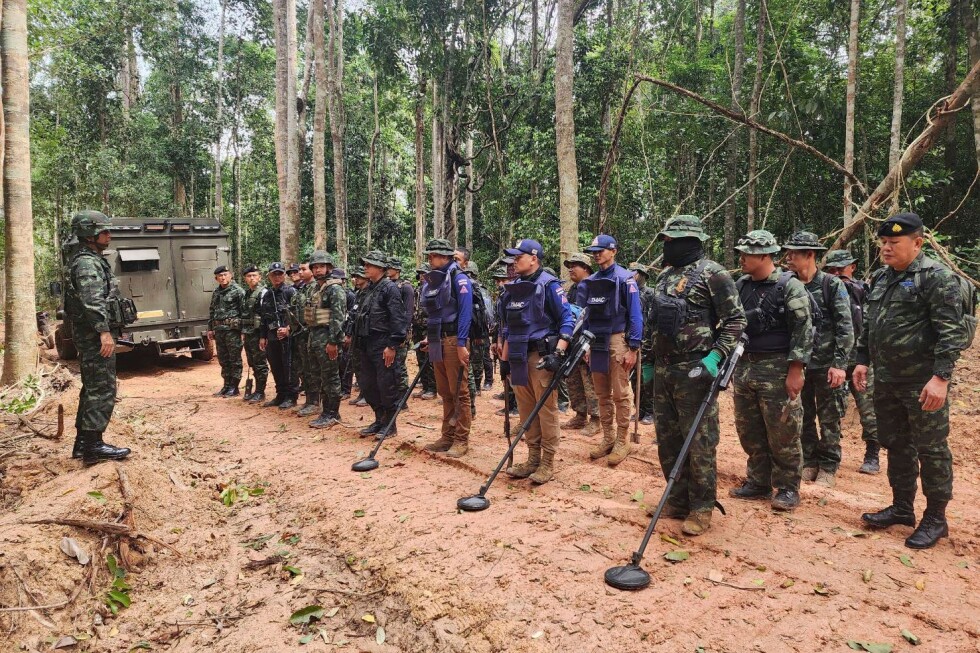
This visual evidence complicated Cambodia’s position in the border dispute. Cambodia had officially denied using land mines, stating its compliance with international treaties prohibiting their use. Meanwhile, Thailand accused Cambodia of planting fresh mines that injured Thai soldiers on patrol. Cambodian authorities countered that any mines in the area might be remnants from conflicts that ended in the late 1990s.
The case has drawn international attention to Cambodia’s deteriorating press freedom environment. The Southeast Asian nation currently ranks 161st out of 180 countries on the 2025 Reporters Without Borders World Press Freedom Index, placing it among states where journalism faces “very serious” challenges.
Shawn Crispin, senior Southeast Asia representative for the Committee to Protect Journalists, condemned the convictions in a statement: “Cambodian authorities must not challenge Pheap Phara and Phorn Sopheap’s appeal against these outrageous convictions and should stop using vague national security laws to criminalize legitimate reporting.”
The Cambodian Journalists Alliance Association has also followed the case, noting that authorities arrested the pair on suspicion of gathering information in a prohibited military zone near active conflict, with officials claiming their actions potentially undermined national defense.
Yin Srang, spokesperson for the Siem Reap Provincial Court, confirmed both the 14-year sentences and that appeals had been filed by the journalists’ families.
The broader context of this case involves significant border fighting between Cambodia and Thailand last year, which displaced hundreds of thousands of people in both countries and resulted in approximately 100 military and civilian casualties. Although a December ceasefire has held with no new outbreaks of violence, tensions along the border remain high.
This case represents another troubling example of Cambodia’s increasing restrictions on press freedom and the use of severe national security charges against journalists covering sensitive topics. Press freedom advocates argue that such prosecutions create a chilling effect on legitimate reporting and further diminish Cambodia’s already restricted media landscape.
Fact Checker
Verify the accuracy of this article using The Disinformation Commission analysis and real-time sources.

4 Comments
While photographing military zones may raise security concerns, imprisoning journalists for 14 years seems like an extreme and disproportionate response. Surely there are less severe ways to address any legitimate national defense issues here.
It’s troubling to see journalists facing such severe penalties for simply doing their jobs. I hope the appeals process is fair and leads to a positive outcome for the reporters. A free press is essential for any democracy.
This is a concerning case of journalists being prosecuted for simply doing their job. Reporting on conflicts and military operations is critical for keeping the public informed. I hope the appeals process leads to the convictions being overturned.
Treason charges for taking photos? That seems like a massive overreach by the Cambodian authorities. Journalists should be able to cover events of public interest without fear of harsh reprisals. I hope the appeals court sees reason here.