


Listen to the article
Senegal and Morocco received over $1 million in combined fines and multiple suspensions following a chaotic Africa Cup final that drew international condemnation.
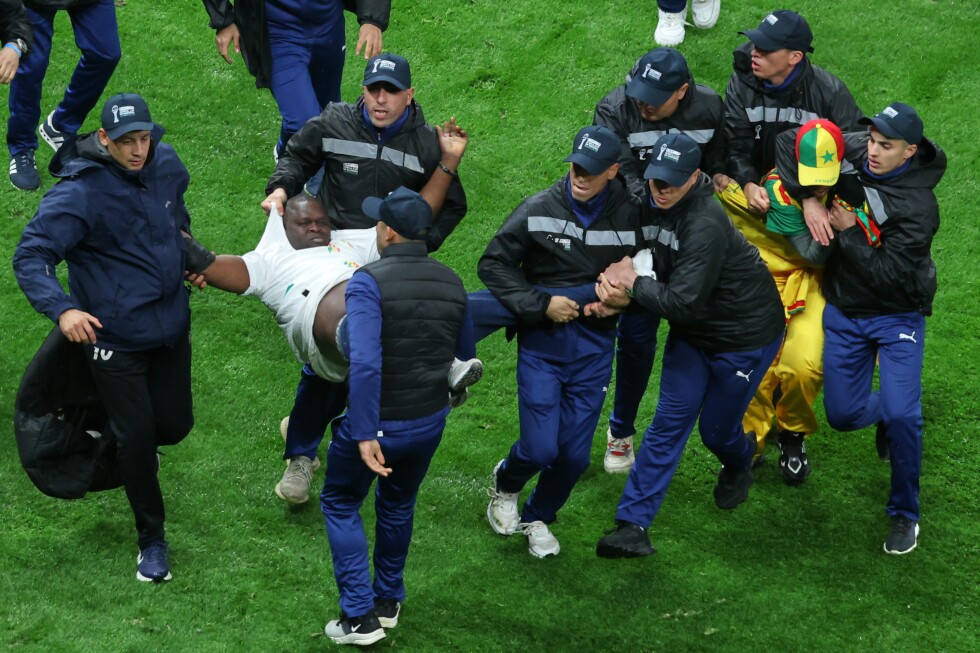
The Confederation of African Football (CAF) handed down severe penalties on Wednesday after the January 18 match in Rabat, which Senegal won 1-0 in extra time, descended into disorder with a player walk-off, attempted pitch invasions, and post-match violence among journalists.
The Senegalese Football Association received the heaviest punishment with $615,000 in fines, while Morocco’s federation was fined $315,000. Senegalese coach Pape Thiaw faces a particularly steep sanction of a $100,000 fine and a five-game suspension from African competitions for “bringing the game into disrepute.”
Individual players also faced disciplinary action. Senegal’s Iliman Ndiaye and Ismaila Sarr received two-game bans from African competitions, while Morocco’s Achraf Hakimi was banned for two games with one suspended. His teammate Ismael Saibari received a three-game ban and a $100,000 fine for unsporting behavior.
The tournament final unraveled in stoppage time when Morocco was awarded a penalty with the score still 0-0. Thiaw led his Senegalese team off the field in protest, causing a 15-minute delay. When play eventually resumed, Morocco missed the penalty, and Senegal scored the winning goal in extra time.
The disorder extended beyond the playing field. Moroccan fans attempted to storm the pitch, players from both teams engaged in sideline confrontations, and Moroccan ball boys tried to take a towel from Senegal’s goalkeeper Edouard Mendy in what appeared to be an attempt to distract him. This last incident alone resulted in a $200,000 fine for Morocco.
FIFA President Gianni Infantino condemned the events as “ugly” and had anticipated sanctions from CAF. Morocco’s coach Walid Regragui acknowledged that the final presented a “shameful” image of African soccer.
The incidents have cast a shadow over Morocco’s status as a 2030 World Cup co-host alongside Spain and Portugal. The North African nation had hoped to host the 2030 World Cup final at the Hassan II Stadium, currently under construction and planned to become the world’s largest soccer venue with a capacity of 115,000 upon completion in 2028. However, Spain announced this week that it will host the final instead.
The controversy extended beyond sports into diplomatic relations. The match strained ties between the two nations, prompting government officials from both countries to call for calm. In Morocco, rights groups reported an increase in hate speech targeting sub-Saharan African residents in the aftermath of the match.
Senegalese Prime Minister Ousmane Sonko, during an investment-related visit to Morocco days after the final, attempted to ease tensions by describing the reactions as “emotional outbursts produced by fervor and not as political or cultural rifts.”
CAF rejected an appeal from Morocco that sought to have the match result canceled and Morocco declared the winner due to Senegal’s walk-off.
The sanctions apply only to African competitions and will not affect either team’s participation in the upcoming World Cup, which begins in June. Both Senegal and Morocco have qualified for the tournament and will be looking to put this continental controversy behind them as they prepare for the global stage.
The incident highlights ongoing challenges in African football governance and tournament management, even as the continent’s teams continue to gain prominence on the world stage. CAF’s swift and substantial punishment signals a determination to address behavior that undermines the reputation of African football.
Fact Checker
Verify the accuracy of this article using The Disinformation Commission analysis and real-time sources.

6 Comments
It’s unfortunate that the climactic final of the Africa Cup was overshadowed by these ugly scenes. While the sanctions are severe, they appear justified given the scale of the misconduct. Hopefully, the tournament organizers can use this as an opportunity to review and strengthen their crowd control and player discipline protocols.
The African Cup of Nations is such an important tournament for the continent, it’s a shame to see it tarnished by these types of incidents. Hopefully, the heavy fines and bans serve as a strong deterrent and the focus can shift back to the thrilling football on the pitch.
Discipline and sportsmanship should be paramount in any major sporting event. While the penalties seem harsh, they may be necessary to send a clear message that such behavior will not be tolerated. I hope the federations and players learn from this experience and work to uphold the integrity of the game.
While the fines and suspensions seem justified given the severity of the incidents, I wonder if there are deeper underlying issues that need to be addressed to prevent such chaotic scenes from happening again in the future. Improving stadium security and player conduct protocols could be a good start.
You make a good point. Tackling the root causes rather than just punishing the symptoms is key to ensuring lasting change. It will be interesting to see if the governing bodies take a more proactive approach to improving the overall match environment.
Wow, that’s a hefty price tag for the chaos that erupted at the Africa Cup final. It’s a shame to see the beautiful game marred by such unsportsmanlike behavior. Hopefully, these stiff penalties will serve as a wake-up call for players and officials to maintain better discipline on the pitch.