


Listen to the article
Media experts are set to tackle how climate narratives are shaped in the digital age at an upcoming Global Landscapes Forum event that will examine the intersection of social media, artificial intelligence, and climate communication.
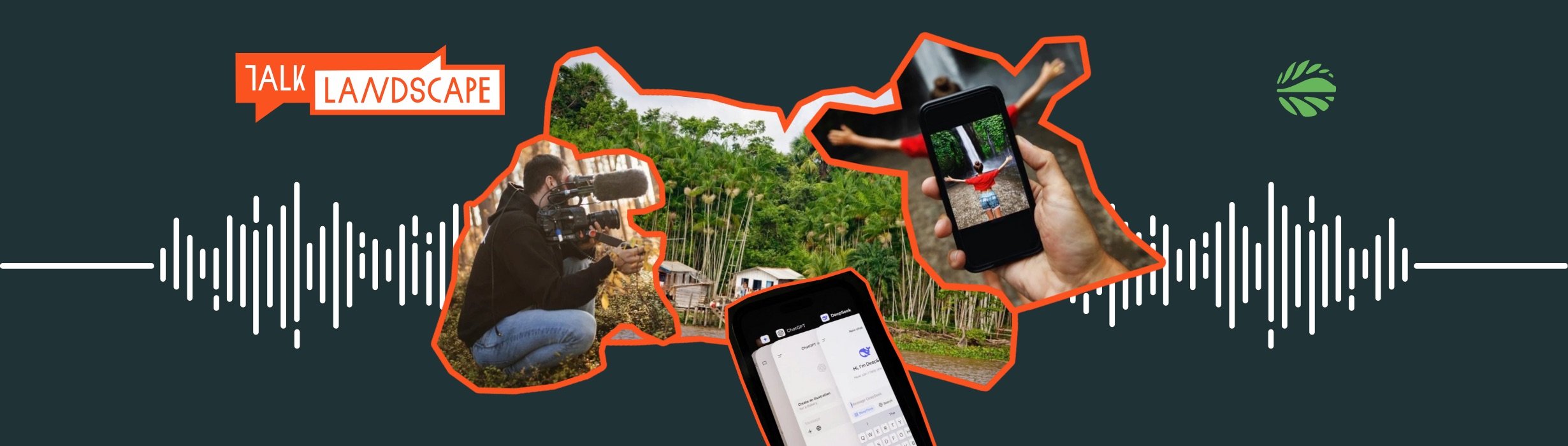
In an era of rampant online disinformation—much of it AI-generated—questions about whose climate stories reach audiences and whose remain unheard have become increasingly urgent. The eighth episode of TalkLandscape will explore these issues in depth during a live discussion scheduled for Tuesday, November 25 at 13:00 UTC.
The event brings together an international panel of experts representing diverse perspectives on media, filmmaking, and environmental communication. Participants will discuss strategies for combating misinformation and elevating authentic stories from communities on the frontlines of climate action.
“In the increasingly contested field of climate communication, whose voices are being heard or silenced? And who – or what – gets to decide what stories land in your social feeds?” promotional materials for the event ask, highlighting the power dynamics at play in digital climate discourse.
Brazilian filmmaker Estêvão Ciavatta Pantoja brings significant environmental credentials to the conversation. As founding partner of Pindorama Filmes—the world’s first carbon-neutral film production company—Ciavatta has established himself as a prominent advocate for environmental causes. His accolades include a 2022 Cannes Golden Lion for the “Jatoba – Refugee Tree” campaign and the 2021 One World Media Award for Environmental Impact for his feature film “Amazon Undercover.”
Ciavatta’s work extends beyond traditional filmmaking. He has created and produced series for HBO Latin America, including “Preamar” and “Santos Dumont,” which garnered multiple Telly Awards. His environmental activism includes leading the “Da Pé” crowdfunding campaign that mobilized seven million people to plant trees in Brazil’s springs and riparian forests.
Communications scholar Chris Wells will contribute academic expertise to the discussion. As a professor of emerging media studies at Boston University’s College of Communication, Wells brings experience from both environmental politics and academic research. His work examines how news media coverage develops, how citizens engage with political information, and how they choose to participate in civic life.
Wells’ recent research has focused on understanding how various media platforms interact as part of a broader media ecosystem—particularly relevant to discussions about climate narratives across different digital spaces.
Completing the panel is Natalia Figueiredo, a journalist and marketing specialist who serves as a Social Media Ambassador for the Global Landscapes Forum. Figueiredo’s work bridges communication, sustainability, and technology as co-founder of a creative impact communications hub.
Her diverse background includes video journalism training from Columbia University and a postgraduate degree in big data and marketing intelligence. Figueiredo has contributed to various media outlets covering culture, women’s rights, and environmental issues.
The event organizers are encouraging public engagement through a pre-event social media experiment. They invite potential attendees to observe climate-related content in their social feeds, noting whose stories are being amplified, what perspectives might be missing, and whether they encounter misleading information.
This interactive approach highlights the personal nature of algorithm-driven content delivery systems that increasingly determine what information reaches individual users on topics like climate change.
The Global Landscapes Forum initiative comes at a critical time when climate communication faces multiple challenges. Studies have shown that climate misinformation spreads rapidly across social platforms, while many frontline communities most affected by climate impacts often have limited representation in digital spaces.
The discussion promises to explore both the challenges of the current media landscape and potential solutions for ensuring diverse and accurate climate narratives can break through in an increasingly crowded and sometimes manipulated information environment.
Fact Checker
Verify the accuracy of this article using The Disinformation Commission analysis and real-time sources.

7 Comments
I’m interested to hear the panel’s insights on this complex issue. Whose voices get amplified in the climate debate, and how can we counter AI-driven misinformation? A critical topic for our times.
The power dynamics at play in digital climate discourse are concerning. This event seems like an important step towards amplifying authentic, diverse voices and combating the spread of misinformation.
Yes, it’s crucial that marginalized groups have a platform to share their climate stories and perspectives. Elevating these voices is key to a just, equitable transition.
This is an important discussion. Social media has amplified both helpful climate information and harmful disinformation. Striking the right balance and ensuring marginalized groups have a platform will be key.
I agree, social media has become a battleground for climate narratives. Elevating real stories and perspectives from impacted communities is vital.
Thought-provoking event. It’s crucial to amplify diverse, authentic voices in climate discourse, especially those from frontline communities. AI-generated misinformation is a major challenge that needs to be confronted head-on.
Fascinating topic. In an era of polarization and rampant online misinformation, finding ways to elevate genuine climate narratives is a major challenge. Looking forward to hearing the panel’s insights.