


Listen to the article
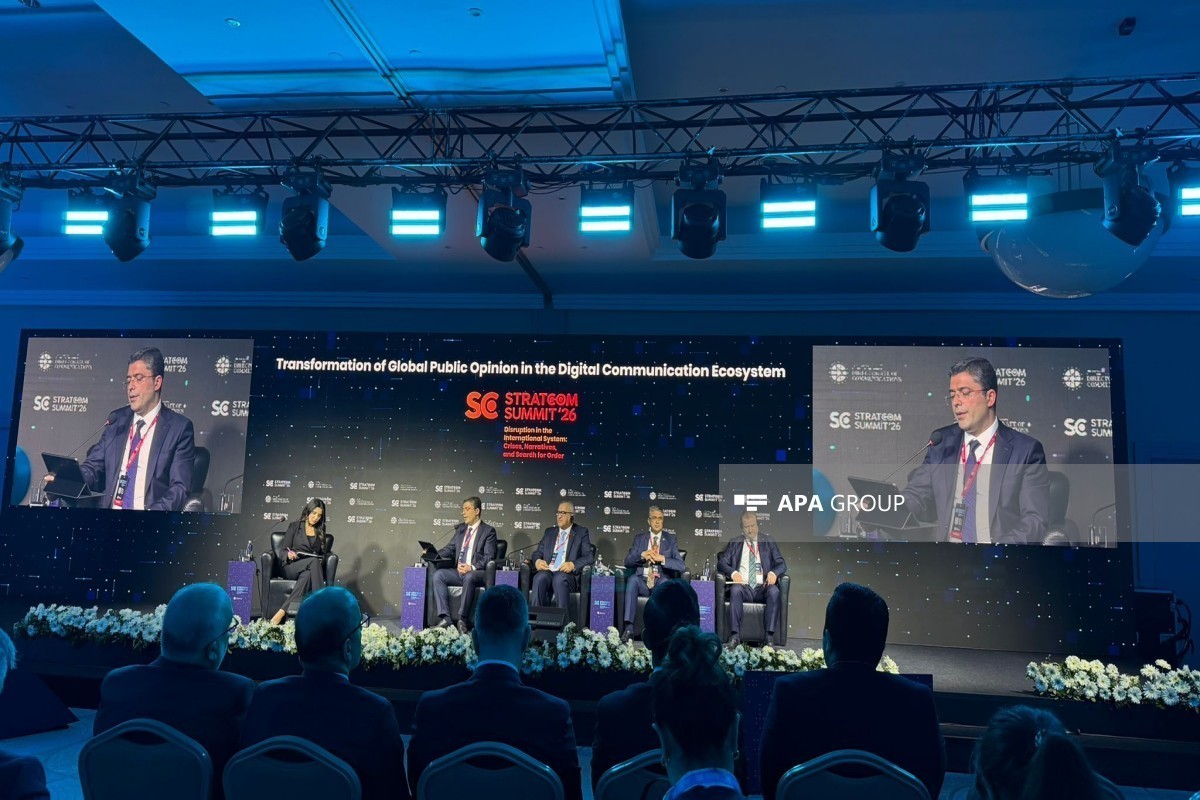
Azerbaijan’s Media Development Agency Chairman Ahmad Ismayilov addressed growing challenges in the digital information landscape during a panel discussion at the STRATCOM summit in Istanbul, emphasizing the critical role of strategic communication in combating disinformation.
Speaking on the panel “Transformation of global public opinion in the digital communication ecosystem,” Ismayilov highlighted how the digital environment has fundamentally altered the information landscape, creating both opportunities and significant challenges for media integrity and public discourse.
“In the modern era, public opinion has taken on a global character, and artificial intelligence and social media platforms have become key actors,” Ismayilov said, according to reports from APA’s Turkey bureau. “The decentralized nature of the digital environment turns users into both consumers and producers, which increases the risks of disinformation, deepens the crisis of trust, and brings the issue of information sovereignty to the forefront.”
The chairman outlined several strategic priorities to address these challenges, including enhancing media literacy programs to help citizens better evaluate information sources critically. He stressed the importance of developing robust national content and digital platforms that can serve as reliable information sources in an increasingly fragmented media landscape.
Professional development for journalists was another key focus of Ismayilov’s address. As misinformation proliferates online, the role of trained journalists adhering to ethical standards becomes increasingly vital for maintaining public trust.
Ismayilov advocated for stronger collaboration between government entities, media organizations, and civil society groups to create a more resilient information ecosystem. He also emphasized the need for accelerated digital transformation across the media sector to remain competitive and relevant.
The STRATCOM summit, which brings together communication experts and policymakers from around the world, provides a platform for discussions on strategic communication challenges in an era of rapid technological change. Azerbaijan’s participation reflects the country’s growing engagement with international media forums and its efforts to address shared challenges in information integrity.
Ismayilov highlighted Azerbaijan’s contributions to international media cooperation, specifically mentioning the Shusha Global Media Forum. This initiative, launched in Azerbaijan’s culturally significant city of Shusha, serves as a platform for international dialogue on media development and information security.
He also noted Azerbaijan’s active participation in media collaborations within the Organization of Turkic States, a regional body that includes Azerbaijan, Turkey, Kazakhstan, Uzbekistan, and Kyrgyzstan. These partnerships aim to strengthen regional media cooperation and develop shared approaches to digital challenges.
Azerbaijan, like many countries, faces the dual challenge of protecting its information space while promoting freedom of expression and media development. The country has implemented various initiatives to modernize its media sector in recent years, though international organizations continue to monitor press freedom issues in the region.
As digital platforms continue to reshape how information is created and consumed globally, the issues raised by Ismayilov reflect broader international concerns about information integrity, digital sovereignty, and the evolving relationship between governments, media organizations, and technology platforms.
The STRATCOM summit continues to serve as a key forum for addressing these evolving challenges at the intersection of technology, communication, and governance in an increasingly interconnected global information environment.
Fact Checker
Verify the accuracy of this article using The Disinformation Commission analysis and real-time sources.

9 Comments
The shift to a more global and decentralized information landscape is a double-edged sword. It provides new opportunities but also significant challenges in terms of information integrity and public discourse. I’m curious to learn more about the strategic priorities outlined to address these issues.
Agreed, the role of AI and social media platforms as key actors in this ecosystem adds another layer of complexity. Building media literacy and strengthening information sovereignty will be crucial.
The transformation of global public opinion in the digital communication ecosystem is a critical challenge. Addressing the risks of disinformation and the crisis of trust will be crucial for maintaining the integrity of public discourse. I’m interested to learn more about the strategic priorities outlined.
This is a concerning trend that erodes trust in media and reliable information. As users become both consumers and producers, the risk of spreading disinformation increases. Proactive efforts to enhance media literacy are an important step in the right direction.
This is a timely and important discussion. The decentralized nature of the digital environment and the growing influence of AI and social media platforms have certainly heightened the risks of disinformation. Enhancing media literacy is a sensible approach, but I’m curious to learn more about the other strategic priorities being explored.
The decentralized nature of the digital environment is a double-edged sword. It empowers users but also heightens disinformation risks. I’m curious to learn more about the specific strategic priorities being considered to address these challenges.
This is an important issue that impacts us all as digital citizens. The dual role of users as both consumers and producers of content certainly heightens the risks of disinformation. Enhancing media literacy seems like a critical step to help people navigate this complex landscape.
This is a complex issue that requires a multifaceted approach. Enhancing media literacy to help citizens better evaluate information is a sensible starting point. Curious to see what other strategies the panel discussion explored to combat disinformation in the digital age.
The dual role of users as both consumers and producers of content is a significant factor in the rise of disinformation. Strengthening media literacy programs seems like an important step, but I wonder what other policy or technological solutions are being considered to tackle this complex issue.