


Listen to the article
In the wake of last year’s Southport murders, the rapid spread of misinformation on major social media platforms significantly contributed to the nationwide riots that followed, according to recent analysis. The incident highlights critical failures in content moderation systems during times of crisis.
Hours after the tragic attack, false narratives began circulating on X (formerly Twitter), TikTok, and Facebook, incorrectly identifying the perpetrator as a Muslim migrant named “Ali al-Shakati.” Despite police quickly clarifying that the suspect was actually a local 17-year-old, these false claims continued to gain traction online.
High-profile figures with substantial followings played a key role in amplifying the misinformation. Actor-turned-political activist Laurence Fox leveraged the false narrative to call for anti-Muslim action, including demands for “the permanent removal of Islam from Great Britain.” His post garnered over 850,000 views within 48 hours of the attack, demonstrating how rapidly harmful content can reach mass audiences.
On X, the platform’s recommendation algorithm appeared to give preference to posts from paid premium users, potentially allowing inflammatory content to reach wider audiences. This preferential treatment raises questions about how platforms apply their Terms of Service to verified accounts, particularly during sensitive events.
TikTok’s search functionality actively contributed to the problem, with the platform suggesting searches like “Ali al-Shakati arrested in Southport” long after authorities had debunked the claim. Alarmingly, researchers found that conspiratorial content and disinformation about the Southport attack remained accessible through recommendation algorithms months after the incident.
The lack of transparency around these recommendation systems remains a significant concern. While the European Union’s Digital Services Act (DSA) mandates independent auditing of these systems, the UK’s Online Safety Act (OSA) does not contain equivalent provisions, potentially leaving British users more vulnerable to algorithmic amplification of harmful content.
The permissive online environment created fertile ground for hate speech to flourish. Analysis showed that anti-Muslim slurs more than doubled on X in the ten days following the Southport attack, with over 40,000 mentions recorded. The impact was even more pronounced in dedicated far-right channels, with anti-Muslim hate increasing by 276% and anti-migrant hate rising by 246% on Telegram.
One particularly troubling example involved an X user with premium status and 16,000 followers who shared a protest flyer claiming that “children are being sacrificed on the unchecked altar of mass immigration” – rhetoric that attempted to justify subsequent real-world violence.
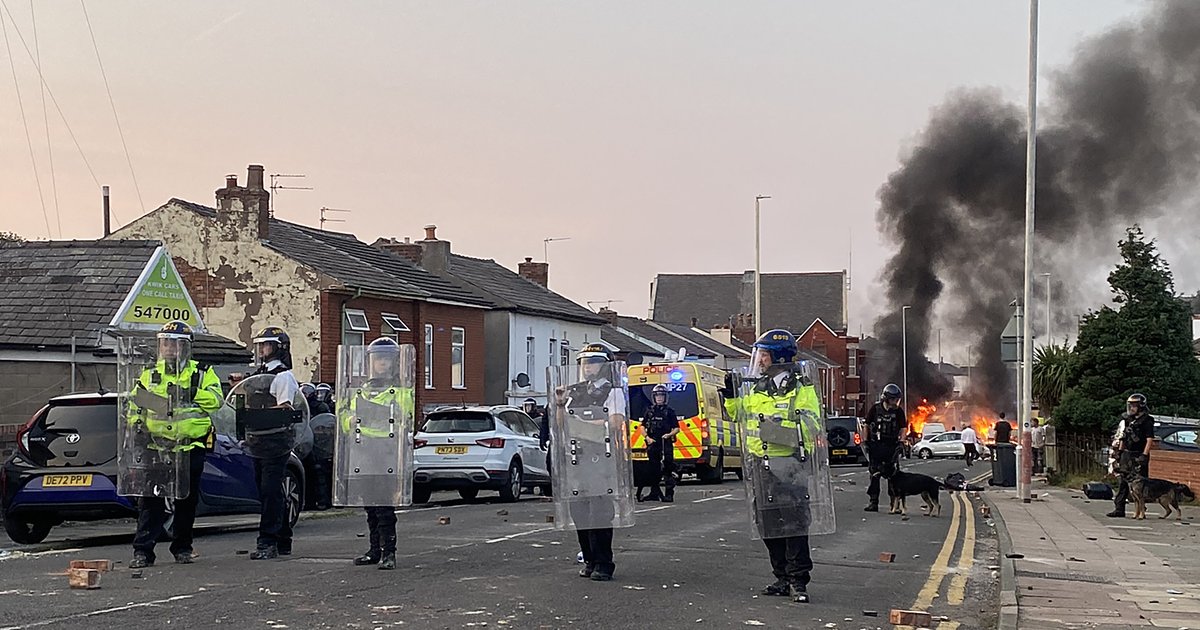
The connection between online misinformation and offline violence became starkly apparent as riots erupted across the UK, with targeted attacks on mosques, hotels housing asylum seekers, and immigrant-owned businesses.
Experts are calling for several reforms to prevent similar incidents in the future. Social media platforms need explicit crisis response protocols with surge capacity during high-risk events and improved coordination with authorities. Greater algorithmic transparency and independent auditing are essential to understand how recommendation systems may amplify harmful content during sensitive periods.
More consistent enforcement of platform policies is also critical, particularly for verified accounts with large followings that currently appear to receive preferential treatment. Additionally, platforms must address financial incentives that currently allow disinformation actors to profit from engagement-driven misinformation.
Researchers also emphasize the need for improved access to platform data to enable external monitoring of harmful content trends and evaluate the effectiveness of moderation practices.
The Southport case illustrates how quickly digital propaganda can fuel real-world violence when left unchecked. Without enhanced platform accountability and clearer regulatory frameworks, similar incidents remain a persistent risk, underscoring the urgent need for collaborative solutions that prevent online spaces from becoming catalysts for violence and social unrest.
Fact Checker
Verify the accuracy of this article using The Disinformation Commission analysis and real-time sources.

16 Comments
This is a concerning example of how social media can be weaponized to sow discord and incite violence. The rapid spread of misinformation, even when quickly debunked by authorities, demonstrates the urgent need for platforms to develop more effective strategies to combat the amplification of harmful content. Addressing this challenge should be a top priority.
Absolutely. The role of influential figures in amplifying false narratives is particularly worrying. Platforms must find ways to limit the reach of such content, even from high-profile users. Transparency and accountability will be key to developing effective solutions.
The role of social media in amplifying misinformation and fueling societal tensions is a complex and concerning issue. This case study highlights the need for more effective content moderation and algorithmic controls to limit the reach of harmful narratives, especially during times of crisis. Addressing this challenge will require a multi-stakeholder approach.
This is a sobering example of how social media misinformation can have devastating real-world consequences. The rapid spread of false claims and the inability of platforms to effectively moderate content during crises is deeply troubling. Urgent action is needed to address these systemic issues.
Absolutely. Policymakers and tech leaders need to work together to develop robust solutions that can quickly identify and contain the spread of misinformation, especially around sensitive events. Transparency and accountability will be key.
Interesting analysis. The role of influential figures in amplifying false narratives is particularly concerning. Social media platforms must find ways to limit the reach of such harmful content, even from high-profile users. Improving content moderation and algorithmic recommendations should be a top priority.
The UK riots incident underscores the critical failures in social media content moderation systems during times of crisis. The rapid spread of misinformation, fueled by the amplification of influential figures, can have devastating real-world consequences. Urgent action is needed to address these systemic issues and prevent similar outcomes in the future.
This case study highlights the urgent need for improved social media regulation and fact-checking measures. The ability for false narratives to gain traction online and incite dangerous behavior is deeply concerning. Platforms must prioritize combating the spread of misinformation, especially around sensitive events, to protect public safety and social stability.
Agreed. Addressing this challenge will require a multi-stakeholder approach, with policymakers, tech companies, and civil society working together to develop effective solutions. Transparency and accountability will be key to ensuring the public’s trust.
Fascinating insights on the challenges posed by social media misinformation. The ability for false narratives to rapidly spread and influence public perception is deeply troubling. Platforms must improve their content moderation systems and find ways to combat the amplification of harmful content, even from influential figures.
Agreed. This is a critical issue that requires urgent attention. Policymakers, tech companies, and civil society must work together to develop effective solutions that prioritize the public good over commercial interests.
The UK riots incident highlights the crucial need for better social media regulation and fact-checking measures. Misinformation can rapidly escalate tensions and incite dangerous behavior if left unchecked. Platforms must prioritize combating the spread of false narratives, especially around sensitive events.
Agreed. This is a complex issue without easy solutions, but it’s clear that the current systems are inadequate. Policymakers and tech companies need to work together to develop more effective strategies to combat online misinformation.
The UK riots case study highlights the serious consequences of social media misinformation. The rapid spread of false narratives, amplified by prominent figures, is a clear threat to public safety and social stability. Improved content moderation and algorithmic controls are essential to prevent such harmful outcomes in the future.
This is a concerning case study on the dangers of social media misinformation during times of crisis. The rapid spread of false narratives, amplified by influential figures, can have serious real-world consequences. Platforms need to improve content moderation and recommendation algorithms to prevent such harmful content from gaining traction.
Absolutely. The ability for misinformation to spread so quickly online poses a major threat to public safety and social stability. Improved transparency and accountability for social media platforms is crucial.