


Listen to the article
Fake News Campaign Targets Penrith Panthers Fans with False Stories
A coordinated disinformation campaign is targeting Penrith Panthers fans with fabricated news stories designed to drive traffic to suspicious websites, an AAP FactCheck investigation has revealed.
The NRL premiers, currently sitting second on the ladder after three consecutive wins to start the 2026 season, are the subject of numerous false claims being spread by a Facebook page called “Black Cat League News.”
The page combines real photos and details from unrelated news stories to create convincing but entirely fictional narratives about the club and its players. Each post includes links to external websites filled with advertisements and additional false claims.
One particularly egregious post falsely claims the Panthers community is mourning the death of a 32-year-old local firefighter who died battling a blaze in Western Sydney. The post features an image purported to be the deceased fan. However, AAP FactCheck’s investigation revealed the photo actually shows Chicago firefighter Michael Altman, who died in the line of duty in the United States. The image was originally published by several American media outlets, including the Chicago Tribune.
In another fabricated story, the page claims to show a seven-year-old girl with terminal brain cancer in a hospital bed, whom Panthers coach Ivan Cleary supposedly visited as her “last wish.” This story is also completely false. The images actually depict Branson Blevins, an 11-year-old boy from Alabama who was battling leukemia, according to verified social media posts.
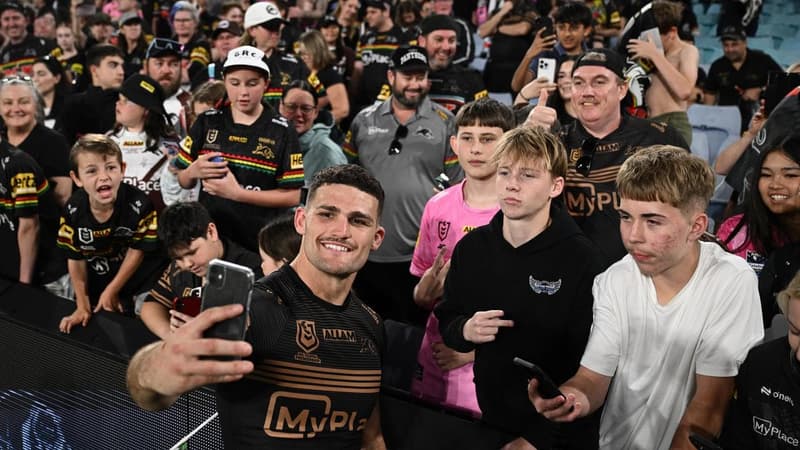
Many of the false posts focus on Panthers star halfback Nathan Cleary, who has become one of the NRL’s most recognizable players after leading the club to three consecutive premierships from 2021 to 2023.
One post falsely claims Cleary gave a $900 tip to a 24-year-old waitress named Lily, including photos of the waitress and a meal receipt. However, fact-checking revealed both images were taken from a 2016 Inside Edition article about a pregnant waitress who received a generous tip in Phoenix, Arizona – completely unrelated to Cleary or Australia.
Another fabricated story asserts that Cleary purchased his childhood home and transformed it into a $3.2 million support center for women and children. This claim is entirely fictional, with no credible news reports supporting it. The mansion pictured is actually the Oklahoma home of American singers Blake Shelton and Gwen Stefani, as published in the New York Post.
The disinformation campaign has even ventured into creating AI-generated images. One post features computer-generated pictures of Cleary and his girlfriend, Matildas striker Mary Fowler, falsely claiming they were asked to leave a luxury jewelry store for wearing casual clothing. The post incorrectly refers to Fowler as Cleary’s wife, though the couple are not married. The images show clear signs of AI generation, including the inconsistent appearance of a sales assistant who inexplicably changes outfits between frames.
Digital media experts warn that such targeted disinformation campaigns are becoming increasingly sophisticated, often using a mix of real elements and fabricated details to appear credible. The strategy typically aims to generate clicks and drive traffic to ad-heavy websites, creating revenue for the operators.
Social media platforms have faced ongoing criticism for not doing enough to combat the spread of misinformation. Facebook’s parent company Meta has previously stated it is working to reduce the distribution of false news in its feed, though clearly fabricated content continues to circulate widely.
Sports fans are advised to verify news through official team channels or established news organizations before sharing content, particularly stories that seem designed to elicit strong emotional responses or that come from unfamiliar sources.
Fact Checker
Verify the accuracy of this article using The Disinformation Commission analysis and real-time sources.

12 Comments
It’s disappointing to see sports fans targeted in this way. Fabricated news stories about tragedies are particularly egregious and can cause real harm. Fans should be able to enjoy their passion for the game without being subjected to manipulative falsehoods.
Absolutely. Exploiting emotional stories and images to spread disinformation is a despicable tactic. Sports should be a unifying, positive force, not a battleground for malicious actors peddling lies.
This is concerning to hear about coordinated disinformation campaigns targeting sports fans. Spreading false narratives to drive traffic to suspicious websites is a malicious practice that can sow division and confusion. Fact-checking is crucial to combat the spread of misinformation online.
You’re right, these kinds of social media attacks are extremely problematic. Fans deserve accurate, reliable information about their teams. Fact-checkers play a vital role in exposing these deceptive tactics.
I’m curious to learn more about the motives behind this disinformation campaign. Is it financially driven, politically motivated, or something else? Understanding the root causes can help develop effective strategies to prevent such attacks in the future.
That’s a good point. Identifying the underlying motivations is key to addressing the issue. Profit-seeking or political agendas are common drivers for this type of coordinated misinformation. Robust media literacy education may also help fans spot and avoid falling for these tactics.
As a fan, I’m disappointed to see my community targeted in this way. But I’m heartened to see the diligent fact-checking work that has exposed these lies. Moving forward, I hope sports organizations and platforms can collaborate to better protect fans from such malicious attacks.
I share your sentiment. Sports should be a source of joy and unity, not division. Collaboration between teams, leagues, media, and tech companies is essential to safeguard the integrity of these communities and ensure fans have access to reliable information.
This is a worrying trend that goes beyond just sports. Coordinated disinformation campaigns are becoming increasingly common across various sectors. Strengthening media literacy, promoting digital citizenship, and enhancing platform accountability are all important steps to combat this issue.
You make a good point. This problem extends far beyond the sports world. Addressing the broader challenges of online misinformation and manipulation requires a multi-faceted approach involving education, regulation, and technological solutions.
I appreciate the thorough investigation and fact-checking work done to expose this disinformation campaign. Maintaining the integrity of sports communities is crucial, and I hope more can be done to protect fans from these kinds of attacks in the future.
Fact-checking is so vital in the digital age. Kudos to the investigators for their diligence in uncovering the truth behind these false narratives. Raising awareness and building resilience against online manipulation should be a priority.