


Listen to the article
In a significant ruling, the U.S. Supreme Court has overturned a lower court decision in the closely watched Murthy v Missouri case, finding that government communications with social media platforms about COVID-19 misinformation did not violate the First Amendment. The 6-3 decision, which split along unexpected lines, clears the way for the government to continue encouraging tech companies to remove false information—a particularly relevant ruling as misinformation concerns mount ahead of this year’s presidential election.
The court determined that the plaintiffs, including the founder of a far-right conspiracy website, lacked standing to bring the case against the Biden administration. Writing for the majority, conservative Justice Amy Coney Barrett explained the procedural shortcomings of the challenge.
“The plaintiffs, without any concrete link between their injuries and the defendants’ conduct, ask us to conduct a review of the years-long communications between dozens of federal officials, across different agencies, with different social-media platforms, about different topics,” Barrett wrote. “This court’s standing doctrine prevents us from ‘exercis[ing such] general legal oversight’ of the other branches of government.”
The ruling represents a victory for the Biden administration and deals a significant setback to Republican-led efforts that have frequently characterized content moderation as censorship. The plaintiffs had argued that the government and federal agencies coerced tech companies into silencing conservative voices by demanding the removal of pandemic-related misinformation.
The case originated with a ruling from a Republican-appointed judge in Louisiana, who accused federal agencies of functioning as an “Orwellian ‘Ministry of Truth.'” The U.S. Court of Appeals for the Fifth Circuit partially affirmed this decision, concluding that the Biden administration had pressured platforms to remove content, and issued a broad injunction limiting communications between the government and tech companies.
Barrett’s opinion explicitly rejected the Fifth Circuit’s conclusions, stating that “the Fifth Circuit was wrong” in its assessment. The Supreme Court found that the plaintiffs failed to demonstrate they faced substantial risk of harm from the government’s actions.
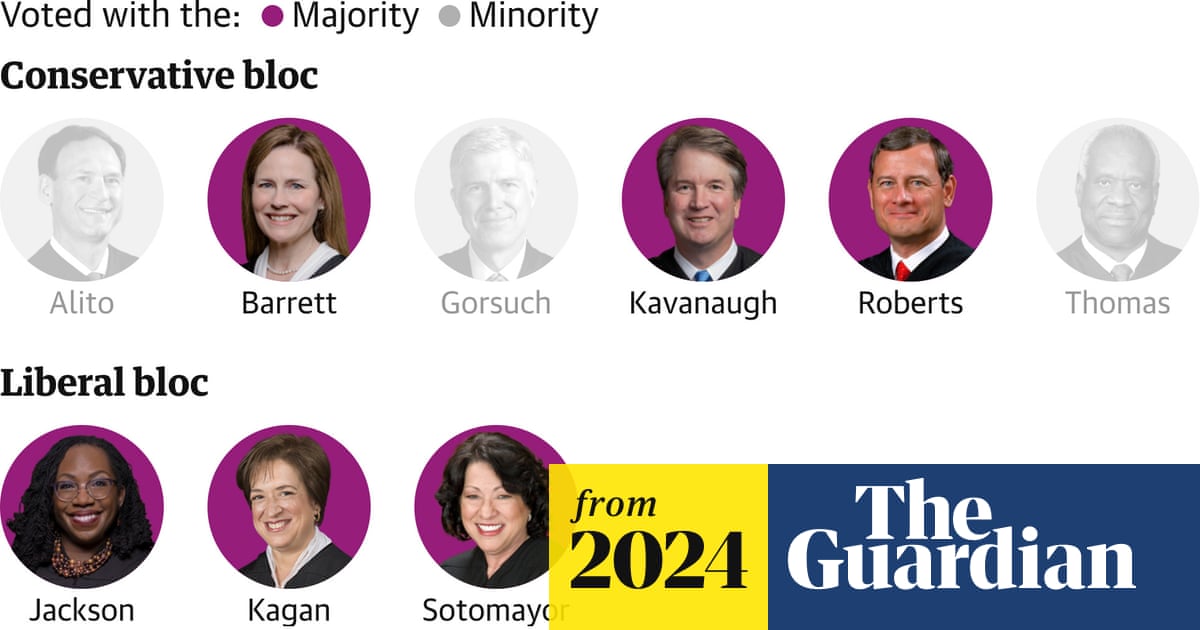
The court’s alignment on this case defied typical ideological divisions. The majority included three liberal justices—Sotomayor, Kagan, and Jackson—alongside three conservatives—Roberts, Barrett, and Kavanaugh. The dissenting minority consisted solely of conservative justices: Alito, Thomas, and Gorsuch.
In a strongly worded dissent, Justice Samuel Alito alleged that “for months, high-ranking government officials placed unrelenting pressure on Facebook to suppress Americans’ free speech.” Alito warned that the court’s ruling provides “an attractive model for future officials who want to control what the people say, hear and think.”
During oral arguments earlier this year, government lawyers maintained that encouraging social media platforms to take stronger measures against misinformation did not constitute threats or imply legal consequences. Public health experts and state officials had warned that preventing the government from flagging medical misinformation or election falsehoods could have serious societal consequences.
The case highlighted the increasingly contentious relationship between government regulation, free speech principles, and the role of social media companies in moderating content. Benjamin Aguiñaga, Louisiana’s solicitor general who represented the plaintiffs during oral arguments in March, faced sharp criticism from several justices. Justice Sonia Sotomayor notably told him: “I have such a problem with your brief, counselor,” citing factual inaccuracies and misrepresentations in the plaintiffs’ case.
Barrett’s decision specifically noted that the lower court ruling “glossed over complexities in the evidence” and “also erred by treating the defendants, plaintiffs and platforms each as a unified whole.”
The ruling maintains the government’s ability to communicate with tech platforms about harmful misinformation while establishing clearer boundaries for when such interactions might raise constitutional concerns.
Fact Checker
Verify the accuracy of this article using The Disinformation Commission analysis and real-time sources.

16 Comments
This is a complex issue without easy answers. While combating misinformation is important, I worry about the government’s ability to influence online discourse. We’ll need robust safeguards to protect free speech.
Well said. The line between curbing harmful falsehoods and infringing on legitimate debate is a tricky one. Vigilance will be required to ensure this power is not abused.
I’m concerned that this could lead to increased censorship, even of legitimate debate and analysis around mining, energy, and commodities. We’ll need to stay vigilant and push for transparency around content moderation decisions.
Agreed. The potential for this ruling to stifle important discussions is worrying. Oversight and accountability will be crucial going forward.
This is a complex and nuanced issue. While misinformation can be harmful, I’m concerned about the government’s ability to dictate what social media platforms can remove. We’ll have to see how this plays out in practice.
I agree, the implications of this ruling deserve careful scrutiny. The line between legitimate content moderation and government overreach is a fine one.
Interesting development, though I have some reservations. Giving the government more power to shape online discourse sets a concerning precedent, even if the intent is to curb misinformation. We’ll need to monitor this closely.
Valid point. The potential for abuse or overreach is concerning. Hopefully there are sufficient safeguards in place, but this will require ongoing oversight.
This is an important decision that deserves close examination. While I understand the desire to combat misinformation, I’m concerned about the potential for government overreach. Transparency and oversight will be critical.
Agreed. The balance between public interest and preserving free speech is a delicate one. Careful implementation and continuous monitoring will be essential.
As an investor in mining and energy equities, I’ll be watching closely to see how this affects the flow of information online. Accurate, unbiased data is crucial for making informed decisions.
As someone who follows mining, commodities, and energy news, I’m worried this ruling could lead to the suppression of legitimate debate and analysis on these topics. Maintaining an open flow of information is crucial.
I’m curious to see how this ruling will be applied in practice, especially when it comes to topics like mining, energy, and commodities. Maintaining an open, fact-based dialogue is crucial for these industries.
This seems like a significant decision with far-reaching implications. I hope the government uses this power judiciously and that there are strong safeguards against overreach or abuse. The public deserves access to accurate information.
As someone invested in the mining and commodities space, I’m curious how this ruling could impact the flow of information online. Could it limit important discussions around energy policy, resource extraction, etc.?
That’s a good question. The balance between combating misinformation and preserving open dialogue on critical issues is delicate. Careful implementation will be key.