


Listen to the article
Researchers to Explore Social Media’s Double-Edged Role in Health Information Spread
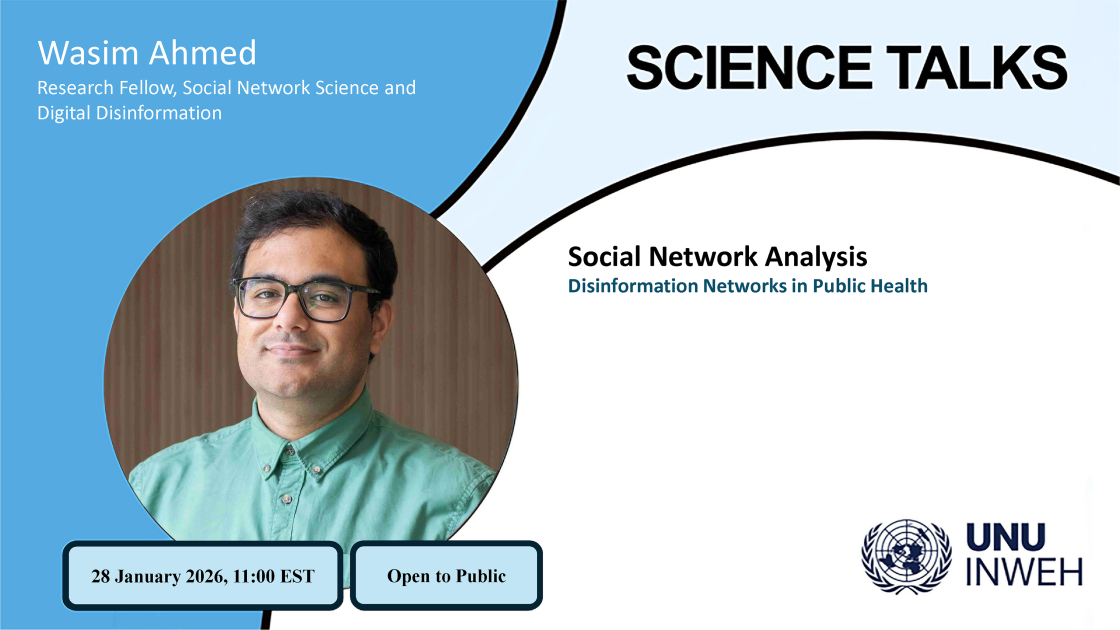
Social media platforms have emerged as powerful forces in the distribution and consumption of health information, particularly during public health emergencies when reliable information can be lifesaving. An upcoming Science Talk will delve into the complex dynamics of how health-related information—both accurate and misleading—circulates online.
The presentation will specifically examine how false narratives, conspiracy theories, and misinformation campaigns gain traction and spread through digital networks. Drawing from extensive research on controversial health topics including vaccines and COVID-19, the talk aims to illustrate how social media simultaneously serves as an invaluable source of real-time public health insights and a dangerous conduit for potentially harmful misinformation.
Dr. Wasim Ahmed, Research Fellow specializing in Social Network Science and Digital Disinformation, will lead the discussion, bringing expertise in tracking how health narratives evolve in digital spaces. His presentation promises to break down sophisticated methodological approaches that researchers use to study health disinformation, including social network analysis, content and sentiment analysis, and digital ethnography.
The event will feature revealing case studies demonstrating how network visualization techniques can identify key influencers, expose coordinated disinformation campaigns, and map the community structures that allow misleading health narratives to persist and grow. These visual representations often reveal surprising patterns in how information spreads and which accounts drive conversation in different health-related topics.
This Science Talk comes at a critical moment when public health authorities worldwide continue to grapple with the “infodemic” that has accompanied the COVID-19 pandemic. The World Health Organization and other global health bodies have identified misinformation as a significant obstacle to effective public health response, with direct impacts on vaccine hesitancy, treatment adherence, and preventive behaviors.
The research being presented holds significant implications for various stakeholders. For public health officials, understanding how misinformation spreads through specific networks can help target interventions and communications more effectively. Policymakers might gain insights to inform regulatory frameworks around digital platform responsibilities. Meanwhile, healthcare practitioners could benefit from recognizing the digital information landscapes their patients navigate.
Social media companies themselves face mounting pressure to address health misinformation on their platforms. Recent years have seen platforms like Facebook, Twitter (now X), and YouTube implement various measures to label, demote, or remove health misinformation, with mixed results. Dr. Ahmed’s research could provide valuable perspective on the effectiveness of such approaches.
The timing of this presentation reflects the growing academic and public interest in the intersection of digital media and public health. Research in this field has expanded dramatically since 2020, with new methodologies emerging to track and analyze the digital information ecosystem.
Ultimately, the Science Talk aims to equip researchers, healthcare practitioners, and policymakers with deeper understanding of the mechanisms behind health misinformation online. Such knowledge could prove crucial in developing more effective responses to future health crises, where the quality of information circulating on social platforms may significantly impact public health outcomes.
Those interested in attending the Science Talk can register through an online form accessible through the event announcement. The presentation promises valuable insights for anyone concerned with the integrity of health information in the digital age.
Fact Checker
Verify the accuracy of this article using The Disinformation Commission analysis and real-time sources.

9 Comments
As someone invested in the mining and commodities space, I’m curious to see if this analysis extends to how information flows around topics like mineral supply chains, new discoveries, and industry trends. Identifying misinformation vectors in those areas could be very valuable.
That’s an excellent point. Misinformation can have serious impacts on commodity markets, so applying similar network analysis techniques to mining-related narratives could yield important insights.
The role of social media in health information distribution is a complex issue that deserves deeper examination. I’m glad to see researchers taking a rigorous, data-driven approach to understanding these dynamics and their implications.
As someone who closely follows developments in the mining and energy sectors, I’m really interested in how this type of social network analysis could be applied to track the spread of information (and misinformation) around critical mineral supplies, new technologies, and industry trends.
Agreed, that could be a very valuable application. Identifying influential nodes, information cascades, and misinformation vectors in those domains could help industry participants and policymakers make more informed decisions.
The growth of social media has been a double-edged sword when it comes to public health information. While it enables rapid information sharing, it also provides a platform for the rapid spread of misinformation. Rigorous research in this area is crucial.
Fascinating to see how researchers are using social network analysis to understand the dynamics of online information flows, especially around sensitive health topics. Curious to learn more about the specific methodologies and data sources they’re leveraging.
Fascinating look at how social networks shape the spread of health information, both accurate and misleading. Analyzing these dynamics is crucial to combating misinformation and ensuring people have access to reliable data during crises.
Agreed, the interplay between social media and public health is a critical area of study. Looking forward to hearing more about the research methodologies used to track the evolution of online narratives.