


Listen to the article
Nostalgia for Dictatorship: How Social Media Fuels Dangerous Historical Revisionism
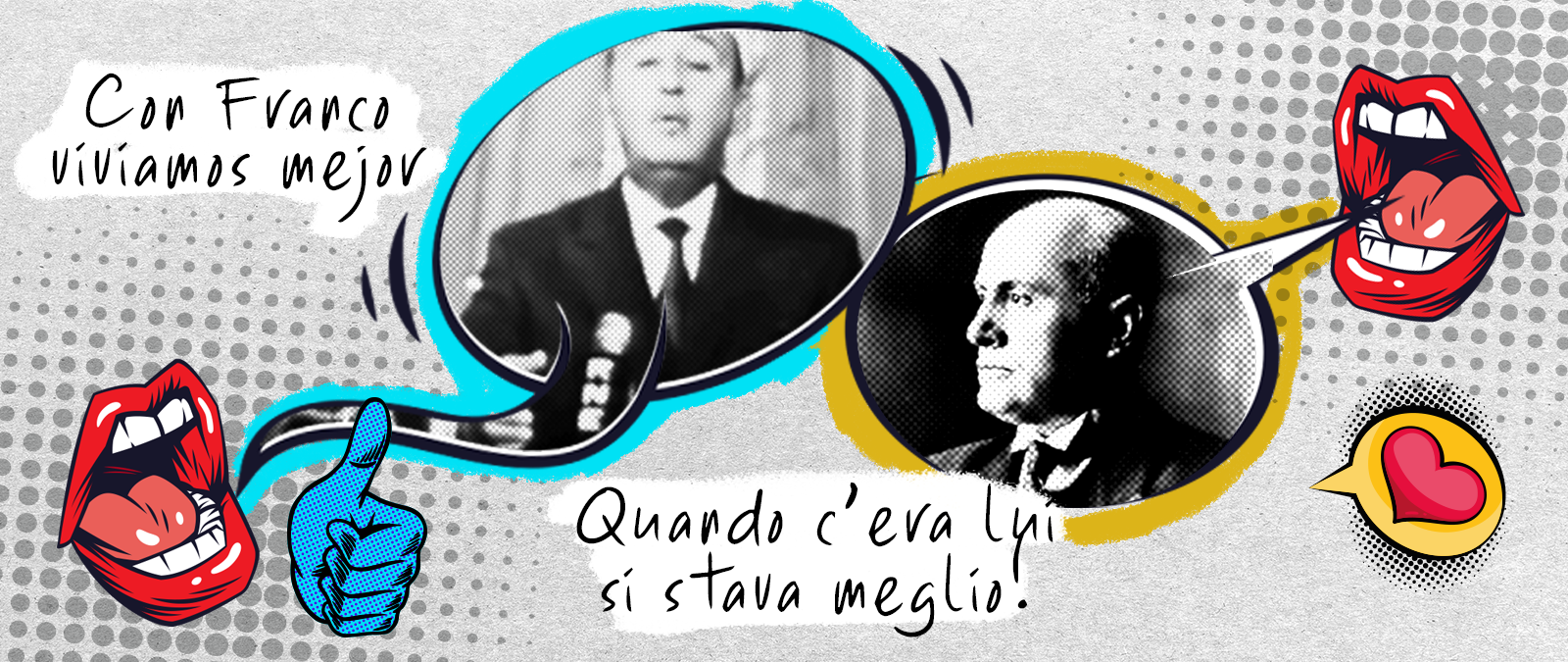
“We lived better under Franco” and “When Mussolini was around, things were better” are becoming increasingly common refrains on social media platforms, according to extensive content analysis by fact-checking organizations Maldita.es and Facta. These narratives, which paint totalitarian regimes as periods of greater security and prosperity compared to modern democracies, tend to surge during times of crisis or social tension.
The glorification of dictatorial regimes relies on multiple tactics: decontextualized statistics, direct comparisons with present-day challenges, and the exploitation of nostalgia for an idealized past. Social media has provided powerful new tools to amplify these messages, which experts say have circulated in various forms since the dictatorships themselves.
When major events like the April 2025 blackout or the devastating DANA floods in Valencia occurred, social media was flooded with claims that “this wouldn’t have happened under Franco” or that “Franco’s infrastructure would have prevented this.” During the Valencia floods, viral messages falsely alleged that democratic governments had demolished reservoirs built during Franco’s era, when in reality no such demolitions took place.
These narratives frequently use manipulated imagery and selective history to create powerful emotional appeals. On Instagram and other platforms, black-and-white photographs of families from the dictatorship era are shared with captions like “We lived better under Franco,” drawing on nostalgia while omitting the brutal realities of life under authoritarian rule.
Housing affordability is another common theme, with Franco credited for building 4.5 million social housing units—a claim debunked by historians. According to Carlos Barciela, author of “We lived better under Franco: Pomp and Circumstance of Forty Years of Dictatorship,” housing was central to the regime’s propaganda but largely remained an unfulfilled promise.
Matilde Eiroa, Professor of History at Universidad Carlos III de Madrid, describes these narratives as “propaganda tools that are easy to exploit,” relying on the idealization of the past and people’s childhood memories. Sociologist Zygmunt Bauman termed this phenomenon “retrotopia,” a longing for a past that seemed better, whether real or imagined.
YouTube channels like RescueYou, with 245,000 subscribers, publish videos of interviews with elderly citizens who lived through the Franco era, asking them leading questions about whether life was better under the dictatorship. These videos present a carefully curated selection of testimonies without addressing their representativeness or historical context.
False achievements are another cornerstone of dictator glorification. Claims that Franco created Spain’s Social Security system, paid holidays, or Sunday rest days have been repeatedly debunked. Similarly, in Italy, the false claim that Mussolini introduced the thirteenth-month salary bonus resurfaces every Christmas, despite historical evidence showing it became universal only after fascism fell.
The narrative surrounding Adolf Hitler follows similar patterns, with social media content either attempting to detach him from responsibility for the Holocaust and World War II or, conversely, glorifying his crimes under slogans like “Hitler was right.” These posts often romanticize Nazi Germany as a period of technological, cultural, or economic splendor, accompanied by dramatic music edits to enhance their emotional impact.
Perhaps most concerning is the impact these narratives appear to be having on younger generations. Data from Spain’s Center for Sociological Research (CIS) shows that while 79% of Spaniards still prefer democracy, support for authoritarianism has grown significantly among young people. Among 18-24-year-olds, sympathy for authoritarian regimes jumped from 7.3% in 2007 to 17.3% in 2025.
A 2024 poll found that one in four Gen Z men (25.9%) believe authoritarianism may sometimes be preferable to democracy, while another survey revealed that 38% of 18-24-year-olds agreed they “wouldn’t mind living in a less democratic country if it guaranteed a better quality of life.”
Similar trends are visible in Italy, where 24% of young people said they would support an authoritarian government “in certain circumstances,” according to a 2025 YouGov study.
Kye Allen, researcher at the University of Oxford, points to a telling statement made by Vox MP Manuel Mariscal in Spain’s Congress: “Thanks to social media, many young people are discovering that the post-Civil War period was not as dark as this Government claims, but rather a time of reconstruction, progress and reconciliation.”
Experts suggest that countering these narratives requires both better content moderation on social platforms and comprehensive educational reforms that provide accurate historical context about dictatorial regimes and their true legacies of oppression.
Fact Checker
Verify the accuracy of this article using The Disinformation Commission analysis and real-time sources.

10 Comments
This is a worrying development. Glorifying totalitarian regimes as being more ‘secure and prosperous’ is a harmful revisionist narrative that ignores the brutal realities of dictatorship. Social media amplifies these distorted views, which can undermine democratic values. Fact-checking and media literacy are crucial to combat this kind of disinformation.
It’s alarming to see social media being used to spread nostalgia for totalitarian regimes. This revisionist narrative is not only inaccurate but also potentially harmful to democratic values. Fact-checking and media literacy efforts are crucial to counter this concerning trend.
Agreed. We must be proactive in challenging these distorted historical accounts and ensuring that the truth prevails, especially in times of crisis when disinformation can thrive.
Exploiting nostalgia to rewrite history in favor of past dictatorships is a concerning tactic. It’s crucial that we call out these revisionist narratives and counter them with facts. Social media has made it all too easy for disinformation to spread, and we must remain vigilant in defending the truth.
The findings of this study are deeply troubling. Attempts to rewrite history and portray authoritarian regimes as superior to modern democracies are not only factually inaccurate but also potentially dangerous. We must redouble our efforts to combat disinformation and promote factual, unbiased historical accounts, especially on social media platforms.
The study highlights how social media is being used to revise historical accounts and portray authoritarian regimes in a positive light. This is a troubling trend that we must be proactive in addressing. Fact-checking, media literacy, and a commitment to democratic values are essential to combat this kind of dangerous revisionism.
Absolutely. Glorifying dictatorships is a slippery slope that can erode democratic institutions. We must remain vigilant and not allow social media to become a platform for historical revisionism.
Interesting study on the disturbing trend of social media fueling nostalgia for dictatorships. It’s concerning how easily disinformation can spread and reshape historical narratives, especially during times of crisis. We need to be vigilant about fact-checking claims and not let social media become a breeding ground for dangerous revisionism.
This study highlights the urgent need to combat the spread of disinformation and revisionist narratives on social media. Glorifying dictatorships and rewriting history to suit political agendas is a dangerous trend that undermines our democratic values. We must remain vigilant and committed to facts and truth.
Absolutely right. Social media has become a powerful tool for manipulating historical narratives, and we cannot allow it to erode our collective understanding of the past. Fact-checking and media literacy are essential to maintain the integrity of our shared history.