


Listen to the article
In an escalating crackdown on digital misinformation, the Director-General of the Signals Bureau has issued a stern warning to individuals using social media platforms to spread false information aimed at inciting unrest, stating they will face prosecution regardless of their location.
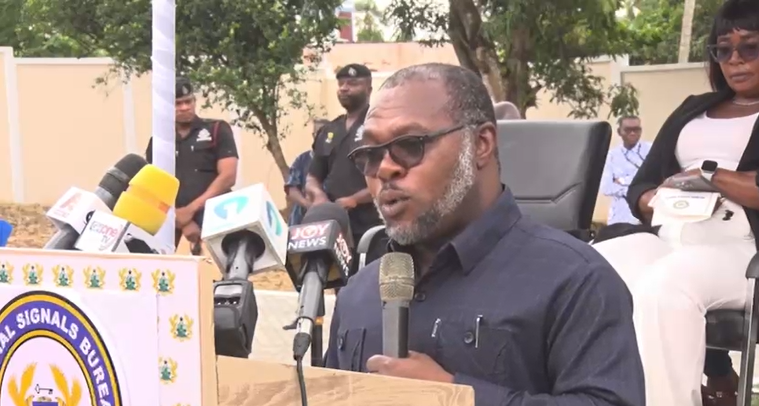
Dr. George Atta Boateng delivered this caution during the inauguration ceremony of a new Signals Bureau facility in Koforidua on Wednesday, revealing that his organization has enhanced its capabilities to monitor platforms such as TikTok and Facebook for potentially destabilizing content.
“I must also say that those who hide behind TikTok and Facebook to spread misinformation and disinformation to incite violence or chaos — we will come after you no matter where you are,” Dr. Atta Boateng warned. He emphasized the Bureau’s improved response time, noting, “Initially, it used to take us 24 hours; now it is coming down to 12 hours. Our records speak for themselves.”
The Bureau’s heightened focus on social media monitoring comes amid growing concerns about the role of digital platforms in spreading false narratives that can trigger public unrest. Ghana, like many countries across Africa, has experienced an exponential growth in social media usage, creating both opportunities for civic engagement and challenges for national security.
Dr. Atta Boateng stressed the importance of information verification, calling on citizens to exercise caution before sharing content online. His warning reflects a growing trend across West Africa, where governments are increasingly vigilant about digital communication during sensitive periods, particularly around elections or times of social tension.
The newly commissioned facility in Koforidua represents a significant investment in the country’s intelligence infrastructure. Equipped with advanced technology, the center aims to enhance the Bureau’s capabilities in detecting, analyzing, and responding to security threats in real-time. It forms part of a broader strategy to decentralize security operations beyond the capital, Accra.
National Security Coordinator COP Osman Abdul Razak, who also addressed the gathering, revealed the impressive scale of the country’s surveillance network expansion. “The NSB has roaming cell towers across the country. As we speak, we have 10,000 CCTV cameras nationwide, and we intend to expand this surveillance to deter crime,” he stated.
This extensive camera network represents one of the largest surveillance systems in West Africa, signaling Ghana’s commitment to technological solutions for security challenges. Security experts note that such systems can help authorities respond more efficiently to incidents and gather evidence for prosecutions, though some civil liberties organizations have expressed concerns about potential privacy implications.
COP Abdul Razak highlighted the strategic importance of the Eastern Region in Ghana’s evolving security architecture. “The data and capabilities generated by this asset will be analysed in this very facility, making Koforidua a key place in our national security network,” he explained, indicating a shift toward more distributed intelligence processing.
The investment in Koforidua’s new facility aligns with broader government initiatives to modernize national security operations through technology integration and enhanced coordination between security agencies. This approach reflects similar developments across the continent, where countries are increasingly leveraging digital tools to address both traditional and emerging security challenges.
Security analysts observe that the Signals Bureau’s enhanced capabilities come at a time when digital threats are diversifying, requiring more sophisticated monitoring and response mechanisms. The agency’s focus on reducing response time from 24 to 12 hours demonstrates an understanding that in the digital age, misinformation can spread rapidly, necessitating equally swift countermeasures.
As Ghana continues to strengthen its security infrastructure, the balance between effective surveillance and protecting civil liberties remains a topic of ongoing discussion among policy experts, civil society organizations, and government officials.
Fact Checker
Verify the accuracy of this article using The Disinformation Commission analysis and real-time sources.
