


Listen to the article
Pakistan’s Information Minister Calls for Greater Oversight of Social Media Platforms
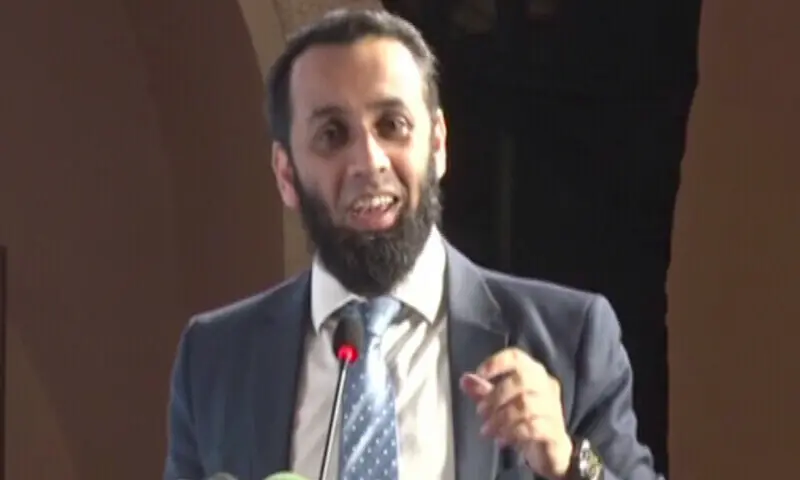
Federal Minister for Information and Broadcasting Attaullah Tarar highlighted Pakistan’s ongoing struggle against digital misinformation campaigns during a strategic dialogue on Thursday, noting that the absence of major social media platforms’ offices in Pakistan has significantly hampered the government’s ability to combat online disinformation.
Speaking at the Strategic Dialogue on Media Literacy and Digital Resilience in Islamabad, Tarar emphasized that misinformation has become “the most powerful weapon to distort facts, spread unrest, and threaten the integrity of the state.” The event was jointly organized by the High Commission of Canada in Pakistan and the Department of Digital Media at the University of the Punjab.
“National security remains the government’s top priority, demonstrated by Pakistan’s successful handling of information warfare during the Pakistan-India tension and the recent conflict involving Afghanistan,” Tarar stated. However, he pointed out a significant obstacle: disinformation campaigners often escape accountability because major social media companies lack physical offices in Pakistan, limiting direct engagement and enforcement mechanisms.
The minister revealed that the government is actively working to bring these platforms to Pakistan to enable more effective collaborative efforts in addressing digital manipulation. This initiative comes as Pakistan faces increasing challenges in the digital sphere, where false narratives can rapidly gain traction and potentially destabilize social and political structures.
Tarar stressed the importance of Media and Information Literacy (MIL) as a critical tool that can “empower citizens to think critically, assess information responsibly, and engage ethically in the digital space.” He endorsed the integration of MIL into national education curricula and committed to forwarding this recommendation to relevant authorities.
Canadian High Commissioner to Pakistan, Tarik Ali Khan, reinforced the importance of digital literacy in his address, describing the cyber ecosystem as “an increasingly dangerous space” that requires “an informed and engaged citizenry that can participate meaningfully both online and offline.” Khan highlighted Canada’s ongoing commitment to supporting free, open, and secure digital spaces, including initiatives focused on media freedom and digital inclusion.
The High Commissioner called for collaborative efforts to support informed citizenship, democratic participation, and the protection of journalists and truth-tellers who face heightened risks in today’s digital environment.
UNESCO Country Representative Fuad Pashayev contributed to the discussion by sharing that the theme of Global Media and Information Literacy Week 2025 would focus on media and information literacy as “the strongest defence in the age of generative AI and algorithmic influence.” This underscores the growing international recognition of digital literacy as a bulwark against manipulation through emerging technologies.
Dr. Savera Mujib Shami, Chairperson of the Department of Digital Media at the University of the Punjab, emphasized that media literacy is not merely an academic concern but “a necessity for everyone,” with profound implications for political awareness, social cohesion, and moral values in society.
The dialogue takes place against a backdrop of increasing digital challenges in South Asia, where social media platforms have been implicated in the spread of political disinformation, sectarian content, and cross-border propaganda. Pakistan’s push for greater accountability from tech giants mirrors similar efforts by other countries in the region, including India, which has implemented stricter regulations requiring social media companies to establish local offices and comply with national laws.
As Pakistan continues to navigate complex regional security dynamics, including tensions with India and Afghanistan, the government’s focus on combating digital disinformation reflects an evolving understanding of national security that encompasses information warfare alongside traditional concerns.
Fact Checker
Verify the accuracy of this article using The Disinformation Commission analysis and real-time sources.

12 Comments
Interesting insights on the challenges of combating disinformation campaigns. The lack of local social media presence and accountability does seem to hamper government efforts to address this growing threat to national security.
Agreed, it’s a tough issue without easy solutions. Strengthening digital literacy and resilience is crucial, along with greater platform cooperation and accountability.
The minister makes a fair point about the challenges of prosecuting disinformation campaigners when social media platforms lack a local presence. This highlights the need for greater international cooperation and harmonized regulations.
Absolutely. Tackling cross-border disinformation requires a coordinated global effort, not just individual national responses. Platform accountability is key.
Disinformation is a complex and evolving challenge that requires multifaceted solutions. I’m curious to learn more about the specific strategies and partnerships Pakistan is exploring to combat this threat to national security.
Agreed, a comprehensive approach involving government, civil society, and the tech sector will be essential. Improving platform cooperation and accountability should be a priority.
This is an important discussion on a critical issue. Disinformation campaigns can have serious consequences, so it’s encouraging to see Pakistan taking a proactive stance. The challenges around platform accountability are concerning, though.
Yes, the lack of local presence for major social media companies is a significant obstacle. Addressing this through international cooperation and harmonized regulations will be crucial.
Pakistan’s approach to countering information warfare during recent conflicts is noteworthy. Developing greater digital resilience seems crucial, but the obstacles around platform cooperation are concerning.
Yes, the lack of local presence for major social media companies is a significant hurdle. Strengthening digital literacy and finding ways to improve platform accountability will be critical going forward.
This is a timely and important discussion. Disinformation is a serious problem that can undermine public trust and democratic processes. I’m curious to hear more about the specific strategies Pakistan is using to address this challenge.
Yes, it will be interesting to see how Pakistan and other countries navigate this complex issue. Balancing free speech and national security concerns is no easy task.