


Listen to the article
Pakistan’s Planning Minister Warns of Digital Disinformation Threats, Calls for Resilience
Federal Minister for Planning and Development Professor Ahsan Iqbal has identified misinformation and digital disinformation as major global threats, emphasizing that digital resilience must be built through education, awareness, and robust cybersecurity measures.
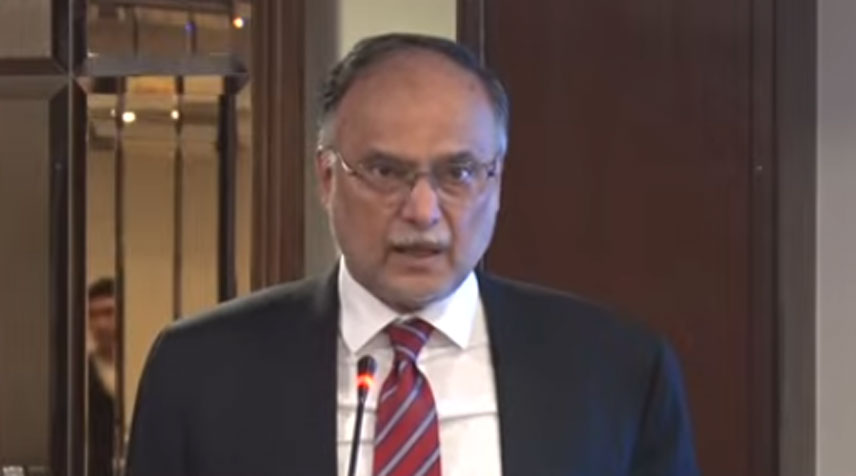
Speaking at a panel discussion titled “Building Digital Resilience” at the Afkar-e-Taza ThinkFest 2026 held at Alhamra in Lahore on Saturday, Iqbal highlighted the dual nature of digital transformation, which has created tremendous opportunities while simultaneously generating serious challenges for both states and individuals.
“While safe city projects and digital surveillance systems have improved urban security, these systems could be misused for criminal and disruptive purposes if hacked,” Iqbal cautioned. He added that cyberattacks on banking infrastructure could severely disrupt financial operations, noting that even modern warfare has become increasingly digitalized.
The minister drew a parallel between physical and virtual borders, stressing that cybersecurity has become as crucial as protecting geographical boundaries. “Just like national boundaries, cyber boundaries also require strong protection,” he said.
Iqbal identified misinformation as the second most significant global threat after terrorism. He explained that social media has made spreading disinformation extraordinarily easy, while ordinary citizens increasingly struggle to distinguish between authentic content and sophisticated AI-generated videos and audio.
Sharing a personal experience, the minister recalled how in 2018, political opponents used religious narratives and online hate campaigns against him, culminating in an assassination attempt by a young man radicalized by digital hate content. “Allah saved my life, but sadly, a young man’s life was destroyed,” he reflected, describing it as a tragic consequence of digital hate.
Pakistan has witnessed a sharp rise in political polarization in recent years, with social media platforms often serving as battlegrounds for competing narratives. The country’s digital landscape has expanded rapidly, with internet penetration growing from approximately 16% in 2016 to over 36% in 2023, according to data from the Pakistan Telecommunication Authority.
Iqbal emphasized that the younger generation must develop critical thinking skills to filter digital information, urging youth to reject content based on hatred or prejudice. “Just as highways have warning signs, social media users must have internal filters to identify and reject hate and prejudicial messages,” he remarked.
The minister noted that beyond conventional warfare, a new form of conflict is now being waged in the information domain, where disinformation can create divisions between citizens and the state. He disclosed that the government has directed the Higher Education Commission to introduce academic content in universities to help students distinguish between truth and falsehood.
The Pakistani government is also working to strengthen institutional capacity to control cybercrimes and is developing legislation to address harassment of women on digital platforms. Iqbal emphasized that freedom of expression should not infringe upon individuals’ wellbeing.
Drawing on global regulatory trends, the minister referenced Australia’s recent decision to ban social media use for children under 16 as an example of emerging approaches to digital regulation. He expressed optimism that societies would gradually develop more responsible ways to utilize freedom of expression, social media, and digital platforms without causing harm to others.
The panel discussion also featured contributions from senior journalist Mehmal Sarfraz, Canadian High Commissioner to Pakistan Tariq Ali Khan, and Dr. Savera Shami, Chairperson of the Department of Digital Media at Punjab University.
Iqbal concluded by emphasizing that unity in diversity remains fundamental to democracy and national strength, warning that countries failing to maintain internal cohesion risk weakening themselves without the intervention of external adversaries.
Fact Checker
Verify the accuracy of this article using The Disinformation Commission analysis and real-time sources.

8 Comments
The minister’s remarks on the evolving nature of modern warfare, with an increased focus on the digital domain, are a sobering reminder of the changing security landscape. Developing comprehensive strategies to address these challenges is paramount.
Building digital resilience is crucial in today’s interconnected world. Misinformation and cyberattacks can have severe consequences, as the minister highlighted. Robust cybersecurity measures and public awareness are essential to combat these challenges.
I agree, the minister’s call for a comprehensive approach to digital resilience is well-founded. Protecting critical infrastructure and financial systems from hacking is a matter of national security.
Strengthening cybersecurity and promoting digital literacy are crucial steps to build resilience against misinformation and cyberattacks. The minister’s emphasis on these aspects is timely and relevant.
The minister makes a valid point about the dual nature of digital transformation. While it has brought many benefits, the risks of misuse and cyberattacks must be taken seriously by governments and businesses alike.
Absolutely. The parallels drawn between physical and virtual borders highlight the evolving nature of modern security challenges. Holistic strategies are needed to safeguard against these emerging threats.
It’s concerning to hear about the potential for misuse of digital surveillance systems and disruption of financial operations through cyberattacks. The minister’s call for proactive measures is well-justified.
I agree, the minister’s warnings underscore the need for robust cybersecurity protocols and continuous monitoring to protect critical infrastructure and sensitive data.