


Listen to the article
Social Media Misinformation Significantly Amplifies Impact of Disease Outbreaks, Research Shows
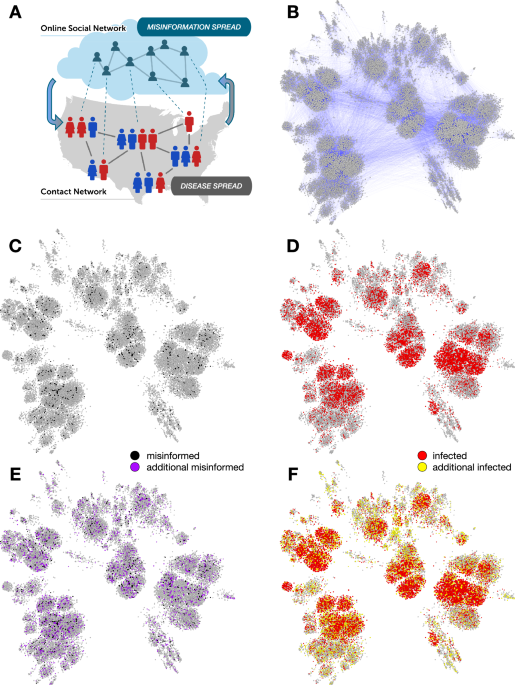
New comprehensive research has revealed that misinformation spreading through social media can significantly worsen the impact of infectious disease outbreaks, potentially increasing deaths and economic costs by alarming percentages. The findings highlight the critical intersection between digital information ecosystems and public health crises, particularly relevant following the global COVID-19 pandemic.
The study, which synthesizes insights from multiple scientific publications, demonstrates that social media platforms can function as transmission vectors for both accurate health information and dangerous misinformation during disease outbreaks. When misinformation proliferates, it directly affects individual behaviors related to prevention measures and vaccination uptake.
“What we’re seeing is a complex relationship between online information networks and physical disease networks,” explains Dr. Caroline Buckee, who has studied social aspects of infectious disease transmission extensively. “The social dynamics that drive information sharing can directly influence the physical dynamics of disease spread.”
Researchers found that during the COVID-19 pandemic, misinformation about vaccines and preventative measures like mask-wearing significantly affected public health outcomes. A study published in the Proceedings of the National Academy of Sciences showed that face masks considerably reduced COVID-19 cases in Germany, but misinformation undermining mask efficacy likely reduced their potential benefit in other regions.
The study points to a troubling pattern: the spread of false or misleading health information often follows similar pathways to the diseases themselves, creating what some researchers have termed an “infodemic” that runs parallel to the actual epidemic. This pattern was documented by Gallotti and colleagues, who assessed the risks of infodemics in response to COVID-19.
Social media platforms create ideal conditions for misinformation spread through complex contagion mechanisms, where repeated exposure to content from multiple sources increases the likelihood of belief adoption. Dr. Damon Centola’s research on behavior spread in online social networks confirms that these digital environments can accelerate the adoption of both beneficial and harmful behaviors.
“We found clear evidence that susceptibility to misinformation about COVID-19 varied around the world, but was consistently associated with reduced compliance with public health measures,” notes Dr. Jon Roozenbeek, whose research examined global patterns of misinformation susceptibility during the pandemic.
The economic impact of misinformation is equally concerning. In the United States alone, vaccine hesitancy fueled by online misinformation likely contributed to billions in additional healthcare costs during the COVID-19 pandemic, according to calculations based on potential healthcare costs cited by Bartsch and colleagues.
Political polarization compounds the problem. Research published in JAMA Internal Medicine revealed higher excess death rates among Republican voters compared to Democratic voters in Florida and Ohio during the COVID-19 pandemic, suggesting that politicized health information contributed to different health outcomes.
The researchers emphasize that combating health misinformation requires a multifaceted approach. Dr. David Broniatowski, who has studied vaccine misinformation extensively, found that both automated accounts (bots) and authentic users contribute to the amplification of misleading health content. “The efficacy of platform policies varies considerably,” he notes in a 2023 Science Advances publication examining Facebook’s vaccine misinformation policies.
Recent interventions show promise. Porter and colleagues demonstrated in 2023 that correcting COVID-19 vaccine misinformation could be effective across ten different countries. However, timing is crucial – interventions are most effective when deployed early in an information cycle.
As public health officials prepare for future outbreaks, integrating information dynamics into epidemic models becomes increasingly important. Traditional disease models that ignore information spread likely underestimate both the complexity and potential severity of outbreaks.
“When we include misinformation dynamics in our models, we see that the worst-case scenarios become significantly worse,” explains Dr. Manlio De Domenico, whose research demonstrates how individual risk perception shapes disease outcomes. “But we also see opportunities for targeted interventions that can dramatically improve outcomes.”
The research underscores the need for public health authorities to collaborate closely with social media platforms to develop more effective strategies for countering health misinformation during disease outbreaks. Without such collaboration, future pandemics may be unnecessarily amplified by the parallel spread of harmful information.
Fact Checker
Verify the accuracy of this article using The Disinformation Commission analysis and real-time sources.

14 Comments
This is an important study that underscores the outsized impact misinformation can have on public health outcomes. Curbing the spread of false narratives online should be a top priority.
Agreed. Social media platforms must take more responsibility in limiting the amplification of harmful misinformation, while also promoting authoritative sources of information.
This research highlights the urgent need to improve digital media literacy and critical thinking skills. Empowering the public to navigate online information more effectively is crucial.
Excellent point. Educating people on how to identify and counter misinformation should be a key part of the solution.
The findings are a sobering reminder of the very real public health consequences of unchecked misinformation. This issue deserves sustained, cross-sector attention and action.
Agreed. Addressing the root causes of misinformation proliferation will require a comprehensive, long-term strategy involving various stakeholders.
Fascinating research on the interplay between social media and disease outbreaks. It highlights the critical need to address misinformation and ensure timely, accurate public health information is widely shared online.
Absolutely. Misinformation can have devastating real-world consequences, especially during a public health crisis. Combating this challenge requires a multifaceted approach.
This is a thought-provoking study that underscores the need for a more proactive, coordinated approach to combating misinformation, especially during public health crises. The stakes are simply too high to ignore this challenge.
Well said. Addressing misinformation on social media should be a top priority, as it can have devastating real-world consequences for individuals and communities.
While the research is concerning, it’s valuable in highlighting the critical intersection between digital information and physical health outcomes. This is an important area for further study and policy development.
Absolutely. Policymakers and tech companies must work together to find effective ways to mitigate the spread of harmful misinformation online.
The findings are quite concerning, but not entirely surprising given the proliferation of misinformation we’ve seen around COVID-19. Tackling this challenge will require a multi-stakeholder effort.
Definitely. Governments, social media companies, public health agencies, and the general public all have a role to play in addressing this critical issue.