


Listen to the article
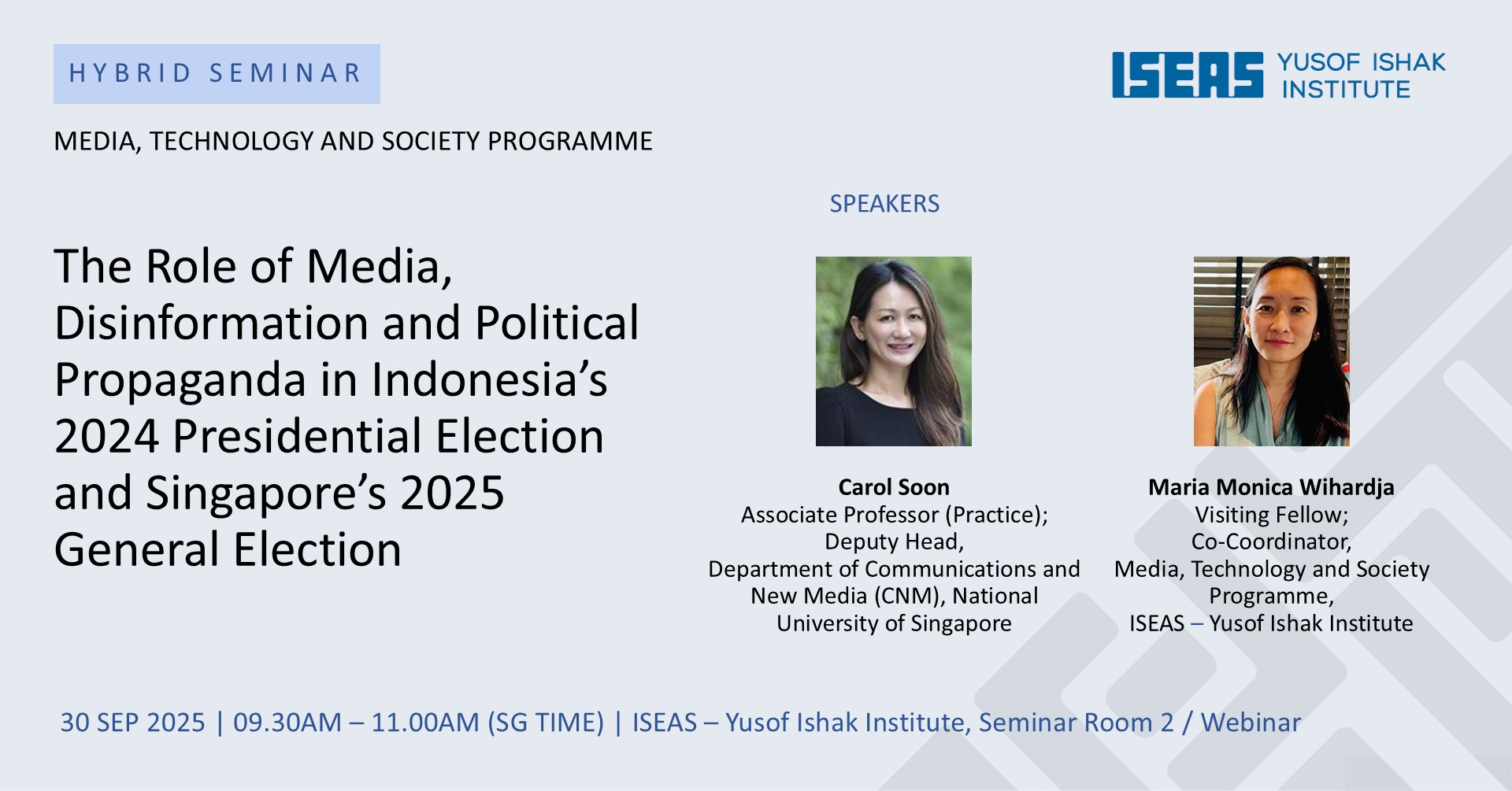
Social media and artificial intelligence (AI) have become pivotal forces in shaping democratic elections across Southeast Asia, raising significant concerns about disinformation and political manipulation. The ISEAS-Yusof Ishak Institute is addressing these challenges through an upcoming hybrid seminar examining the impacts of both traditional and AI-powered media on electoral outcomes in Indonesia and Singapore.
The seminar will present findings from a comprehensive national survey conducted in Indonesia, focusing specifically on how various media platforms and AI-generated content influenced voter perceptions and behaviors during the country’s 2024 Presidential Election. This analysis comes at a critical time when political candidates increasingly rely on digital platforms to engage voters and amplify campaign messaging.
Following the Indonesian case study, the seminar will shift focus to Singapore’s 2025 General Election, presenting survey results that explore media consumption patterns, public attitudes toward AI, and concerns regarding online falsehoods. The presentation will further examine implications for digital inclusion and literacy in Singapore’s evolving information landscape.
The growing ubiquity of social media platforms in Southeast Asian politics reflects a global trend where digital technologies have transformed electoral campaigns. Political strategists now view online engagement as essential rather than optional, creating new opportunities for voter outreach but also raising concerns about information integrity.
Dr. Carol Soon, one of the seminar’s featured speakers, brings significant expertise to these discussions. As Associate Professor (Practice) and Deputy Head at the National University of Singapore’s Department of Communications and New Media, she also serves on the World Economic Forum’s Global Future Council on Information Integrity. Her role as Principal Investigator at the NUS Centre for Trusted Internet and Community and Adjunct Principal Scientist at the Centre for Advanced Technologies in Online Safety positions her at the forefront of research on digital information ecosystems.
Joining Dr. Soon is Dr. Maria Monica Wihardja, a Visiting Fellow and Co-Coordinator of the Media, Technology and Society Programme at ISEAS-Yusof Ishak Institute. Dr. Wihardja also serves as an Adjunct Assistant Professor at NUS’s Department of Southeast Asian Studies and holds positions as a Global Associate at the Indonesia Project and an Honorary Fellow at the Australian National University’s College of Asia and the Pacific.
The seminar comes amid growing regional concerns about deepfakes and AI-generated propaganda that can potentially undermine electoral integrity. Recent elections across Southeast Asia have seen unprecedented levels of computational propaganda, with political actors employing increasingly sophisticated digital tools to influence public opinion.
For electoral commissions and regulatory bodies throughout the region, understanding the interplay between traditional media, social platforms, and emerging AI technologies has become essential for safeguarding democratic processes. The research presented at this seminar aims to provide data-driven insights that could inform future policy approaches.
The hybrid event will be held at the ISEAS-Yusof Ishak Institute, with options for both in-person and virtual attendance. Those wishing to attend in person can register through the ISEAS mobile application, available on both iOS and Android platforms. Virtual participants can register through a dedicated webinar link to receive access credentials.
In-person seating will be limited, and early registration is encouraged. The seminar will include a Q&A session where attendees, both physical and virtual, will have opportunities to engage with the speakers directly.
As Southeast Asian nations continue navigating the complex relationship between technology and democracy, events like this highlight the region’s commitment to addressing emerging challenges in the digital information space while protecting electoral integrity.
Fact Checker
Verify the accuracy of this article using The Disinformation Commission analysis and real-time sources.

10 Comments
This is a concerning trend that deserves close examination. The potential for media manipulation and disinformation to sway elections is a serious threat to democratic processes across Southeast Asia.
I agree, it’s crucial that voters are able to make informed decisions free from the influence of misleading or fabricated information online.
This is a complex issue with no easy solutions. Balancing the benefits of technology in elections with the risks of disinformation and manipulation will require a multi-faceted approach.
Agreed. Policymakers, tech companies, and civil society will all need to work together to address these challenges and protect the democratic process.
The findings from the national survey in Indonesia will be fascinating to learn about. I’m curious to see how different media platforms and AI-generated content impacted voter perceptions during the 2024 election.
Yes, this is a timely and important topic as political candidates increasingly leverage digital tools to reach voters. Transparency and media literacy will be key.
I’m skeptical of the ability of traditional media and AI-powered content to truly inform voters in a fair and unbiased way. Rigorous fact-checking and media literacy education will be essential.
That’s a valid concern. Transparency and accountability measures for both traditional and digital media will be crucial to ensure voters have access to reliable information.
The Singapore case study will also provide valuable insights. Understanding public attitudes toward AI and concerns about online falsehoods is crucial for safeguarding the integrity of the 2025 General Election.
Absolutely. Ensuring digital inclusion and equipping citizens with the skills to navigate the evolving information landscape is critical.