


Listen to the article
Media Agency Warns Against Disinformation on Middle East Conflict
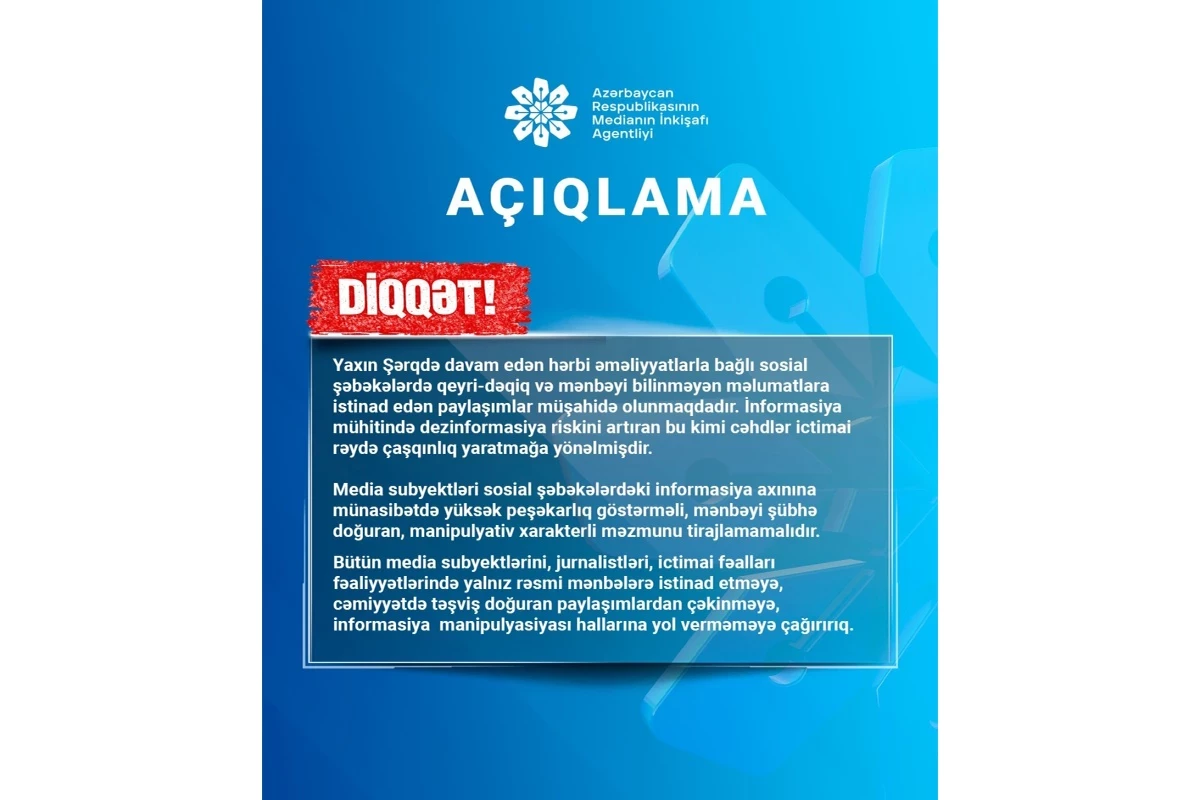
Azerbaijan’s Media Development Agency issued a warning today about the spread of false information regarding ongoing military operations in the Middle East, urging journalists and media outlets to exercise caution when sharing content from social media platforms.
The agency expressed concern over an increasing number of social media posts that cite inaccurate or unidentified sources about the conflict, according to reports from the Azerbaijan Press Agency (APA). These posts, according to the statement, appear designed to create confusion among the public and contribute to a growing disinformation problem in the current information landscape.
“Such attempts increase the risk of disinformation in the information environment and are aimed at creating confusion in public opinion,” the Media Development Agency noted in its official statement.
The warning comes amid heightened tensions in the Middle East, where recent military escalations between Israel and Hamas, alongside growing regional involvement, have created a volatile information environment. The conflict has triggered a parallel battle in the digital sphere, with competing narratives and claims circulating rapidly across social platforms.
Media analysts note that disinformation during armed conflicts can have particularly dangerous consequences, potentially exacerbating tensions, increasing civilian panic, or even influencing military decision-making. The Middle East region has historically been vulnerable to such campaigns, with multiple state and non-state actors vying to control narratives around ongoing conflicts.
In its appeal, the Media Development Agency emphasized that news organizations must demonstrate “high professionalism” when handling information flowing through social networks. The agency specifically cautioned against the circulation of “content of a manipulative nature” from dubious sources.
The statement reflects growing concerns globally about the role social media platforms play in information warfare. Unlike traditional media with established editorial standards, social platforms can allow unverified information to reach millions within minutes, creating significant challenges for fact-checking efforts.
“We call on all media entities, journalists, and public activists to rely only on official sources in their activities, refrain from posts that create panic in society, and avoid cases of information manipulation,” the agency urged.
Media experts point out that while official sources are important, journalists covering conflicts must also maintain independence and verify information across multiple reliable sources. This becomes particularly challenging in conflict zones where access is limited and information control is often a strategic objective for warring parties.
The statement from Azerbaijan’s media authority reflects a broader global struggle with wartime information integrity. Similar warnings have been issued by media regulators and fact-checking organizations worldwide as the digital information space becomes increasingly weaponized during conflicts.
Digital literacy experts recommend that consumers of news remain vigilant about the sources of information they encounter online, particularly during active conflicts. This includes checking whether news comes from established outlets with transparent editorial processes, verifying claims across multiple reliable sources, and being wary of emotional content designed to provoke strong reactions rather than inform.
As the Middle East conflict continues to evolve, the challenge of maintaining information integrity remains significant for media organizations worldwide, requiring heightened vigilance and professional standards in reporting on this sensitive and complex situation.
Fact Checker
Verify the accuracy of this article using The Disinformation Commission analysis and real-time sources.

9 Comments
Glad to see the Media Development Agency taking a proactive stance against disinformation on the Middle East conflict. Accurate, fact-based reporting is crucial during such volatile times to prevent the spread of misinformation.
Disinformation can have real-world consequences, especially when it comes to military conflicts. Kudos to the agency for taking a firm stance and calling on media to be responsible gatekeepers of information.
Curious to see how the Media Development Agency plans to work with journalists and outlets to address this disinformation problem. Proactive collaboration will be key to curbing the spread of false narratives.
The digital battleground is just as critical as the physical one when it comes to the Middle East conflict. Combating disinformation online is essential to prevent the escalation of tensions.
It’s good that the agency is being proactive in warning about disinformation. The public deserves access to accurate, objective information during times of regional conflict and instability.
Agreed. Maintaining transparency and credibility in media coverage should be the top priority, even as the situation on the ground remains volatile.
The warning about social media posts citing unverified sources is well-warranted. It’s important for journalists and outlets to thoroughly vet information, especially around sensitive geopolitical events, before publishing.
Absolutely. Fact-checking and source validation should be the top priorities to maintain public trust in media coverage of this complex situation.
The rise of social media has certainly amplified the spread of disinformation. I hope the Media Development Agency’s efforts can help counter these trends and restore trust in news reporting.