


Listen to the article
Traditional Media Linked to Higher Fake News Sharing in Thailand, Study Finds
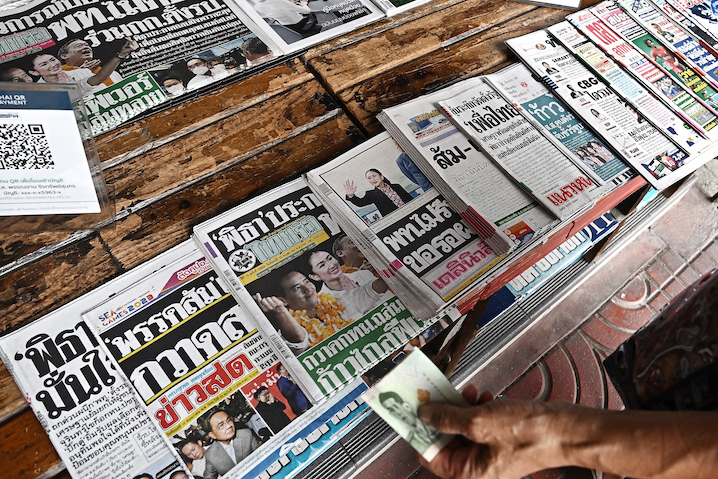
A new study examining media influence on fake news dissemination in Thailand has revealed that individuals who consider traditional media as their primary influential source are more likely to share false information compared to those who rely on online platforms.
The research, conducted by Surachanee Sriyai and Akkaranai Kwanyou using nationwide survey data of 1,675 participants, challenges the common perception that social media is primarily responsible for the spread of misinformation.
“Individuals who are most influenced by traditional media are significantly more likely to share fake news compared to those who are most influenced by online media,” the study found, with traditional media consumers scoring 3.01 on willingness to share fake news versus 2.86 for online media consumers on a 5-point scale.
Interestingly, the researchers found no statistically significant difference in how the two groups evaluated the credibility of fake news, suggesting that media consumption patterns affect sharing behavior more than belief formation.
The study also revealed distinct demographic patterns in media consumption. Younger individuals, typically in their late 30s to early 40s, are more likely to get information from social media and messaging apps, while those in their mid-40s and above tend to rely more heavily on traditional outlets like television and radio.
Social media emerged as the most influential media type overall, with 48.2% of respondents identifying it as their primary source of information, followed by television (27%) and news websites (22.7%).
The research builds on existing theories including the Elaboration Likelihood Model, which outlines two routes to persuasion: a central route involving deep, systematic processing of information, and a peripheral route relying on less effortful, heuristic processing.
The findings challenge the prevailing narrative that social media platforms, with their decentralized nature and algorithmic amplification, are the primary culprits in spreading misinformation. Instead, they suggest that the relationship between media consumption and disinformation is more complex than previously thought.
“This contradicts the recent stream of thinking that social media can promote the dissemination of false information more than its traditional counterparts,” the authors note.
The researchers acknowledge certain limitations in their study, including the inability to identify specific traditional media outlets that respondents consumed, which could vary significantly in quality and journalistic standards.
The study’s findings have significant implications for media literacy initiatives and efforts to combat disinformation in Thailand and potentially other Southeast Asian countries. As digital media consumption continues to rise, understanding how different types of media influence information processing and sharing behaviors becomes increasingly important for developing effective interventions against fake news.
As Thailand navigates an evolving media landscape, this research highlights the need for a nuanced approach to addressing disinformation that considers both traditional and digital information sources, rather than focusing exclusively on online platforms.
Fact Checker
Verify the accuracy of this article using The Disinformation Commission analysis and real-time sources.

10 Comments
This is a fascinating study that challenges the common perception of social media as the main culprit in the spread of fake news. The finding that traditional media consumers in Thailand are more likely to share misinformation, despite similar credibility assessments, is quite intriguing. I wonder if this pattern is unique to the Thai context or if it has broader implications for media and information dynamics.
Absolutely, this study adds an important layer of complexity to the ongoing discourse around misinformation and the role of different media platforms. It will be interesting to see if further research can unpack the underlying reasons for this trend and explore its potential applications in other countries.
The study’s finding that traditional media consumers in Thailand are more prone to sharing misinformation is quite surprising. It suggests that the narrative around social media as the primary driver of fake news may be oversimplified. I’m curious to learn more about the demographic and behavioral factors that contribute to this trend.
Yes, this study highlights the importance of looking beyond the conventional wisdom and examining the nuanced dynamics at play in the spread of misinformation. It will be valuable to see if these insights can inform media literacy efforts and help develop more targeted approaches to addressing the problem.
This is a thought-provoking study that offers a nuanced perspective on the relationship between media consumption and the spread of misinformation in Thailand. The finding that traditional media consumers are more likely to share fake news, despite similar credibility assessments, is quite surprising and challenges the conventional narrative. I’m curious to learn more about the potential factors driving this pattern and how it might inform media literacy efforts in the country.
Agreed, this study provides valuable insights that could help us move beyond simplistic explanations and develop a more comprehensive understanding of the complex dynamics involved in the dissemination of false information. It will be interesting to see if these findings resonate in other contexts or if the Thai media landscape has unique characteristics that contribute to this trend.
This is an important study that provides nuanced insights into the complex relationship between media consumption and the spread of disinformation. The finding that traditional media consumers are more likely to share fake news, despite similar credibility assessments, is quite intriguing and deserves further exploration.
I agree, the study raises some thought-provoking questions about the role of media ecosystems in shaping information sharing behaviors. It would be interesting to see if similar patterns emerge in other countries or if the Thai context is unique in some way.
Interesting study on the role of traditional vs. online media in the spread of misinformation in Thailand. It’s surprising to see that traditional media consumers are more likely to share fake news, despite no differences in perceived credibility. Curious to learn more about the demographic factors behind this trend.
Yes, the findings challenge the common assumption that social media is the primary driver of misinformation. It will be valuable to dive deeper into the reasons behind this pattern and what it might mean for media literacy efforts in Thailand.