


Listen to the article
Nobel Laureate Maria Ressa Warns of “Information Armageddon” Threatening Democracy
When Maria Ressa speaks about threats to democracy, she does so with the hard-earned authority of someone who has faced arrest, prosecution, and harassment for doing her job as a journalist. The co-founder of Philippine news site Rappler and 2021 Nobel Peace Prize winner has become one of the world’s most prominent voices warning about the intersection of authoritarianism and digital disinformation.
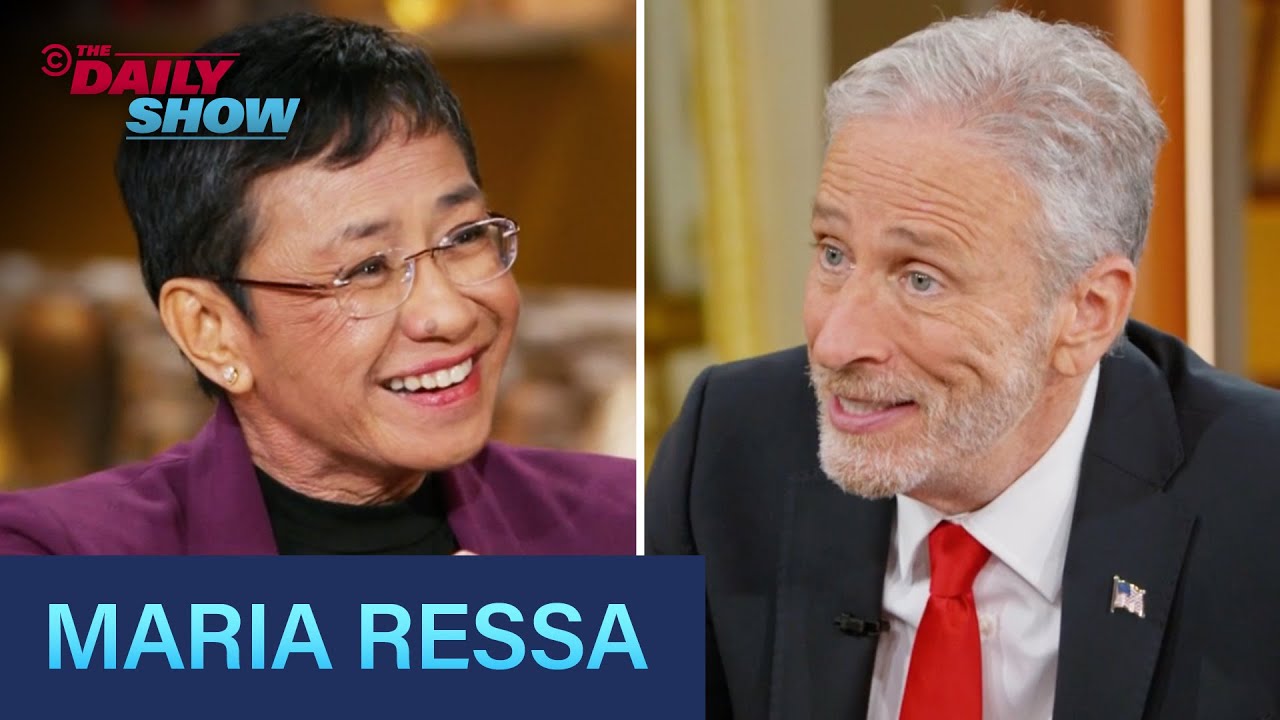
In recent appearances on The Daily Show and at the United Nations’ 80th anniversary, Ressa has drawn urgent parallels between what happened in the Philippines under former President Rodrigo Duterte and democratic backsliding occurring globally, including in the United States.
“It was both déjà vu and PTSD,” Ressa told The Daily Show’s Jon Stewart, describing how watching American politics in recent years triggered memories of Duterte’s rise. She outlined the familiar pattern: unchecked executive power, a compliant legislature, and mounting pressure on courts gradually eroding democratic institutions.
Ressa’s 2022 book, “How to Stand Up to a Dictator: The Fight for Our Future,” serves as both memoir and manifesto. While chronicling her experiences leading Rappler as it exposed the violence of Duterte’s drug war, she identifies a broader threat: the weaponization of social media against truth itself.
“Without facts, you can’t have truth. Without truth, you can’t have trust. Without trust, you have no democracy,” Ressa writes, a principle that guides her analysis of our current information ecosystem.
The journalist points to research showing falsehoods spread six times faster than facts online. Stewart likened today’s social media environment to “ultra-processed speech” – content engineered to bypass reason and trigger emotional responses like fear and anger. Ressa agreed, emphasizing that “online violence is real-world violence.”
She highlighted how digital manipulation strategies were tested in countries like the Philippines before being exported elsewhere. “What happened to us is just happening to you,” she warned, noting that Cambridge Analytica refined many of its tactics in her country before deploying them in other democracies.
At the United Nations, Ressa’s warnings took on even greater urgency. She described the current moment as an “information Armageddon” driven by surveillance capitalism, where tech platforms optimize for engagement regardless of social cost. The stakes, she emphasized, couldn’t be higher.
As evidence, she cited the unprecedented dangers facing journalists globally. More than 240 reporters have been killed in Gaza alone, exceeding the combined journalist deaths from World War I, World War II, Vietnam, and the former Yugoslavia. “They’re targeted, and there must be accountability,” she insisted.
Ressa’s call to action is comprehensive. She urges governments to end Big Tech impunity, invest in alternative information infrastructures built around trust, and establish firm global safeguards for artificial intelligence. “Information integrity is the mother of all battles,” she said. “Win this and we can win the rest. Lose this and we lose everything.”
Despite facing extraordinary personal challenges – including 11 arrest warrants in a single year and ongoing travel restrictions requiring Supreme Court approval – Ressa remains remarkably resilient. She takes heart in seeing former President Duterte now facing crimes against humanity charges at The Hague. “Impunity ends,” she noted.
Her experience at Rappler demonstrates how sustained pressure can sometimes strengthen resolve. Under constant threat, the newsroom became more united and mission-driven as journalists stood together against intimidation.
While acknowledging that political dynasties still shape Philippine politics and disinformation networks remain powerful worldwide, Ressa refuses to surrender to pessimism. She deliberately describes our moment as an “Information Armageddon” rather than an “information apocalypse” – a subtle but important distinction emphasizing that the battle continues and action still matters.
“Democracy’s struggle is not over,” Ressa insists. In a world where digital platforms increasingly mediate our understanding of reality, her message is clear: defending truth has become essential to preserving freedom itself.
Fact Checker
Verify the accuracy of this article using The Disinformation Commission analysis and real-time sources.

9 Comments
Fascinating insights from Maria Ressa on the critical role of social media in undermining democracy. Her experiences in the Philippines are a sobering reminder of the fragility of democratic institutions in the digital age.
As an investor in mining and energy stocks, I’m curious to hear Ressa’s views on how disinformation campaigns could impact commodity markets and related equities. Transparency and reliable information are crucial for efficient markets.
Ressa’s warnings about the ‘information Armageddon’ threatening democracies worldwide are concerning. Tackling disinformation and digital authoritarianism must be a top priority for policymakers.
I agree. Strengthening media literacy and platform accountability will be key to addressing these challenges.
Ressa’s call to action is a sobering reminder that the fight for democracy is an ongoing struggle, even in the world’s most established democracies. Her insights deserve widespread attention.
It’s alarming to hear Ressa describe the ‘déjà vu and PTSD’ she experienced watching democratic backsliding in the US. Her book ‘How to Stand Up to a Dictator’ sounds like essential reading.
Agreed. Her firsthand account of combating authoritarianism could provide valuable guidance for citizens and policymakers alike.
Ressa’s insights on the parallels between the Philippines and the US are unsettling. We must heed the lessons from her experience and work to safeguard democratic institutions and the free press.
As someone invested in the mining and energy sectors, I’m concerned about the potential for disinformation campaigns to disrupt commodity markets and undermine public trust. Ressa’s warnings deserve serious consideration.