


Listen to the article
Israel’s ceasefire deal on Monday resulted in another exchange of captives and prisoners, giving Gaza’s 2.1 million residents a temporary break from Israeli bombardment. The agreement led to the release of 1,968 Palestinian prisoners after Hamas handed over the final 20 living Israeli captives.
Shortly after the exchange, a wave of disinformation spread across social media platforms claiming that female captives were absent from those released because Hamas had killed them all. Far-right American activist Laura Loomer, known for her strong pro-Israel stance and criticism of Qatar, was among those leading this narrative on X (formerly Twitter), where she alleged that “Hamas raped and murdered all of the women” captives.
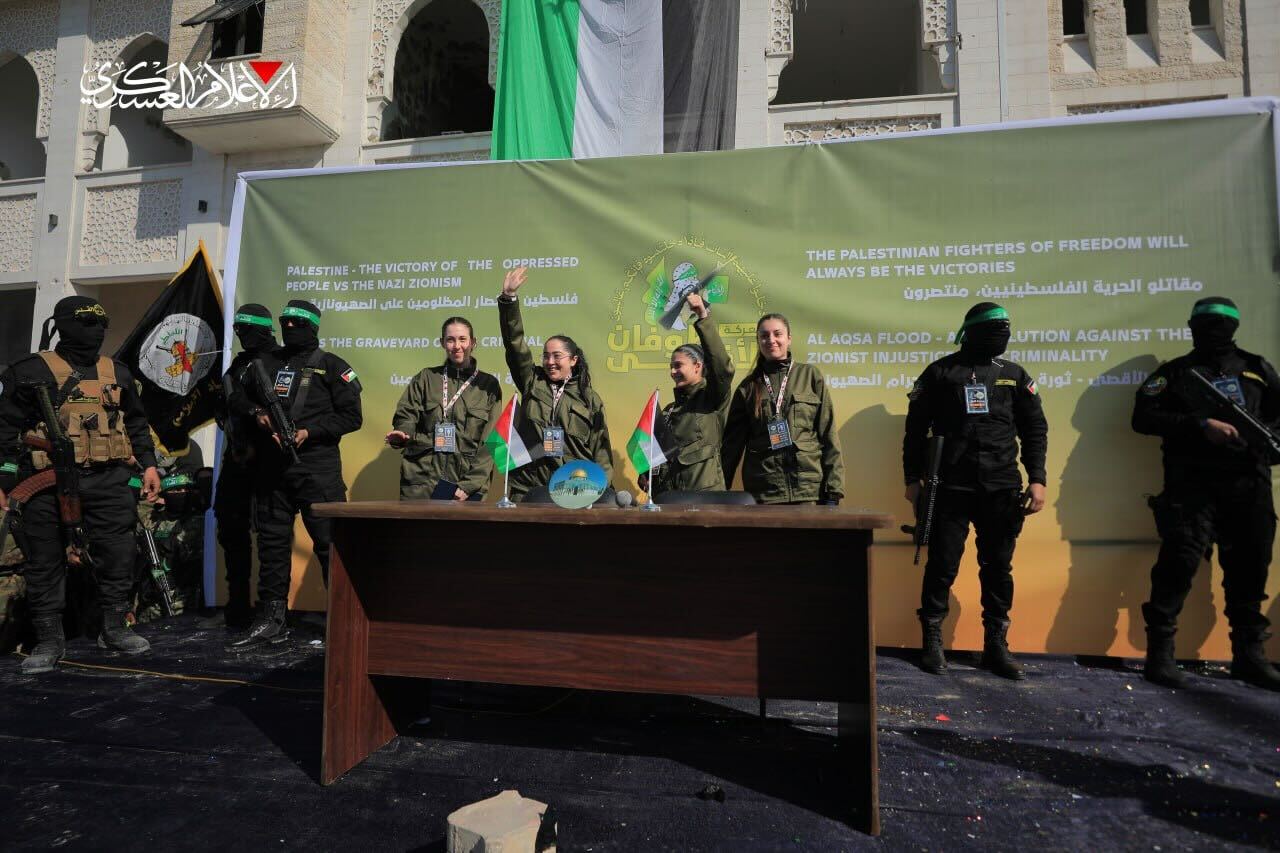
Social media users quickly countered these claims by pointing out that Hamas had already released all female captives during previous ceasefire agreements over the past two years, in accordance with the terms of those deals.
Dr. Rana Sharif, UC President’s Postdoctoral Fellow at UC Berkeley, told Doha News that global witnesses to Israel’s actions in Gaza have rendered public relations efforts ineffective. “No amount of public relations efforts will undo the material violence they have inflicted on Palestinians in Gaza for the last two years,” she stated.
Sharif noted that worldwide support for Palestine has steadily increased over the past two years as “people are learning, asking questions, undoing the decades-long attempt to sanitize a history of settler colonialism by Israel.”
Qatar-based disinformation expert Dr. Marc Owen Jones described those spreading such rumors as “professional agitators” with clear agendas who “care less about the truth and more about perpetuating an agenda demonizing Hamas and Palestinians.”
The timeline of female captive releases contradicts the disinformation narrative. On October 20, 2023, Hamas released the first two female captives, Judith Tai Raanan and Natalie Raanan, citing humanitarian grounds. Days later, two elderly female captives, Yocheved Lifshitz and Nurit Cooper, were also freed.
During a week-long truce in November-December 2023, Hamas released approximately 60 living female captives. A second ceasefire between January and March this year saw Hamas release an additional 33 Israeli captives, including nine living females and one deceased. Israeli forces later discovered the remaining female captives—10 deceased and two alive—during ground operations in Gaza.
Released captives generally appeared in good health, with 85-year-old Yocheved Lifshitz even stating that Hamas “treated them gently”—comments that reportedly prompted Israeli officials to restrict media interviews with freed captives.
Israel has long employed propaganda tactics known as “Hasbara” (Hebrew for “explanation”) to project a positive image of its occupation of Palestinian territories. However, this strategy has faltered as real-time images of destruction in Gaza circulated globally.
Sharif referenced a recent Pew Research Center poll showing nearly 60 percent of Americans now “view Israel unfavorably.” She explained, “The state is no longer able to monopolize the communication apparatus, despite all its efforts and resources. We are witnessing a shift that is translating to more pro-Palestine engagement online and in the streets.”
In the conflict’s early days, major media outlets circulated unverified claims that Hamas had beheaded babies during its October 7 attack. Despite subsequent debunking by major news organizations, many Western reporters continued to amplify these allegations.
Critics point to Israel’s attempts to weaponize feminist rhetoric, with Western media often portraying female Israeli soldiers as victims while ignoring their participation in military operations against Palestinians. Sharif noted how the Israeli military “celebrates itself for ‘gender equity'” while erasing “the harm and violence caused by the military industrial complex.”
She highlighted the concept of colonial feminism, which uses the language of women’s liberation to justify colonial actions while depicting Palestinian women as “disposable, threatening and deserving of death.”
A recent Responsible Statecraft report revealed that Israel has been paying American social media influencers up to $7,000 per post to share pro-Israel content. Additionally, a Eurovision News Spotlight report disclosed that Israel spent $50 million on platform deals, including with Google, to deny the famine in Gaza—efforts undermined by widespread images of malnourished Palestinians.
As Jones noted, Israel may intensify its propaganda campaigns as it attempts to rebuild its reputation during the ceasefire, particularly as journalists document the destruction in Gaza and recover bodies. “For this reason, Israel is probably going to double down on their propaganda efforts,” he concluded.
Fact Checker
Verify the accuracy of this article using The Disinformation Commission analysis and real-time sources.

10 Comments
This article highlights the importance of critical thinking and media literacy when it comes to reporting on conflict zones and geopolitical tensions. Fact-checking and avoiding the amplification of unsubstantiated claims should be a priority for responsible journalism and public discourse.
Exactly. Maintaining objectivity and scrutinizing information, rather than simply reacting to emotive narratives, is key to having a productive dialogue around these complex topics.
The article raises important questions about the spread of disinformation, especially on social media platforms. It’s a good reminder to be vigilant and seek out reliable sources when it comes to reporting on complex geopolitical conflicts.
Absolutely. Social media can be a breeding ground for unsubstantiated claims, which is why it’s crucial to verify information from credible, fact-based sources before drawing conclusions or sharing narratives.
Interesting claims around the supposed ‘female captives’ narrative. While disinformation can spread quickly online, it’s important to examine the facts and evidence objectively. The details provided suggest Hamas had already released all female captives as part of previous ceasefire agreements.
You’re right, verifying claims and checking sources is crucial. The article seems to indicate the ‘female captives’ allegations were unfounded and contradicted by the facts on the ground.
The ‘female captives’ rhetoric appears to be another example of how partisan narratives can distort the reality on the ground. It’s important to avoid getting swept up in sensationalized claims and instead focus on the nuanced details and negotiations that actually took place.
Well said. Cutting through the partisan noise to understand the full context and timeline of events is essential for having a balanced, informed discussion on these sensitive issues.
This highlights the challenges of navigating complex geopolitical conflicts and the need to be cautious about unsubstantiated narratives, especially those with strong ideological undertones. A balanced, fact-based approach is important to understand the nuances of these situations.
Well said. Cutting through the noise and rhetoric to focus on the actual events and agreements is key. Maintaining objectivity and scrutinizing claims, rather than simply amplifying them, is the responsible way to discuss these sensitive topics.