


Listen to the article
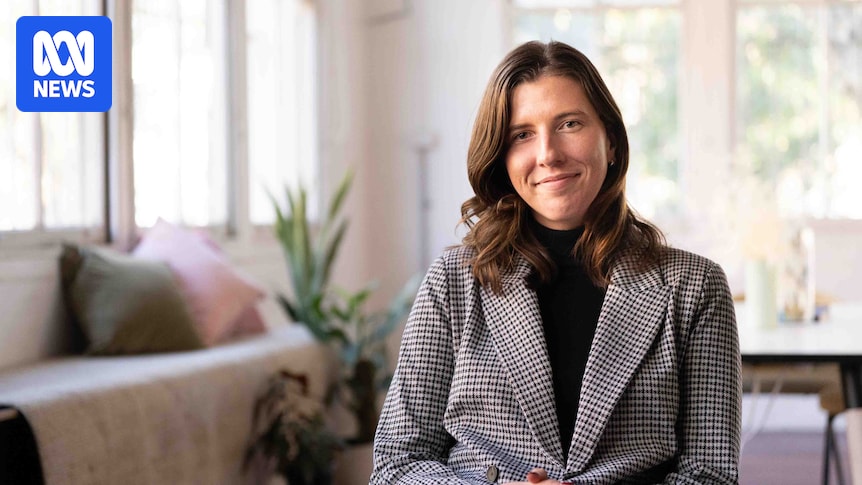
Social media commentator Hannah Ferguson has built a substantial online presence by bridging entertainment and serious political discourse, but now warns of the platform’s darker impact on society.
Ferguson founded Cheek Media five years ago to create a space for young Australians disillusioned with traditional media outlets. Her approach has resonated strongly, with her Cheek Media and personal Instagram accounts now reaching more than 290,000 followers. During Australia’s 2025 federal election cycle, her content garnered over 4 million views, including thousands who watched her “get ready with me” reel before interviewing Prime Minister Anthony Albanese.
“[Social media has] been an incredible tool for change and starting social impact conversations around politics, education and media literacy,” Ferguson told ABC TV’s Compass program.
Despite her success in building an engaged community around social, political and feminist issues, Ferguson has experienced significant personal costs. “Trying to lead hopeful conversations [has] come with threats to my life, threats to my safety, threats to my family,” she revealed.
Ferguson also expresses broader concerns about social media’s influence on public discourse. “The algorithms push inflammatory material, and we are so used to that,” she explains. This has led to moments of self-doubt about her work: “Is this doing more harm than good?”
She points to how social media has fueled political polarization globally, particularly in the United States. “Our system of compulsory preferential voting is inherently different to the United States, but to say [Trump-style politics] couldn’t happen here is naïve,” Ferguson cautions. “We need to be aware about what we’re consuming and how that can look in Australia.”
These concerns are shared by Nobel Peace Prize winner Maria Ressa, a Philippines-based investigative journalist who has witnessed firsthand how social media can undermine democratic processes. As co-founder of Rappler, the Philippines’ first digital news outlet, Ressa observed how social media was weaponized following President Rodrigo Duterte’s 2016 election.
Rappler uncovered an online network of bots, fake accounts, and influencers supporting Duterte’s controversial anti-drug campaign that resulted in thousands of Filipino deaths. When Ressa published these findings, she and her news organization faced severe backlash, including a barrage of online hate—averaging 90 hostile messages per hour—and multiple legal charges that could have resulted in cumulative jail sentences of up to 100 years.
While Ressa has been acquitted of most charges, her continued advocacy against tech platforms comes with significant personal risk. Her experience highlights the real-world consequences of online disinformation campaigns.
These issues are not confined to authoritarian contexts. A 2018 MIT study found falsehoods spread six times faster than facts on Twitter, even before Elon Musk’s ownership led to reduced content moderation. In 2024, England experienced riots after false social media posts incorrectly claimed a Muslim asylum seeker had stabbed three young girls in Southport, demonstrating how platforms can amplify hate and fracture social cohesion.
Australia faces similar challenges. ABC NEWS Verify recently discovered a pro-Russian news website attempting to “poison” AI chatbots with propaganda ahead of Australia’s 2025 federal election. An audit found that 16.66 percent of chatbot responses amplified false narratives, including disinformation about Australian politics.
The Australian government’s attempt to address these concerns through the Combatting Misinformation and Disinformation Bill 2024 failed to pass Parliament, facing criticism from various perspectives about free speech implications and potential government overreach. However, from December, Australia will implement a ban preventing those under 16 from accessing social media platforms, including YouTube.
Ressa advocates for stronger regulation and structural changes to social media platforms, including redesigning their systems and restricting user data collection. Working with fellow Nobel laureate Dmitry Muratov, she has developed a comprehensive 10-point plan to address these issues.
“Without facts, you can’t have truth, without truth, you can’t have trust,” Ressa warns. “Without these three things, you can’t have a shared reality. In the end, a world with no facts is ripe for a dictator.”
Fact Checker
Verify the accuracy of this article using The Disinformation Commission analysis and real-time sources.

11 Comments
Fascinating perspective from these two influential voices. Social media has been a double-edged sword – empowering marginalized groups but also fueling polarization and abuse. Finding the right balance will require ongoing collaboration between platforms, policymakers, and civil society.
This is a timely warning about the dangers of social media disinformation. Given the outsized influence these platforms wield, responsible tech leadership and smarter regulation will be essential to protect our civic institutions and democratic processes.
It’s a complex issue with no easy solutions. On one hand, social media has democratized public discourse. But the anonymity and virality of the platforms can also enable harassment and the spread of harmful falsehoods. We have more work to do.
Hmm, it’s a shame to hear that even successful social media influencers can face such personal costs and threats. We need better safeguards and support systems to protect free speech and public figures, especially women and minorities, online.
Absolutely. Social media platforms must do more to moderate harmful content and harassment. And governments should consider stronger regulations to hold tech companies accountable.
This is a really important issue that deserves more attention. Social media has democratized information and given a voice to the voiceless. But the lack of gatekeepers and moderators has also enabled the spread of harmful falsehoods. We need to get the incentives right.
This is a concerning trend – the dark side of social media that can enable disinformation and threaten those who try to create positive change. It’s crucial we address these challenges head-on to protect democratic discourse and public safety.
Kudos to these women for shining a light on this critical challenge. Safeguarding free speech and democratic discourse online is one of the defining issues of our time. Policymakers and tech leaders must work together to find solutions that protect users while preserving the benefits of social media.
The threat of disinformation on social media is a global concern that requires a coordinated response. I’m glad to see prominent figures like Hannah Ferguson and Maria Ressa speaking out and calling for more responsible platform governance and media literacy education.
This highlights the double-edged nature of social media. It can empower grassroots voices, but also amplify disinformation and abuse. Fostering media literacy and more responsible platform design will be crucial going forward.
Well said. We need a holistic approach – empowering users, improving platform policies, and ensuring better digital citizenship education. Only then can we harness the benefits of social media while mitigating the risks.