


Listen to the article
France’s National Rally Transforms Social Media Strategy, Maintains Populist Core
The National Rally (RN) party in France has dramatically transformed its social media approach while maintaining its populist ideology, according to recent research comparing its Twitter strategies during the 2014 and 2019 European election campaigns.
The study reveals a 400% increase in Twitter activity, with the party publishing or retweeting 1,002 messages in 2019 compared to just 254 during the 2014 campaign. This shift reflects a more sophisticated understanding of social media’s role in political communication.
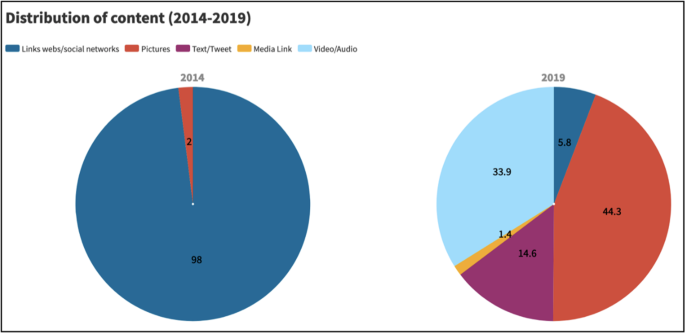
In 2014, nearly all RN content (98%) directed users away from Twitter to the party’s website, creating a one-way communication flow that generated minimal engagement. By 2019, the party had fundamentally changed its approach, with 86.8% of tweets incorporating images (44.3%) or video content (33.9%), keeping followers engaged directly on the platform.
“The evolution of RN in social networks is dictated by a need for progression at the political level,” the researchers note. After achieving its best-ever European election results in 2014, the party sought to widen its lead over other French political formations in 2019.
Perhaps most significantly, RN shifted from a centralized messaging approach to a more distributed model featuring multiple party voices. In 2014, all published content came exclusively from the official @RNational_off account. By 2019, only 40% of messages originated from this source, with party leader Marine Le Pen (21.4%) and European list leader Jordan Bardella (20.8%) becoming prominent voices in the party’s Twitter presence.
This diversification strategy paid dividends in engagement metrics. Messages from individual politicians consistently outperformed the official account posts in retweets, likes, and comments. Posts receiving zero audience response dropped dramatically from 57.1% in 2014 to just 13.87% in 2019.
The research also examined whether these communication changes reflected deeper shifts in the party’s political character. Despite its rebranding from Front National to Rassemblement National and attempts to broaden its appeal, the analysis found the party maintained core populist characteristics.
The RN continues to construct political “enemies” in its communications, though its targeting has evolved. In 2019, media mentions increased significantly (31.9% of content), while direct confrontations with political rivals decreased slightly (7.7%). The party appeared to position mainstream media as supporters of its political opponents, particularly President Macron’s party.
The tone of RN’s messaging has also become more polarized. In 2014, the party focused on communicating its proposals to supporters, with about 70% of publications taking this approach. By 2019, positive messaging was almost exclusively reserved for content about the party itself and its campaign (72% positive), while nearly all policy-specific content adopted a negative, critical tone.
Immigration (77% negative messaging), EU governance (77% negative), and economic liberalism (90% negative) were consistently framed in pessimistic terms, reflecting the party’s nationalist and protectionist positions.
“In the 2014 election campaign, within the RN’s populist nature, the most exploited feature was its propagandistic sense,” the researchers conclude. “However, the results of 2019 show that Marine Le Pen’s party used its official Twitter account to polarize its discourse, equating its actions with moral good and those of its enemies with evil.”
The findings suggest that while RN has modernized its communication strategy and attempted to broaden its appeal, its fundamental populist character remains intact, with a continued emphasis on creating division between the “people” it claims to represent and the various “enemies” it positions itself against.
Fact Checker
Verify the accuracy of this article using The Disinformation Commission analysis and real-time sources.

7 Comments
While the article focuses on the National Rally party, I wonder how other French political parties have adjusted their social media strategies for the EU elections. It would be interesting to see a broader comparison.
Good point. A more comprehensive analysis of social media trends across the French political landscape could provide valuable insights.
Incorporating more visual content like images and videos is a savvy tactic to boost engagement. It makes the party’s messaging more dynamic and accessible on social media.
Interesting to see how the National Rally party in France has evolved its social media strategy over time. Keeping voters engaged directly on the platform seems like a smart move, rather than just redirecting them elsewhere.
The 400% increase in Twitter activity is quite remarkable. It highlights the party’s growing understanding of the importance of social media in modern political communication and campaigns.
Indeed, adapting to the changing digital landscape is crucial for political parties these days.
The shift towards more sophisticated social media tactics, while maintaining a populist core, is a noteworthy development. It will be important to closely monitor the impact of these strategies on voter sentiment and election outcomes.