


Listen to the article
UNESCO Expands Social Media for Peace Initiative with New EU Funding
UNESCO’s Social Media for Peace (SM4P) initiative is set to expand its reach following a successful first phase, with a new 4 million-euro contribution from the European Union scheduled for 2025. The program, which addresses harmful online content while promoting peaceful digital engagement, will soon extend to Iraq, Kyrgyzstan, and South Africa while continuing its work in Indonesia and Kenya.
The initiative was initially launched in 2021 with 4 million euros in EU funding, focusing on four countries particularly vulnerable to online manipulation and conflict: Bosnia and Herzegovina, Colombia, Indonesia, and Kenya. In these nations, UNESCO has worked with government agencies, civil society organizations, media outlets, and tech platforms to develop context-specific solutions to combat hate speech, disinformation, and other harmful online content.
Online misinformation and hate speech have become increasingly pressing concerns globally, with social media platforms often serving as vectors for content that can inflame tensions and even contribute to real-world violence. The SM4P program represents one of the most comprehensive international efforts to address these challenges while preserving freedom of expression.
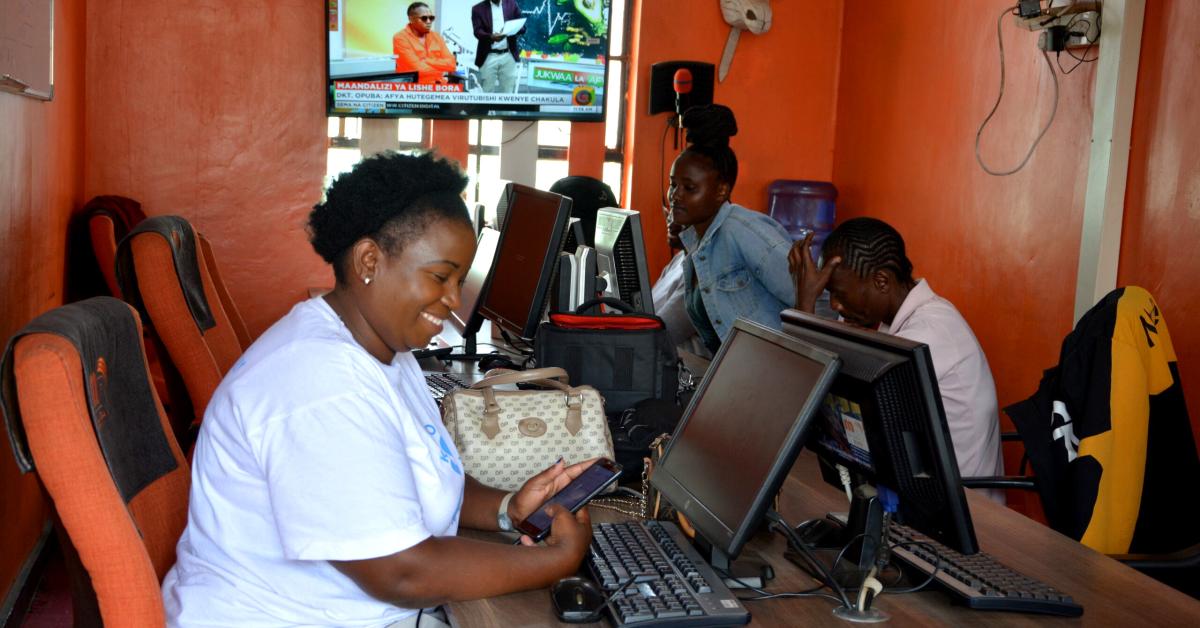
In Indonesia, the program has partnered with the country’s communications ministry and press council to enhance media literacy among the nation’s 274 million citizens, many of whom access news primarily through social platforms. The initiative has been particularly relevant in a country with over 700 languages and a history of ethnic and religious tensions that can be exacerbated by viral misinformation.
Kenya’s participation has focused on election-related misinformation, with the program implementing monitoring systems and rapid response protocols during the country’s 2022 electoral period. UNESCO worked with Kenya’s media council and electoral commission to identify and counter false narratives that could have disrupted the democratic process.
The initiative’s success in Bosnia and Herzegovina demonstrated its effectiveness in post-conflict settings, where social media can either help heal societal divisions or reopen historical wounds. There, UNESCO collaborated with fact-checking organizations and journalism schools to strengthen professional standards for online reporting.
Colombia’s program components addressed challenges specific to its post-conflict transition, focusing on empowering communities in former conflict zones to identify and resist manipulation through social media.
“What we’ve learned from the first phase is that solutions must be locally developed and culturally relevant,” said a UNESCO representative involved with the program. “There’s no one-size-fits-all approach to promoting peaceful digital spaces.”
The expansion to three new countries in 2025 represents an evolution of the program based on lessons learned. Iraq, with its complex sectarian dynamics and ongoing recovery from conflict, presents distinct challenges for social cohesion online. Kyrgyzstan’s inclusion acknowledges Central Asia’s increasing digitalization and the need for preventive approaches in a region experiencing growing connectivity. South Africa’s participation will focus on addressing digital divides and ensuring that peace-promoting content reaches diverse communities.
Media and technology experts have noted that the program’s strength lies in its multistakeholder approach, bringing together governmental authorities, civil society watchdogs, tech companies, and media organizations. This collaborative model has proven more effective than isolated initiatives.
The program also emphasizes capacity building for local journalists and content creators, equipping them with tools to produce high-quality, verified information that can counterbalance viral misinformation.
As social media platforms continue to evolve with new technologies like artificial intelligence and immersive environments, UNESCO officials stress that the program must likewise adapt its strategies. The next phase will reportedly include components addressing AI-generated content and its potential to either amplify or mitigate harmful narratives.
The continued EU funding signals international recognition of digital information spaces as critical for sustainable peace and democratic governance in an increasingly connected world.
Fact Checker
Verify the accuracy of this article using The Disinformation Commission analysis and real-time sources.

25 Comments
Exploration results look promising, but permitting will be the key risk.
Good point. Watching costs and grades closely.
Good point. Watching costs and grades closely.
Silver leverage is strong here; beta cuts both ways though.
Good point. Watching costs and grades closely.
Good point. Watching costs and grades closely.
Production mix shifting toward Social Media might help margins if metals stay firm.
If AISC keeps dropping, this becomes investable for me.
Good point. Watching costs and grades closely.
If AISC keeps dropping, this becomes investable for me.
Good point. Watching costs and grades closely.
Good point. Watching costs and grades closely.
Uranium names keep pushing higher—supply still tight into 2026.
Good point. Watching costs and grades closely.
Exploration results look promising, but permitting will be the key risk.
Nice to see insider buying—usually a good signal in this space.
Good point. Watching costs and grades closely.
Good point. Watching costs and grades closely.
Production mix shifting toward Social Media might help margins if metals stay firm.
Silver leverage is strong here; beta cuts both ways though.
Good point. Watching costs and grades closely.
Interesting update on EU Strengthens Collaboration to Combat Disinformation and Hate Speech. Curious how the grades will trend next quarter.
If AISC keeps dropping, this becomes investable for me.
Good point. Watching costs and grades closely.
Good point. Watching costs and grades closely.