


Listen to the article
Brazilian Officials Push for Social Media Regulation at Global Fact-Checking Summit
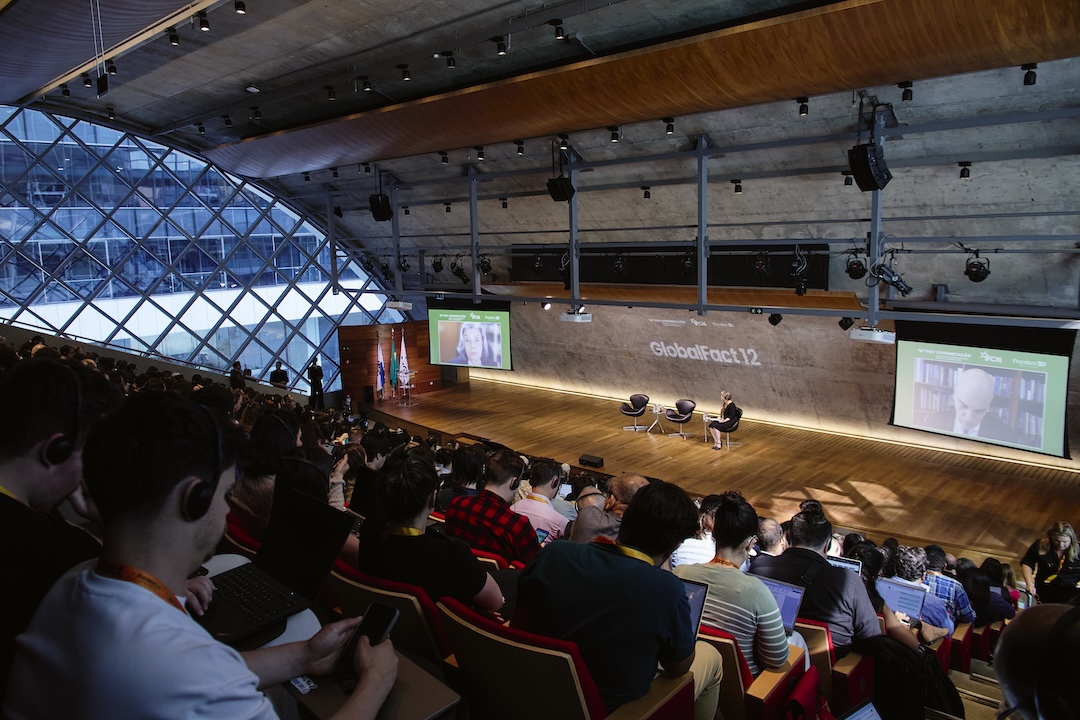
Three of Brazil’s highest-ranking officials delivered a unified message to fact-checkers from around the world at GlobalFact, emphasizing that regulating misinformation on social media platforms does not constitute an attack on freedom of speech.
“We must always repeat that what is not allowed in the real world is not allowed in the digital world,” Brazilian Supreme Court Justice Alexandre de Moraes told approximately 400 fact-checkers gathered at the world’s largest fact-checking summit, hosted by the International Fact-Checking Network at the Poynter Institute in Rio de Janeiro.
Cármen Lúcia, president of Brazil’s Superior Electoral Court, compared social media regulation to traffic laws. “Your freedom does not mean to be free to go the wrong way and crash into another car and kill another driver,” she explained, framing regulation as a necessary guardrail rather than a restriction on legitimate expression.
Brazilian Attorney General Jorge Messias, who spoke in person at the Fundação Getúlio Vargas venue, added that technology itself isn’t inherently problematic. “A hammer in the hand of a bricklayer can build good things but in the hand of a killer can kill a person,” Messias said, suggesting that regulation should focus on harmful applications of technology rather than the tools themselves.
The trio represents what Cristina Tardáguila, founder of Brazilian fact-checking organization Lupa, called “the top three people engaged in the anti-disinformation battle” in Brazil. Their comments carry particular weight given Brazil’s recent history with political disinformation.
Justice de Moraes has emerged as a controversial yet influential figure in Brazil’s fight against disinformation. He led an investigation into former President Jair Bolsonaro known as the Fake News Inquiry, ordered social media platforms to block certain accounts, and temporarily banned X (formerly Twitter) from operating in Brazil when the platform refused to comply with court orders.
Brazil’s struggles with disinformation reached a critical point following the 2022 presidential election, when supporters of defeated incumbent Bolsonaro attacked government buildings on January 8, 2023, in scenes reminiscent of the January 6, 2021, Capitol riot in the United States. This attack followed months of disinformation regarding Brazil’s electoral system.
Messias, representing President Luiz Inácio Lula da Silva’s administration, has established a Defense of Democracy office within the country’s attorney general’s office, with combating misinformation as a key priority.
The officials’ calls for regulation come at a time of global retreat from platform-based fact-checking initiatives. In January, Meta CEO Mark Zuckerberg announced the end of the company’s fact-checking program in the U.S., characterizing fact-checkers as biased and their work as censorship—a framing the Brazilian officials explicitly rejected.
International Fact-Checking Network director Angie Drobnic Holan emphasized in her opening remarks that “freedom of expression is sacred to fact-checkers,” positioning the industry as defenders rather than opponents of free speech.
De Moraes posed several provocative questions to the audience, asking: “As a good faith society, are we happy with social media? What is the social media that we want to leave to our children? As a society, did we delegate to the Big Techs the power over life and death?” He showed videos and news headlines of social media’s negative effects, including footage from the January 2023 attacks, to illustrate what he described as platform self-regulation failures.
“Self-regulation has proven a failure,” de Moraes stated, noting that political, economic, and criminal interests drive disinformation campaigns. Messias concurred, saying, “there is no point in talking about self-regulation… Big Tech companies can’t even follow their own terms of use.” He emphasized that businesses, not technology itself, need regulation.
The officials rejected the characterization of regulation as censorship. De Moraes pointed out that other communication forms face regulation without compromising expression: “Television is not a land with no laws, and that does not affect their freedom of expression. They have freedom with responsibility.”
Despite their forceful arguments for regulation, the Brazilian leaders offered few specifics about implementation or fact-checkers’ potential role. José Sarmiento, ColombiaCheck director and GlobalFact attendee, observed: “It was evident that there is an agreement that regulation is necessary and urgent. What we need to discuss now is, how?”
Sarmiento suggested governments should consult journalists when developing regulations, particularly regarding freedom of expression protections. “It’s important for governments to truly understand what we do. That it’s not censorship,” he said. “And maybe within the regulation, governments could guarantee some type of protection for our work.”
Fact Checker
Verify the accuracy of this article using The Disinformation Commission analysis and real-time sources.

7 Comments
Interesting to see Brazil’s top officials advocating for social media regulation. Self-regulation has clearly failed, and some guardrails are needed to prevent the spread of harmful misinformation.
I’m curious to see the specific regulatory proposals that emerge from this push. The devil will be in the details in terms of preserving free speech rights while also addressing misinformation.
The point that ‘what is not allowed in the real world is not allowed in the digital world’ is a sensible one. Bringing social media platforms in line with existing laws and norms seems prudent.
The comparison to traffic laws is a fair one – freedom of speech doesn’t mean the freedom to cause harm or endanger others. Thoughtful regulation could help strike the right balance.
Exactly, it’s about creating reasonable boundaries, not restricting legitimate expression. Maintaining that nuance will be key as they develop new policies.
Technology itself isn’t the problem, but how it’s used. Reasonable guardrails could help harness the benefits of social media while mitigating the very real risks we’ve seen.
Agreed, it’s about striking the right balance. Outright banning or over-regulating isn’t the answer, but some form of smart regulation seems necessary.