


Listen to the article
Foreign Disinformation Campaigns Create Paradox for Media Literacy Efforts, Study Finds
Governments worldwide are deploying countermeasures against foreign disinformation campaigns, but researchers have discovered a concerning paradox: warnings and educational initiatives designed to protect citizens may inadvertently erode trust in democratic institutions and reliable media sources.
This unintended consequence plays directly into the hands of authoritarian regimes like Russia, whose disinformation strategies aim to foster societal suspicion, confusion and cynicism that destabilizes democratic nations over time, according to a new study conducted in Sweden.
“The question becomes: how can we inoculate against disinformation without producing these unintended consequences?” said one of the researchers involved in the study, which examined the effectiveness of different media literacy approaches through a preregistered experiment in Sweden.
The research responds to growing concerns about the global spread of targeted disinformation and the challenge of preparing citizens to identify unreliable information without breeding excessive skepticism toward legitimate sources.
Sweden provided an ideal testing ground as a high-trust society that has demonstrated resilience to disinformation while simultaneously being a key target of Russian influence operations. This contrasts with the United States, where previous studies on excessive media vigilance have been conducted in an environment already characterized by low trust, media fragmentation, and political polarization.
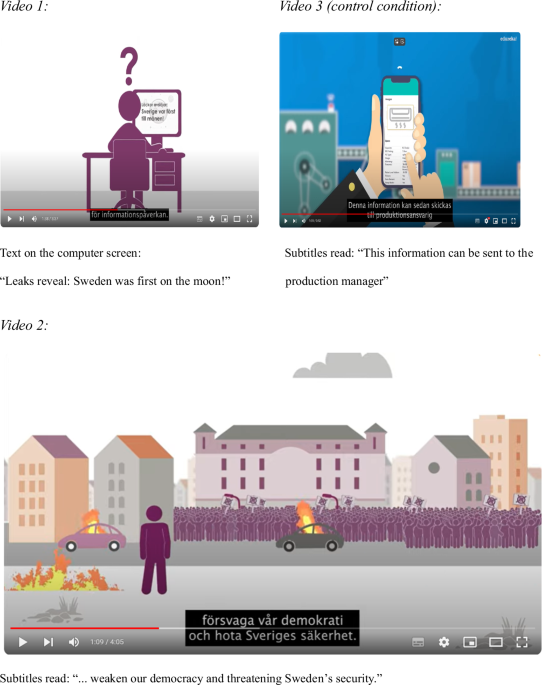
The study explored three key questions: whether education in source criticism improves people’s ability to differentiate between trustworthy and non-trustworthy information; if such education risks reducing trust in legitimate domestic media; and whether emphasizing the foreign nature of disinformation can mitigate potential negative effects.
“Our results show that both versions of our media literacy education improved participants’ abilities to discern between foreign disinformation and legitimate information, without generating the negative side effects on trust expected from previous research,” the researchers noted.
Significantly, the group that received information framing disinformation as a foreign threat displayed higher trust in reliable media and governmental communication while correctly discounting foreign disinformation sources.
The Distinct Challenge of Foreign Disinformation
While various forms of problematic information circulate in today’s media environment, the study specifically focused on disinformation – deliberately false or misleading content created with intent to deceive – as particularly concerning when deployed by foreign states.
Unlike domestic misinformation, targeted foreign disinformation represents a state-to-state issue with potential to escalate into diplomatic disputes or even armed conflict. State actors engaging in cross-border disinformation typically command larger budgets than domestic media organizations in smaller countries, allowing them to orchestrate operations on a much greater scale.
“Such campaigns may be part of hybrid warfare strategies aimed at destabilizing other nations and setting the stage for further escalation, potentially leading to war,” the researchers explained.
Russian state media outlets RT and Sputnik feature prominently in the study as examples of foreign disinformation sources. In September 2024, U.S. Secretary of State Antony Blinken accused RT of “functioning like a de facto arm of Russia’s intelligence apparatus,” describing it as the “weaponization of disinformation to subvert and polarize free and open societies.”
Academic researchers similarly view RT as “one of the most important organizations in the global political economy of disinformation” and an “opportunist channel used as an instrument of state defense policy to meddle in the politics of other states.”
How Russian Disinformation Spreads and Impacts Societies
Despite the European Union’s ban on RT and Sputnik in March 2022, Russian disinformation continues to reach European audiences. A 2023 survey found 5% of Swedes reported reading these outlets after the ban was implemented.
These influence operations often gain traction when disseminated through mainstream media channels or when collaborating with domestic alternative media. A recent study revealed that Russian state media effectively leads coverage of U.S. news outlets on geopolitical topics, thus setting the news agenda on key international affairs.
“Russian disinformation also gains influence by collaborating with or posing as domestic alternative media,” the researchers noted, pointing to a study showing that at least half of Germany’s leading alternative media outlets have connections to the Kremlin.
While the actual effects of Russian disinformation should not be overstated, evidence indicates measurable consequences. Studies demonstrate that Russian disinformation can trigger negative emotional responses, increase polarization, manipulate political views, and – most concerning for this study – erode trust in reliable information and democratic institutions.
The Media Literacy Paradox
The ineffectiveness of correcting false information after exposure has led to the development of preventive “inoculation” methods, often delivered through media literacy education. However, experimental studies in multiple countries indicate that such programs can inadvertently increase skepticism toward legitimate information.
“Studies show that indiscriminate warnings and careless elite discourse about fake news and disinformation can erode trust in reliable information,” the researchers observed, noting that one study even found warnings about deepfakes did nothing to enhance detection ability while causing people to incorrectly label authentic videos as fake.
The researchers hypothesized that media literacy training would improve people’s ability to distinguish between unreliable and reliable information, but might also increase distrust toward reliable sources – a condition they term “excessive vigilance.”
To counter this potential side effect, they tested whether emphasizing disinformation as a foreign threat – combined with strengthening national identity – could improve discernment while maintaining trust in reliable information.
Their findings suggest a promising approach: framing disinformation as an external threat appears to strengthen social cohesion and increase trust in legitimate domestic information sources while correctly identifying foreign disinformation.
This research offers valuable insights for governments and organizations developing media literacy programs, suggesting that emphasizing the foreign nature of certain disinformation campaigns may help citizens resist unreliable information without undermining trust in legitimate democratic institutions.
Fact Checker
Verify the accuracy of this article using The Disinformation Commission analysis and real-time sources.

12 Comments
The paradox identified in this research is deeply concerning. Governments must find ways to combat foreign disinformation without breeding excessive skepticism toward legitimate media sources that are essential for a healthy democracy. It’s a delicate balancing act.
You’re right, it’s a challenging dilemma. Policymakers will need to tread carefully and prioritize maintaining public trust in democratic institutions and reliable journalism, even as they work to defend against foreign interference.
Interesting research on the delicate balance between defending against foreign disinformation and maintaining trust in democratic institutions and reliable media. It’s a challenging paradox that requires nuanced solutions to protect citizens without breeding excessive skepticism.
You raise a good point. Overzealous anti-disinformation efforts could backfire and play into the hands of authoritarian regimes seeking to sow societal division and distrust. Finding the right approach is critical.
This is a complex issue with no easy answers. Governments must be vigilant against foreign interference, but measures to address disinformation need to be carefully crafted to avoid unintended consequences like undermining legitimate media sources.
I agree. The researchers are right to highlight this paradox. Any anti-disinformation initiatives must be implemented thoughtfully to protect democratic institutions without fueling excessive skepticism toward credible news outlets.
The study’s findings on the potential for media literacy efforts to inadvertently erode trust in democratic institutions and reliable media are concerning. This underscores the delicate balance governments must strike in defending against foreign disinformation.
Absolutely. It’s a challenging tightrope to walk. Policymakers will need to carefully assess the impacts of different anti-disinformation approaches to avoid creating the very outcomes they’re trying to prevent.
The research highlights a critical paradox that governments must grapple with. Defending against foreign disinformation is vital, but the methods used must be carefully crafted to avoid undermining the very democratic institutions and media sources they aim to protect.
Exactly. Policymakers will need to strike a delicate balance, employing anti-disinformation strategies that inoculate the public without breeding excessive skepticism toward legitimate sources of information and democratic processes.
This is a really thought-provoking study. The finding that anti-disinformation efforts could actually erode trust in democratic institutions and the media is deeply concerning. Clearly, governments need to approach this issue with great care and nuance.
This is a complex and important issue. While governments must take action against foreign disinformation campaigns, the study highlights the risk of inadvertently undermining democratic norms and institutions in the process. Nuanced solutions are clearly needed.