


Listen to the article
In a chilling turn of events, an AI-generated video has surfaced on social media falsely depicting a victim of the Philippines’ notorious drug war claiming to be alive, triggering a wave of harassment against his grieving sister who has been seeking justice.
Sheerah Escudero, whose 18-year-old brother Ephraim was killed during former President Rodrigo Duterte’s controversial war on drugs, found herself targeted after appearing on News 5 Everywhere to welcome Duterte’s arrest by the International Criminal Court (ICC) in March. Days after her televised interview, a pro-Duterte influencer with 11,000 followers posted a manipulated video using AI technology that showed an image of Ephraim claiming he was still alive and accusing his sister of lying for money.
“I wake up to hundreds of notifications and hate messages,” Escudero told reporters. “The worst thing is reading comments of people who believe this is real!”
This incident is not isolated. Other families of drug war victims, particularly those affiliated with the advocacy group Rise Up, have faced similar digital harassment. The National Union of People’s Lawyers (NUPL), which represents these victims, has condemned the “online hate” being “directed at widows, mothers, and daughters of drug war victims, attempting to intimidate them into silence.”
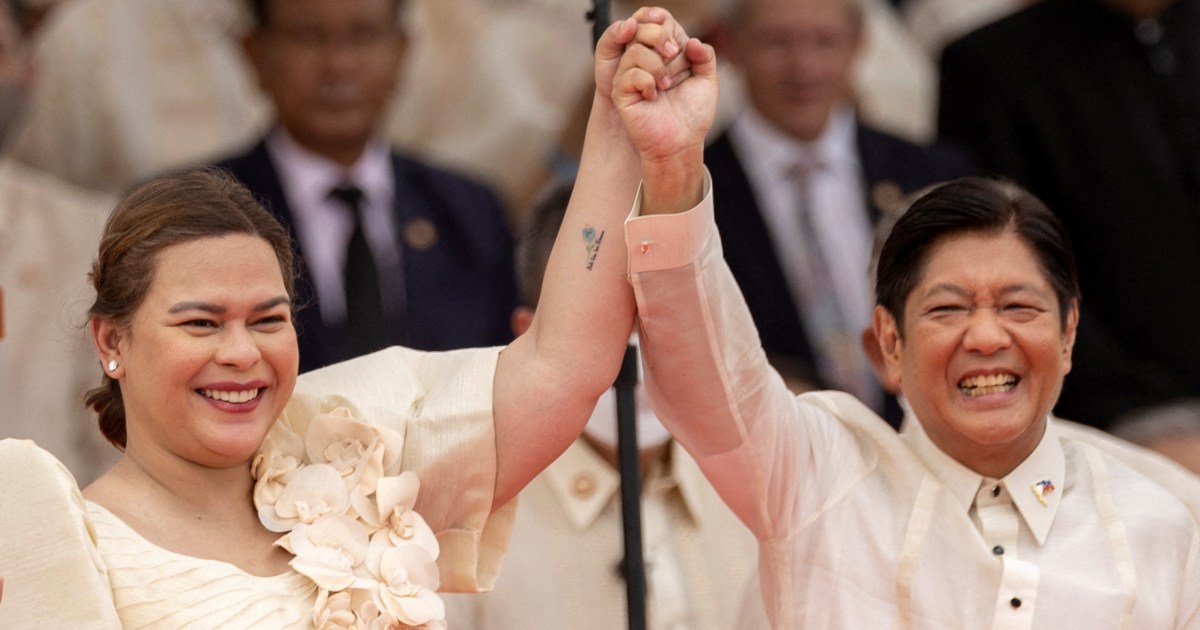
The surge in disinformation comes amid escalating political tensions between Duterte and current President Ferdinand Marcos Jr., whose alliance collapsed last year over policy disagreements, including Marcos Jr.’s diplomatic outreach to the United States. The political rivalry has intensified as Marcos Jr.’s supporters are pushing for the impeachment of Duterte’s daughter, Vice President Sara Duterte.
Danilo Arao, a mass media expert and convener of election watchdog Kontra-Daya, explains the strategy: “The Duterte camp aims to deodorize the image of both patriarch and daughter. They will resort to disinformation to get what they want, even if it means twisting certain data.”
The Philippines has long struggled with political disinformation. Marcos Jr. himself benefited from campaigns that whitewashed his father’s dictatorial regime during his successful 2022 presidential bid. However, fact-checkers note that the recent wave of false narratives appears to be more heavily weighted toward the Duterte camp.
Public concern about misinformation has reached unprecedented levels. According to a June report by Reuters Digital News, nearly 70 percent of Filipinos express worry about disinformation—a record high for the country. The timing is particularly sensitive as the nation approaches its mid-term elections in May 2025.
The role of AI in amplifying disinformation has become increasingly prominent. Tsek.ph, the country’s premier fact-checking coalition, found that between February and May this year, nearly one-third of altered claims “likely involved deepfake technology to impersonate public figures or distort reality.”
In June, Duterte-allied Senator Ronald Dela Rosa shared an AI-generated video on his official Facebook page showing a young man criticizing the “selective justice” targeting Sara Duterte. Before being removed, the video garnered 8.6 million views. When questioned, Vice President Sara Duterte defended the content, stating there’s “no problem sharing an AI video supporting me as long as it’s not for profit.”
“This is a problem of human behavior, not AI. It’s a disinformation influence operations problem, exacerbated by the unethical usage of AI tools,” explained Carljoe Javier, executive director of Data and AI Ethics PH.
The sophistication of these operations has evolved beyond simply generating content. A recent OpenAI Safety Report revealed that a Manila-based tech firm used AI to analyze political trends, draft PR strategies, and orchestrate coordinated campaigns across social media platforms with thousands of pro-Marcos Jr. and anti-Duterte comments.
“If you put AI in the hands of an already good public relations or marketing team, the capacity for disinformation is amplified by so much. They can have one message and instantly generate 20 different versions of it,” Javier noted.
Despite the public perception battle, polling suggests the Duterte family’s popularity has declined significantly. March surveys indicate that 51 percent of Filipinos want the former president to face trial for alleged crimes, while 66 percent support the impeachment process against Sara Duterte over corruption allegations.
The Philippine government launched a task force last year to address disinformation and AI misuse, but effective legislation remains pending. Several bills concerning responsible AI use are currently in Congress, though experts question whether politicians genuinely want ethical AI restrictions when many benefit from the current state of digital political operations.
As families like the Escuderos continue to face the painful consequences of these technological abuses, the intersection of grief, justice, and digital manipulation highlights the human cost of the Philippines’ increasingly sophisticated disinformation landscape.
Fact Checker
Verify the accuracy of this article using The Disinformation Commission analysis and real-time sources.

13 Comments
This is a disturbing example of how disinformation and AI can be weaponized to inflict further trauma on vulnerable communities. The Philippines government must urgently address this issue and provide support for the affected families.
Agreed. Protecting human rights and ensuring justice for victims of the drug war should be the top priority, not enabling the spread of harmful lies.
The weaponization of AI to spread false narratives and harass victims’ families is a deeply troubling development. The Philippines government needs to take urgent action to address this issue and provide support to those affected.
This is deeply concerning. The use of AI to spread disinformation and harass victims’ families is despicable. The Philippines government must take action to protect its citizens from such abuses of technology.
Agreed. The weaponization of AI against vulnerable groups is a disturbing trend that needs to be addressed urgently. Stronger regulations and enforcement are crucial to prevent these kinds of attacks.
The use of AI to create fake videos and harass grieving families is a new low. This kind of malicious, unethical behavior cannot be tolerated. Robust safeguards and transparency measures are needed to prevent such abuses.
It’s alarming to see how quickly disinformation can spread and cause real harm, especially to those who have already suffered so much. The Philippines authorities must take this threat seriously and prioritize protecting human rights.
Absolutely. Families of victims should not have to endure this kind of revictimization. The government must crack down on these manipulative tactics and hold perpetrators accountable.
This is a clear example of how the rapid advancement of technology can be exploited for nefarious purposes. The Philippines authorities must prioritize protecting human rights and ensuring justice for victims of the drug war, not enabling further harm.
Agreed. Robust regulations and enforcement mechanisms are crucial to prevent the misuse of AI and other emerging technologies for the purposes of disinformation and harassment.
The Philippines needs to take strong action to prevent the exploitation of emerging technologies like AI for the purpose of disinformation and harassment. Safeguarding the truth and the rights of victims must be the utmost concern.
This is a devastating situation. Families who have already suffered so much are now being further victimized through the malicious use of AI and disinformation. The authorities must intervene to protect these vulnerable communities.
Absolutely. The perpetrators of these attacks must be held accountable, and robust measures put in place to prevent the recurrence of such abhorrent behavior.