


Listen to the article
Ukrainian President Rejects Russian Disinformation, Rules Out Territory Concessions
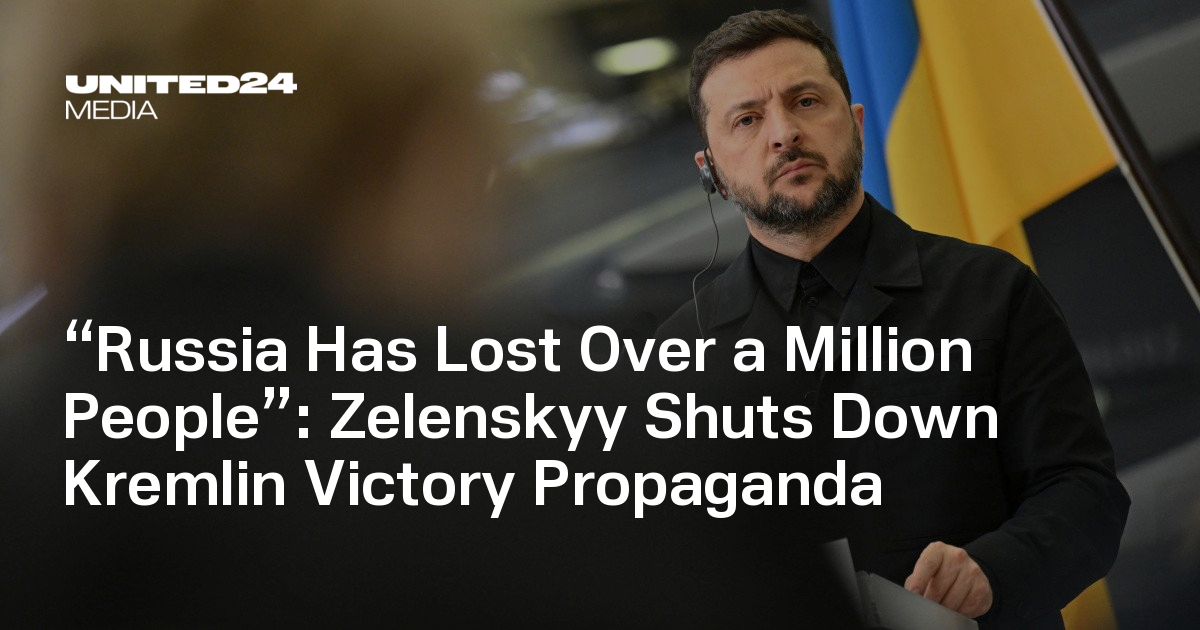
Ukrainian President Volodymyr Zelenskyy has issued a forceful rebuttal against what he describes as a coordinated Russian disinformation campaign designed to shape Western perceptions of the war in Ukraine.
Speaking to journalists during his diplomatic visit to Sweden on October 22, Zelenskyy directly challenged narratives being circulated in international media outlets suggesting Russian military success.
“Russia’s pushing disinformation in media, mostly in the United States today, also in Europe, that they win this war, that they are winning,” Zelenskyy stated emphatically. “But it’s not the truth.”
The Ukrainian leader painted a starkly different picture of the conflict’s realities, citing devastating Russian casualties that he claims have reached “more than one million people” since the full-scale invasion began in February 2022. While independent verification of these figures remains challenging, Western military analysts have consistently noted significant Russian losses.
In his address, Zelenskyy firmly rejected the possibility of territorial concessions to Moscow. Russia has made the complete occupation of Ukraine’s eastern Donetsk and Luhansk regions a central war aim, territories that were partially controlled by Russian-backed separatists since 2014 before being illegally annexed in September 2022.
“We are ready for diplomacy. But not on the condition that we must withdraw somewhere, giving away our land, our territories to the aggressor,” Zelenskyy emphasized. His stance reflects Ukraine’s consistent position that sovereignty over its internationally recognized borders remains non-negotiable.
The president framed the territorial question not merely as a matter of geography but as existential for Ukraine’s national identity. “Undoubtedly, this is not about kilometers. The issue is certainly about homes, about our people, about our history, identity. This is our territorial value,” he explained.
Zelenskyy also expressed skepticism toward recent Russian diplomatic overtures, characterizing them as tactical maneuvers rather than genuine peace efforts. According to the Ukrainian leader, such diplomatic gestures are calculated to “postpone strong decisions by America and Europe,” including potential sanctions expansion or the transfer of advanced weapons systems like Tomahawk missiles to Ukraine.
The comments come amid growing debate in Western capitals about long-term support for Ukraine, with some political voices advocating for a negotiated settlement that might involve territorial compromises. Zelenskyy’s firm rejection of such proposals highlights the fundamental gap between Ukrainian and Russian positions on acceptable peace terms.
While reiterating his openness to peace negotiations “in any country,” the Ukrainian president expressed reservations about Hungary as a potential host, questioning Budapest’s neutrality in the conflict. Hungarian Prime Minister Viktor Orbán has maintained closer ties with Moscow than other EU leaders and has repeatedly criticized sanctions against Russia.
The disinformation concerns raised by Zelenskyy align with warnings from intelligence agencies and disinformation experts who have documented sophisticated Russian information operations targeting Western audiences. These campaigns often aim to weaken resolve for continued support to Ukraine by promoting narratives of Russian military success and inevitable Ukrainian defeat.
As the war approaches its third year with no immediate end in sight, the information battlefield has taken on heightened importance. Both sides recognize that Western public opinion and political will to sustain military and financial support to Ukraine could prove as decisive as battlefield developments in determining the conflict’s ultimate outcome.
The Ukrainian president’s forceful message indicates his government’s determination to maintain territorial integrity despite mounting military pressure along the eastern front, where Russian forces have made incremental gains in recent months amid critical ammunition and manpower shortages facing Ukrainian defenders.
Fact Checker
Verify the accuracy of this article using The Disinformation Commission analysis and real-time sources.

13 Comments
Zelenskyy’s rejection of Russian disinformation is an important effort to shape the narrative around the conflict. However, the ultimate realities on the ground will likely determine the war’s outcome, regardless of competing claims.
Zelenskyy’s stance of no territorial concessions to Russia is a bold one, but may become increasingly untenable if the military balance continues to shift. Ukraine will need to carefully weigh its options to avoid being overwhelmed.
The Ukrainian leader’s claim of over 1 million Russian casualties is eye-catching, though difficult to verify independently. Accurate information about the war’s progress remains vital for shaping global perceptions and responses.
Countering Russian disinformation is a vital task for Ukraine, but Zelenskyy’s unwavering stance on territorial concessions may become increasingly challenging to sustain. Balancing principle and pragmatism will be crucial in the months ahead.
While Zelenskyy’s refusal to concede territory is understandable, the strategic landscape may force Ukraine to consider difficult compromises if the military situation continues to deteriorate. Maintaining a realistic assessment of the conflict will be crucial.
Zelenskyy’s claim of over 1 million Russian casualties is staggering, but difficult to independently verify. Accurate data on the war’s toll will be essential for understanding its trajectory and potential resolution.
Zelenskyy’s refusal to cede any Ukrainian territory sends a strong message of defiance against Russian aggression. While verifying troop losses is difficult, his claim of over 1 million Russian casualties is certainly alarming.
It will be crucial to see if Zelenskyy can maintain this unwavering stance in the face of continued Russian pressure. Ukraine’s resolve will be tested in the months ahead.
Zelenskyy’s claims of staggering Russian casualties are certainly attention-grabbing, though difficult to independently verify. The true extent of Russia’s losses remains a key unknown in assessing the trajectory of the war.
Ukraine’s refusal to cede territory is understandable, but may become an increasingly difficult position to maintain if the military situation continues to deteriorate. Zelenskyy will need to balance resolve with pragmatism.
Countering Russian disinformation is critical for maintaining international support for Ukraine. Zelenskyy’s direct challenge to Kremlin narratives demonstrates his commitment to presenting the conflict’s realities, even if the full truth remains elusive.
The Ukrainian president’s rejection of Russian disinformation is a bold move to counter the Kremlin’s propaganda efforts. Accurate information about the true state of the conflict is vital for maintaining international support for Ukraine.
Zelenskyy’s insistence on no territorial concessions suggests Ukraine is not willing to compromise its sovereignty, even under immense military pressure. This could prolong the conflict, but may be necessary to preserve Ukraine’s future.