


Listen to the article
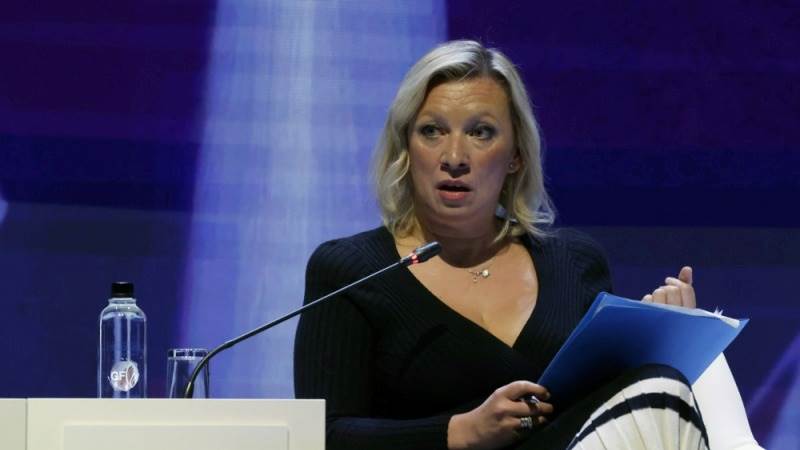
Russia’s Foreign Ministry Spokesperson Maria Zakharova has delivered a scathing critique of United Nations Secretary-General António Guterres, accusing him of acting as a “conduit” for Western propaganda rather than fulfilling his role as an impartial international diplomat.
Speaking during her weekly press briefing in Moscow on Thursday, Zakharova claimed that Guterres has consistently demonstrated a bias that undermines the UN’s foundational principles of neutrality and equitable representation of all member states.
“The Secretary-General has repeatedly shown himself to be more aligned with Western political interests than with the global community he is meant to serve,” Zakharova said. “His statements on numerous international conflicts reflect talking points that originate in Washington, London, and Brussels rather than the balanced perspective expected from someone in his position.”
The criticism comes amid heightened tensions between Russia and UN leadership over the ongoing conflict in Ukraine and other global hotspots. Moscow has increasingly voiced frustration with what it perceives as the international body’s failure to maintain impartiality in addressing complex geopolitical issues.
Zakharova specifically pointed to Guterres’ public statements regarding the Ukraine situation, claiming they lack acknowledgment of what Russia considers to be crucial historical context and security concerns that preceded the current hostilities.
“When the Secretary-General speaks about Ukraine, he presents a narrative that completely ignores Russia’s legitimate security interests and the years of provocations that led to the current situation,” she stated. “This selective approach to facts is precisely what we mean when we say he functions as a conduit for Western propaganda.”
The diplomatic rift highlights broader challenges facing the United Nations as it navigates an increasingly multipolar world where consensus among major powers has become more difficult to achieve. International relations experts note that the UN system, established in the aftermath of World War II, faces mounting pressure to adapt to shifting global power dynamics.
Dr. Elena Korosteleva, Professor of International Politics at University College London, observes that “Russia’s criticism of Guterres reflects a wider dissatisfaction among non-Western powers with international institutions they perceive as dominated by Western interests and perspectives.”
The UN Secretary-General’s office responded to Zakharova’s comments with a brief statement reaffirming Guterres’ commitment to the principles of the UN Charter and his determination to work with all member states to address global challenges.
“The Secretary-General remains focused on promoting peace, sustainable development, and human rights for all people, regardless of geopolitical divisions,” the statement read. “His door remains open for dialogue with all member states, including the Russian Federation.”
This exchange comes at a particularly delicate moment for international diplomacy, with multiple conflicts ongoing globally and increasing fragmentation in multilateral forums. The UN Security Council, where Russia holds permanent membership and veto power, has been frequently deadlocked on major international security issues.
Analysts suggest that such public criticism may further complicate diplomatic efforts to find common ground on pressing global issues, from climate change to nuclear proliferation and humanitarian crises.
“When a permanent Security Council member openly questions the impartiality of the UN Secretary-General, it creates additional obstacles to effective multilateral cooperation,” noted Dr. Thomas Graham, former senior director for Russia on the U.S. National Security Council.
For the UN system, navigating these tensions while maintaining its relevance and effectiveness remains a significant challenge. As global power distributions continue to evolve, the organization faces mounting pressure to demonstrate its ability to represent diverse perspectives while upholding its founding principles.
As this diplomatic disagreement unfolds, many observers are watching closely to see whether it represents a temporary friction point or signals a deeper, more structural challenge to the post-World War II international order that the United Nations embodies.
Fact Checker
Verify the accuracy of this article using The Disinformation Commission analysis and real-time sources.

8 Comments
Interesting accusations from Russia against the UN Secretary-General. It raises questions about the neutrality and independence of the UN leadership, especially during these tense geopolitical times. I wonder what specific examples Zakharova has to support her claims of Western bias.
Yes, the accusations of the UN chief acting as a ‘conduit’ for Western propaganda are quite serious. It will be important to see if Guterres responds and addresses these concerns about the impartiality of the UN.
This seems like a continuation of Russia’s broader campaign to undermine the credibility of Western-led institutions like the UN. While Zakharova’s points deserve consideration, I’d want to see more evidence before accepting the claims of systemic pro-Western bias at the UN.
I agree, it’s important to be cautious about accepting these accusations at face value. The UN’s neutrality and credibility are crucial, so any concerns about bias should be carefully examined.
Zakharova’s accusations raise important questions about the independence and objectivity of UN leadership. However, Russia’s own track record on human rights and international law also undermines its credibility to lecture others on impartiality. This is a murky situation without easy answers.
This is a complex geopolitical issue with valid concerns on both sides. While Russia has a point about the need for UN neutrality, the Secretary-General also has a responsibility to condemn clear violations of international law, like the invasion of Ukraine. Balancing those priorities is undoubtedly challenging.
You make a fair point. The UN chief must walk a fine line between impartiality and condemning flagrant breaches of international norms. It will be interesting to see how Guterres navigates this delicate situation going forward.
The tension between Russia and UN leadership over the Ukraine conflict is clearly escalating. Zakharova’s comments reflect Moscow’s frustration with what it sees as the UN favoring the Western perspective. However, the UN’s role is to represent all member states, so maintaining true impartiality is critical.