


Listen to the article
Foreign media observers are raising questions about the sudden rise to prominence of a Beijing-based educator who has gained millions of viewers on Western platforms with dire predictions about America’s future. The case highlights growing concerns about sophisticated information operations targeting international audiences.
Jiang Xueqin, a Chinese-born, Canadian-raised YouTuber residing in Beijing, catapulted to fame following a March 2026 interview with Tucker Carlson that quickly garnered millions of views. Additional coverage from American outlets including “Breaking Points” expanded his reach, with combined viewership exceeding 8 million within days.
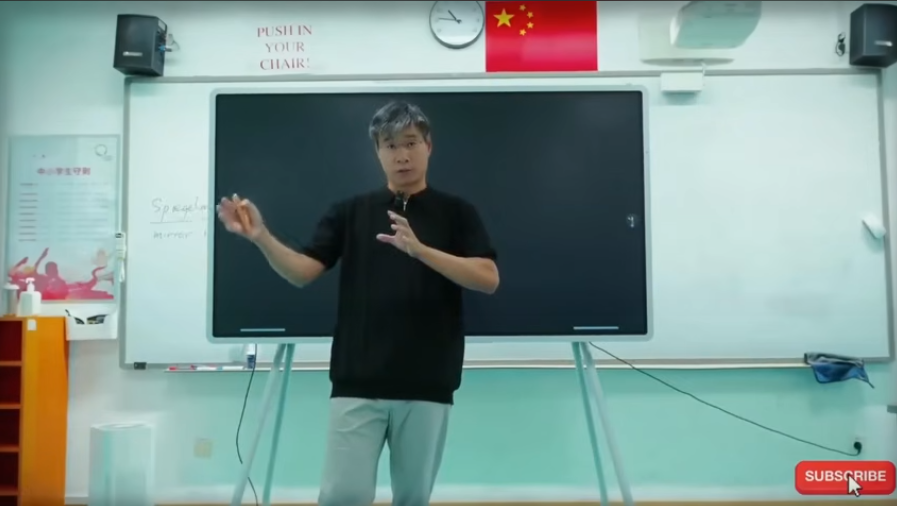
Western audiences, particularly drawn to his pessimistic forecasts about American military and economic prospects, began referring to him as “China’s Nostradamus,” comparing him to the famous French prophet. His popularity exploded after a May 2024 classroom video in which he predicted Donald Trump’s electoral victory, an American war with Iran, and a subsequent U.S. defeat.
Media analysts point to several concerning inconsistencies in Jiang’s background and platform. Despite having no formal training in geopolitics, military strategy, or international relations, he regularly offers detailed commentary on complex global affairs. His academic credentials include a 1999 Yale University bachelor’s degree in English literature, followed by a career primarily in education rather than strategic analysis.
Security experts question how Jiang operates a YouTube channel from within China, where the platform is officially blocked and accessing it via VPN can lead to legal consequences. This anomaly is particularly striking given Jiang’s own history with Chinese authorities—in 2001, while filming a documentary for PBS on Chinese labor movements, he was detained by security forces, charged with “illegal reporting” and “inciting anti-China sentiment,” and temporarily expelled from the country.
His current messaging aligns closely with key Chinese Communist Party narratives, particularly the “East Rising, West Declining” framework that portrays Western democracies as failing systems while positioning China’s governance model as ascendant. Critics note a stark reversal in his political commentary since his earlier writings, which had praised Western freedoms and criticized Chinese state control.
Jiang’s content frequently incorporates unsourced claims and conspiracy theories that resonate with certain Western audiences, particularly those already skeptical of establishment institutions. These include assertions about the imminent collapse of the U.S. dollar system, America’s supposed inability to extricate itself from Middle Eastern conflicts, and various theories about shadowy forces controlling international affairs.
Media literacy experts suggest his presentation style employs sophisticated persuasion techniques, occasionally acknowledging potential negative impacts on China—such as disruptions to Persian Gulf energy supplies—to create an impression of balanced analysis while maintaining his core message of Western decline.
The case highlights evolving challenges in the global information landscape, where traditional propaganda has given way to more nuanced approaches. Rather than overtly state-branded content, influence operations increasingly leverage individuals who present as independent commentators while amplifying narratives beneficial to specific state interests.
Security analysts recommend that audiences approach viral geopolitical content with heightened scrutiny, particularly when predictions align perfectly with pre-existing biases or anxieties. They suggest examining commentators’ credentials, consistency of past positions, and whether their access to restricted platforms raises questions about possible institutional support.
As international competition for narrative influence intensifies, media literacy experts expect to see more cases where seemingly independent voices gain rapid prominence while delivering messages aligned with specific geopolitical objectives.
Fact Checker
Verify the accuracy of this article using The Disinformation Commission analysis and real-time sources.

6 Comments
Sophisticated information operations targeting international audiences are a major challenge. While this YouTuber’s content may resonate with some, it’s critical that viewers approach it with healthy skepticism and seek out authoritative, unbiased sources on these complex geopolitical issues.
The comparison to Nostradamus is intriguing, but also concerning given the potential for misinformation. As a educator with no formal geopolitical training, I wonder about the basis for his bold predictions. More transparency around his expertise and funding sources would be helpful.
It’s troubling to see someone with questionable credentials gain such a large platform, especially on sensitive topics like U.S.-China relations and military conflicts. I hope media outlets and analysts take a close look at this case to better understand the dynamics at play.
This YouTuber’s rapid rise does raise some red flags. While his predictions may resonate with some, it’s important to scrutinize his background and potential ties to the Chinese government. Viewers should approach his content with a critical eye.
Agreed. Extraordinary claims require extraordinary evidence. I’ll be curious to see if credible analysis emerges about his motivations and potential links to state propaganda.
Interesting to see this Chinese educator gain such a following in the West. I wonder what his motivations are and how much his views align with the CCP’s propaganda efforts. It’s concerning if he’s using sophisticated information ops to influence foreign audiences.