


Listen to the article
Ecumenical Patriarch Bartholomew Dismisses Russian Propaganda Concerns Amid Ukraine Peace Efforts
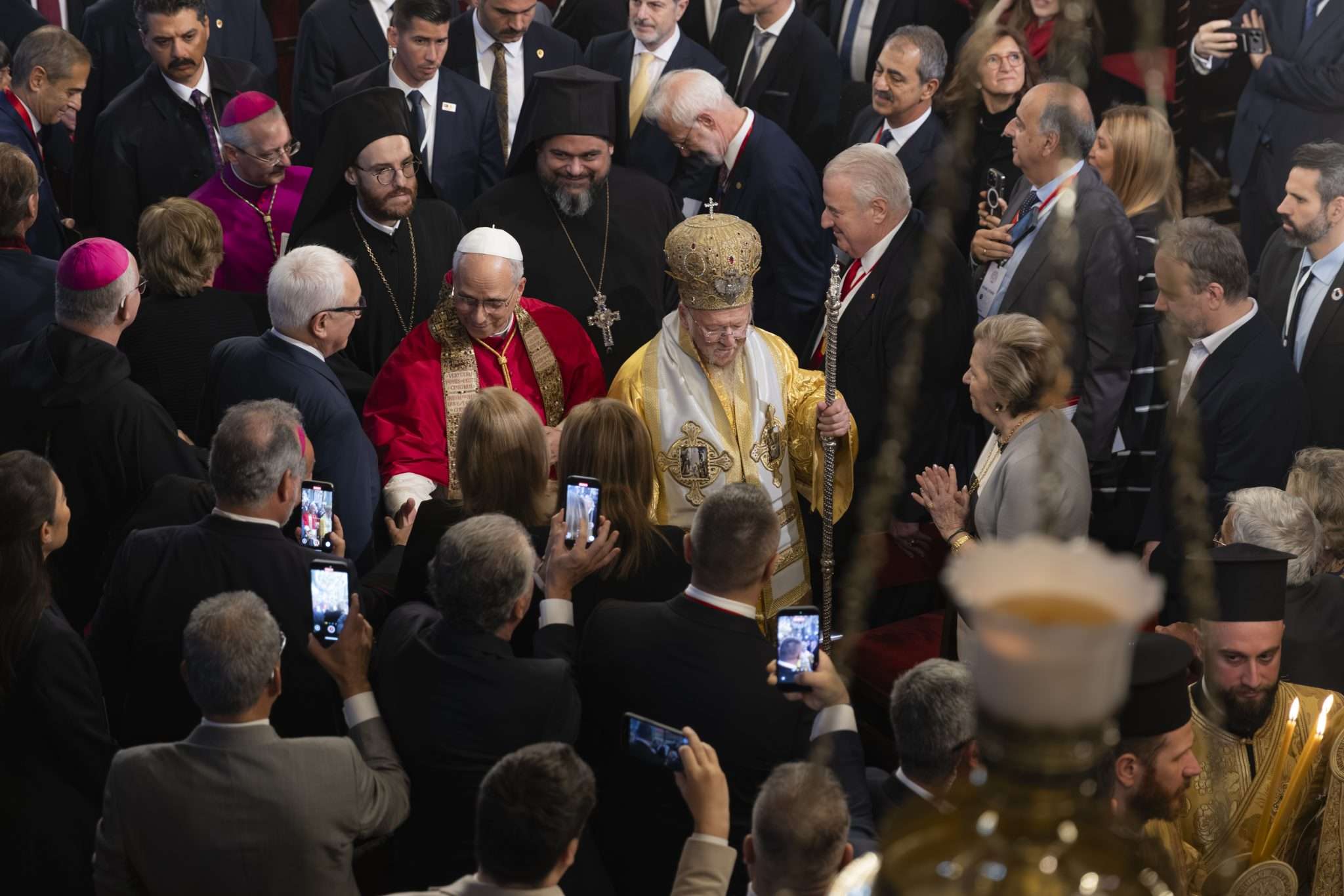
In a wide-ranging interview with TA NEA Weekend, Ecumenical Patriarch Bartholomew addressed tensions between the Orthodox Church and Russian authorities, boldly asking, “Why should I fear Russian propaganda?” The spiritual leader’s comments come amid ongoing discussions about peace negotiations in Ukraine, reflecting his continued assertive stance on church independence and geopolitical matters.
The interview, originally published in Greek and later republished with permission in English by the Orthodox Observer, provides insight into the Patriarch’s perspective on the complex relationship between religious institutions and political powers in Eastern Europe.
“What are your thoughts on the course of the peace negotiations regarding Ukraine?” was among the pressing questions addressed to the 83-year-old Patriarch, who has led the Constantinople-based Ecumenical Patriarchate since 1991. His response underscores the Patriarchate’s commitment to peace while maintaining its principled position on Ukrainian Orthodox autonomy.
The Ukrainian Orthodox Church’s independence has been a flashpoint between Constantinople and Moscow since 2019, when Patriarch Bartholomew granted autocephaly (independence) to the Orthodox Church of Ukraine. This decision severed centuries of Russian ecclesiastical control over Ukrainian Orthodoxy and provoked fierce opposition from the Moscow Patriarchate, which subsequently broke communion with Constantinople.
Russia’s full-scale invasion of Ukraine in 2022 further complicated these religious tensions, with the Russian Orthodox Church under Patriarch Kirill openly supporting the Kremlin’s military actions. By contrast, Patriarch Bartholomew has consistently condemned the invasion and supported Ukraine’s territorial integrity.
Religious analysts note that the Patriarch’s dismissive attitude toward Russian propaganda reflects his confidence in the canonical legitimacy of his actions regarding Ukraine. Dr. Elizabeth Clark, a specialist in Eastern Orthodox affairs at Georgetown University, explains: “The Ecumenical Patriarch is signaling that despite intense pressure and disinformation campaigns from Moscow, he stands by his decision to recognize Ukrainian Orthodox independence.”
The interview comes at a particularly sensitive time for Orthodox Christianity. The ongoing war has fractured the Orthodox world, with churches aligning either with Constantinople or Moscow on the Ukrainian question. Several Orthodox churches, including those of Greece, Cyprus, and Alexandria, have recognized the independent Ukrainian church, while others maintain ties with Moscow.
Church observers also point to the broader geopolitical implications of this religious divide. “The schism within Orthodoxy mirrors the political confrontation between Russia and the West,” says Professor Nicholas Denysenko, a theologian specializing in Orthodox Christianity. “Bartholomew represents a vision of Orthodoxy that is more open to dialogue with both Western Christianity and modern democratic values.”
The Patriarch’s comments further underscore Constantinople’s historical role as the first among equals in Orthodox Christianity, a status that the Moscow Patriarchate has increasingly challenged in recent decades. With approximately 300 million Orthodox Christians worldwide, this leadership dispute carries significant implications for global Christianity.
For the Istanbul-based Ecumenical Patriarchate, these tensions occur against a backdrop of pressures from the Turkish government, which has restricted the Patriarchate’s activities and property rights. Despite these challenges, Patriarch Bartholomew has maintained an active international presence, advocating for religious freedom, environmental protection, and interfaith dialogue.
The full interview reportedly covers additional topics including inter-Orthodox relations, environmental initiatives, and the future of Christianity in an increasingly secularized world. At its core, however, the Patriarch’s rhetorical question about Russian propaganda highlights his determination to maintain Constantinople’s historical prerogatives despite Moscow’s opposition.
As peace negotiations concerning Ukraine continue, the religious dimensions of the conflict remain significant factors in the broader geopolitical landscape. The Ecumenical Patriarch’s steadfast position suggests that religious reconciliation between Moscow and Constantinople may be as challenging to achieve as political resolution between Russia and Ukraine.
Fact Checker
Verify the accuracy of this article using The Disinformation Commission analysis and real-time sources.

20 Comments
This is a thought-provoking perspective on the role of the Orthodox Church in navigating the complexities of the Ukraine conflict and the threat of Russian propaganda. The Patriarch’s comments underscore the importance of principled leadership in the face of geopolitical pressures.
The Patriarch’s willingness to directly address the propaganda threat and assert the Patriarchate’s independence is a significant development that could have far-reaching implications for the peace process.
This is an interesting perspective on the complex relationship between the Orthodox Church and Russian authorities. It’s important to understand the nuances of these geopolitical and religious dynamics, especially in the context of the Ukraine conflict.
The Ecumenical Patriarch’s comments highlight the need for open dialogue and principled positions on matters of church autonomy and regional stability.
The Ecumenical Patriarch’s comments highlight the important role that religious institutions can play in countering disinformation and maintaining principled positions on regional conflicts. This is a complex issue with far-reaching implications.
The Patriarch’s refusal to be intimidated by Russian propaganda is a refreshing and necessary stance in the face of the information warfare tactics being employed in this conflict.
The Ecumenical Patriarch’s comments provide a valuable perspective on the interplay between religion, politics, and information warfare in the Ukraine conflict. It will be important to closely follow how this dynamic evolves in the months ahead.
The Patriarch’s assertive stance on church independence and his refusal to be cowed by Russian propaganda sets an important example for other religious leaders navigating these turbulent waters.
The Patriarch’s willingness to speak out against Russian propaganda is a welcome development in the context of the Ukraine conflict. It’s crucial that influential religious leaders like him continue to take a stand against disinformation and maintain their independence.
The Patriarchate’s commitment to peace and autonomy, as highlighted in the Patriarch’s comments, could be a stabilizing force in the region if it continues to be asserted in the ongoing negotiations.
The Ecumenical Patriarch’s comments provide valuable insight into the delicate balance that religious institutions must maintain in the face of political pressures and information warfare tactics. It’s encouraging to see him take such a bold and principled stance.
The Patriarch’s refusal to be cowed by Russian propaganda sets an important example for other religious and political leaders navigating these complex geopolitical dynamics.
While the Orthodox Church has historically had a complex relationship with political powers, it’s encouraging to see the Patriarch taking a principled stand against Russian propaganda. This could have significant implications for the peace process in Ukraine.
The Patriarch’s willingness to directly address the propaganda threat highlights the important role religious institutions can play in navigating these delicate geopolitical issues.
This is a fascinating exploration of the complex relationship between the Orthodox Church and the political powers at play in the Ukraine conflict. The Patriarch’s comments highlight the important role that religious institutions can play in countering disinformation and maintaining their independence.
The Patriarch’s willingness to directly address the propaganda threat and assert the Patriarchate’s principled position on matters of church autonomy is a significant development that could have far-reaching implications for the peace process.
The Patriarch’s bold stance against Russian propaganda is admirable, especially given the sensitivities surrounding the Orthodox Church’s role in Eastern Europe. It will be fascinating to see how this plays out in the ongoing peace negotiations.
The Patriarchate’s commitment to peace and independence is an important counterweight to the information warfare tactics employed by various actors in this conflict.
This is a fascinating glimpse into the intricate relationship between the Orthodox Church and the political powers at play in Eastern Europe. The Patriarch’s willingness to directly address Russian propaganda is a bold and admirable stance.
It will be interesting to see how the Patriarch’s comments influence the ongoing peace negotiations and the broader geopolitical dynamics surrounding the Ukraine conflict.