


Listen to the article
In a dramatic display of brinkmanship diplomacy, President Donald Trump secured a ceasefire agreement with Iran this week following a series of escalating threats that included warnings of massive strikes against civilian infrastructure. The deal temporarily halts hostilities and reopens the strategic Strait of Hormuz, a vital shipping lane for global oil markets.
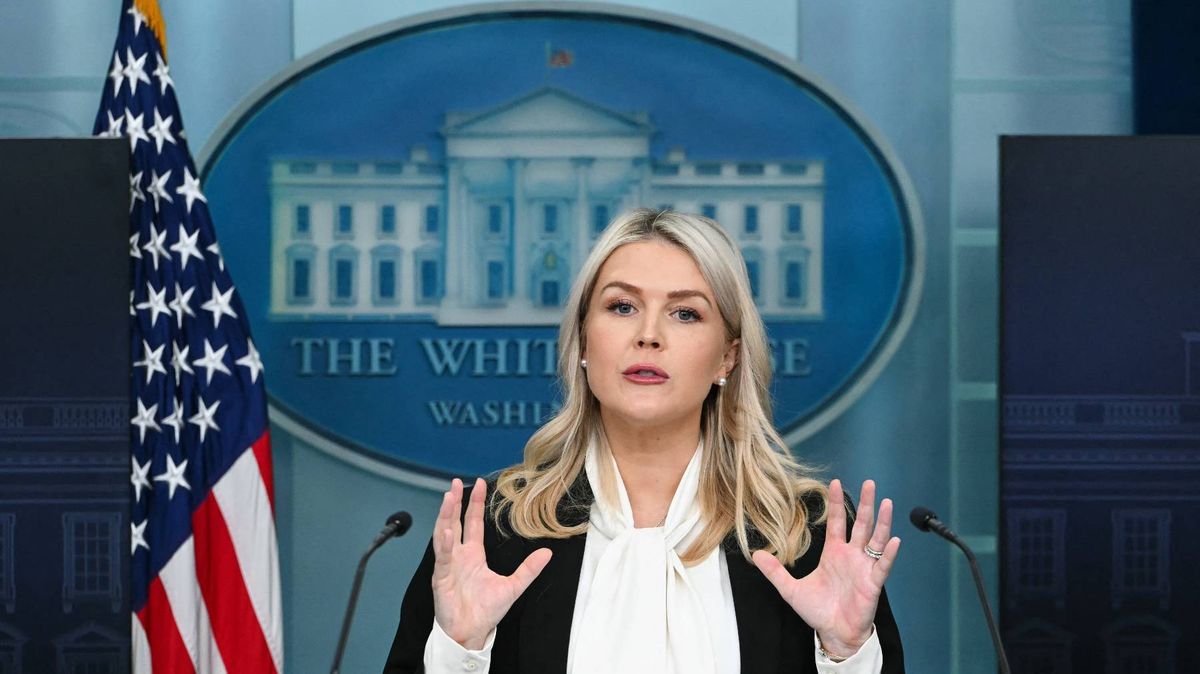
White House Press Secretary Karoline Leavitt defended the president’s approach during Wednesday’s press briefing, characterizing his rhetoric as “a very strong threat from the president of the United States that led the Iranian regime to cave to their knees and reopen the Strait of Hormuz.”
Leavitt emphasized that military action was imminent had negotiations failed. “It was not an empty threat by any means. The Pentagon had a target list that they were ready to hit go on at 8 p.m. last night if the Iranian regime had not agreed to reopen the strait, which they did,” she told reporters.
The diplomatic showdown reached its peak when Trump set a Tuesday deadline for Iran to agree to “the COMPLETE, IMMEDIATE, and SAFE OPENING of the Strait of Hormuz.” In exchange, he offered to “suspend the bombing and attack of Iran for a period of two weeks.”
Trump’s negotiating tactics included increasingly provocative language. On Easter Sunday, he posted on Truth Social that Tuesday would be “Power Plant Day, and Bridge Day, all wrapped up in one, in Iran,” adding: “There will be nothing like it!!! Open the F—– Strait, you crazy b——s, or you’ll be living in Hell – JUST WATCH!”
Just hours before the deadline expired, Trump announced that Iran had presented “a workable basis on which to negotiate,” noting that “almost all of the various points of past contention have been agreed to between the United States and Iran.” The two-week ceasefire aims to finalize the details of the agreement.
The Strait of Hormuz is a crucial waterway connecting the Persian Gulf to global shipping lanes, through which approximately 20% of the world’s oil passes. Its reopening has already begun to ease global oil and gas prices, which had risen sharply amid concerns about supply disruptions.
The president’s approach drew widespread condemnation from international leaders and organizations. UN Secretary General António Guterres expressed being “deeply troubled” by Trump’s statements, while Pope Leo XIV described the threats as “unacceptable.”
Even former MAGA stalwart Marjorie Taylor Greene, who resigned from Congress in January, broke ranks with Trump. She suggested potentially invoking the Constitution’s 25th Amendment to remove him from office, writing on social media: “Not a single bomb has dropped on America. We cannot kill an entire civilization. This is evil and madness.”
The situation in the region remains volatile despite the ceasefire. Shortly after the agreement was announced, several Gulf states including Bahrain, Israel, Kuwait, Saudi Arabia, and the United Arab Emirates issued warnings about incoming missiles from Iran. These strikes reportedly paused briefly before resuming.
Energy analysts are watching the situation closely, as any disruption to the Strait of Hormuz could have profound implications for global energy markets. The waterway handles approximately 21 million barrels of oil per day, and extended closure would likely trigger significant price increases worldwide.
The deal represents a high-stakes gamble in Trump’s foreign policy approach, combining aggressive rhetoric with deadline diplomacy. While the administration claims victory in securing the temporary agreement, critics argue that threatening civilian infrastructure constitutes a potential war crime under international law.
As the two-week negotiation period proceeds, diplomatic efforts will focus on transforming the temporary ceasefire into a more sustainable agreement addressing broader issues between the United States and Iran, including nuclear development, regional influence, and economic sanctions.
Fact Checker
Verify the accuracy of this article using The Disinformation Commission analysis and real-time sources.

7 Comments
The White House’s defense of the President’s language as an effective negotiating tactic is noteworthy. However, I worry that over-reliance on threats and ultimatums could undermine diplomatic efforts in the long run. Constructive dialogue and compromise may be a more sustainable path forward.
It’s good to see a de-escalation of tensions in the Strait of Hormuz, but the details of this agreement will be crucial. I hope the administration can provide more clarity on the specifics of what Iran agreed to and any concessions made on both sides.
The White House’s characterization of the President’s language as a ‘very strong threat’ that ‘led the Iranian regime to cave’ is quite bold. I’m curious to hear more details on the specifics of the negotiations and what concessions Iran made to reopen the Strait.
It’s important that any use of force or coercive diplomacy is proportional and aligned with international law. I hope the administration can provide more transparency around their decision-making process.
This seems like a high-stakes game of brinkmanship. While securing the reopening of the Strait of Hormuz is important for global energy markets, I’m concerned about the broader implications of this approach and the risk of miscalculation leading to unintended conflict.
Interesting developments on the Iran situation. It seems the President’s tough rhetoric backed by a credible military threat was effective in getting Iran to reopen the vital Strait of Hormuz. The White House Press Secretary’s defense of this approach raises some important questions about the use of force and diplomatic brinkmanship.
While the ceasefire is a positive outcome, I hope both sides can find a more sustainable diplomatic solution to ease tensions in the region. Continued escalation and threats of military action are concerning.