


Listen to the article
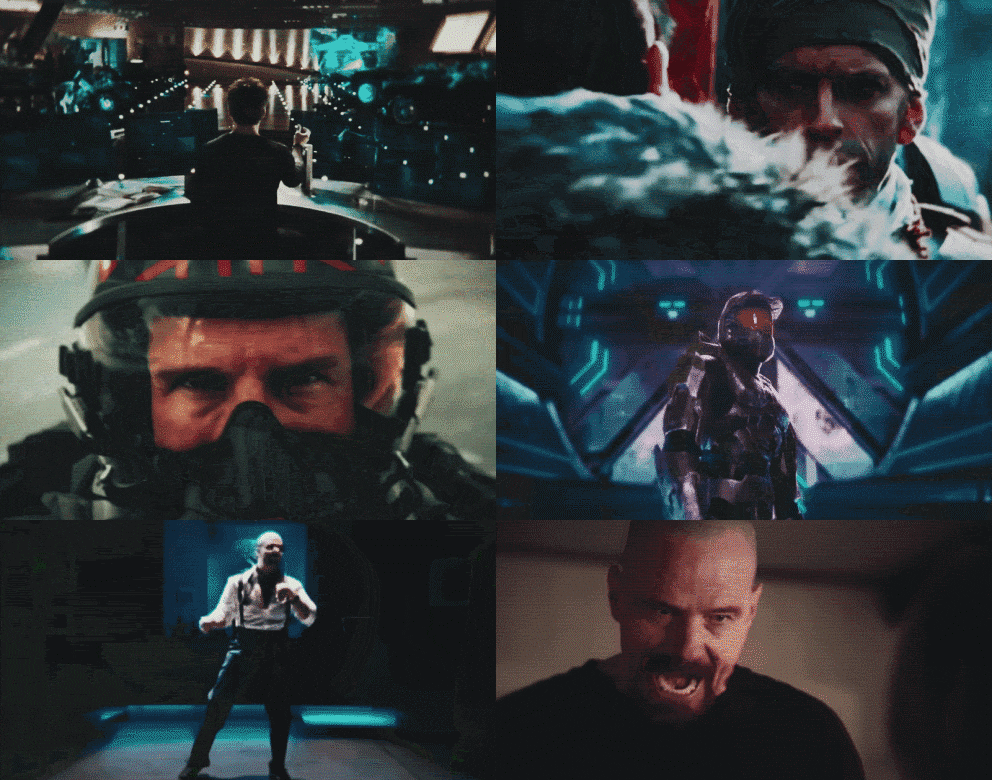
The White House is facing mounting criticism after releasing what many are calling a Hollywood-style propaganda video showcasing the U.S. military’s intervention in Yemen against Houthi rebels.
The 49-second clip, published on the White House’s official social media channels, features dramatic footage of American warship launches against Houthi targets, set to intense background music that critics say mimics action movie trailers. The video concludes with President Biden delivering the line, “We will make sure we respond to the Houthis if they continue this outrageous behavior.”
Released amid ongoing tensions in the Middle East, the video has sparked debate among foreign policy experts and media analysts who question the appropriateness of such stylized presentations of military action by an official government channel.
“This represents a concerning blurring of the lines between entertainment and the serious business of military operations,” said Dr. Eleanor Simmons, professor of media studies at Georgetown University. “When government institutions frame conflict in ways reminiscent of Hollywood blockbusters, it can trivialize the gravity of warfare and its human consequences.”
The Houthi rebels, a Yemen-based group backed by Iran, have been targeting commercial shipping vessels in the Red Sea since November, claiming solidarity with Palestinians amid the Israel-Hamas conflict. The U.S. and UK launched retaliatory strikes in January after multiple commercial vessels were attacked.
Administration officials defended the video as an effort to communicate complex foreign policy decisions to the American public in an accessible format. White House Communications Director Ben Williams stated, “Our goal is to keep citizens informed about our military operations in a clear, transparent manner.”
However, critics from across the political spectrum have expressed alarm. Conservative commentator Richard Thornton called the video “a dangerous precedent of government-produced war propaganda,” while progressive activist Sarah Mendez described it as “an inappropriate glorification of military action that could have significant humanitarian consequences.”
Media ethics experts point out that the presentation style raises questions about how the administration is framing U.S. military interventions. “There’s a fundamental difference between informing the public and creating content designed primarily to generate emotional support for military action,” noted Dr. Jonathan Harris, director of the Center for Media Ethics at Columbia University.
The controversy comes at a sensitive time for U.S. foreign policy, with the Biden administration navigating complex regional dynamics in the Middle East. The Red Sea shipping lanes represent critical global trade routes, with an estimated $1 trillion in goods passing through annually. Disruptions have already forced major shipping companies to divert vessels around the Cape of Good Hope, adding significant costs and delays to global supply chains.
Some defense analysts have defended the administration’s approach. “The reality is that modern communication requires engaging content,” said retired Admiral James Patterson. “As long as the underlying facts are accurate, using contemporary media techniques can help explain complex military operations to the public.”
This is not the first time a presidential administration has faced criticism for its presentation of military action. Previous administrations have been accused of downplaying civilian casualties or overemphasizing success rates in conflict zones.
International reaction has been mixed, with some U.S. allies privately expressing concern about the tone of the video. A European diplomat, speaking on condition of anonymity, said, “This kind of presentation feels out of step with how most democratic nations communicate about serious military engagements.”
As tensions in the region continue to simmer, media watchers say this controversy highlights the evolving challenges of government communications in the digital age, where information competes for attention in an increasingly crowded media landscape.
The White House has not indicated whether it plans to modify its approach to communicating about military operations in the future, though Press Secretary Maria Chen acknowledged the feedback, stating, “We’re always evaluating how best to keep the American people informed about actions taken in their name.”
Fact Checker
Verify the accuracy of this article using The Disinformation Commission analysis and real-time sources.

10 Comments
This video is a troubling example of the government using slick production values to present a one-sided, sanitized view of complex military conflicts. Framing warfare in an entertainment-driven style runs the risk of desensitizing the public to the real human costs of these operations.
Absolutely. When government agencies start taking cues from Hollywood, it raises serious concerns about transparency and accountability. The public deserves a sober, nuanced understanding of these issues, not glossy, manipulative propaganda.
While the visuals in this White House video are undoubtedly striking, I’m troubled by the use of an action movie-style approach to depict military operations. This type of sensationalized framing runs the risk of desensitizing the public to the very real human costs of these conflicts. The government should be focused on providing balanced, factual information, not engaging in propaganda.
Absolutely. The White House’s decision to present military actions through the lens of entertainment media is deeply concerning. This kind of stylized propaganda undermines the public’s ability to make informed judgments about complex foreign policy issues. The government must be held accountable for this inappropriate use of manipulative messaging.
The White House’s use of a Hollywood-style propaganda video to showcase military operations in Yemen is deeply troubling. This stylized approach trivializes the human suffering caused by these conflicts and blurs the line between news and entertainment. The public deserves a sober, factual assessment of these issues, not slick, manipulative messaging.
I agree completely. When government institutions start adopting the tactics of Hollywood blockbusters, it represents a dangerous erosion of democratic norms and transparency. The White House should be held accountable for this inappropriate and concerning use of propaganda.
While the visuals in this video are certainly attention-grabbing, I’m uneasy about the White House using such a dramatic, action-movie style to depict military operations. This approach seems more aimed at stoking emotions than providing factual information about a complex, ongoing conflict.
I share your concerns. Framing military actions through the lens of entertainment media risks oversimplifying the gravity of warfare and its real-world consequences. The White House should focus on informing the public transparently, not engaging in sensationalized propaganda.
Interesting how the White House is using Hollywood-style propaganda tactics to frame military operations. While visually striking, this approach could indeed trivialize the gravity of warfare and its human impact. It’s a concerning blurring of entertainment and serious foreign policy.
I agree, the dramatized video seems more suited for action movie trailers than official government communications. It’s important that the public receives balanced, factual information about military actions, not sensationalized propaganda.